

Airplane Mode Vs Do Not Disturb: Which Is Better For Your Phone Battery?

Airplane mode and Do Not Disturb mode are two common options found on modern mobile devices, which many of us often use in our everyday lives. Although Airplane mode is typically associated with air travel and suspending your phone's wireless capabilities to stop any potential interference with the aircraft communication systems, it can be used anytime and anywhere. It's even used as a trick to get a stronger signal on any phone. Although the Do Not Disturb mode has no such location-specific association, it's pretty useful and commonly used by folks to silence notifications whenever they need. For example, the Do Not Disturb mode is often used when people go to sleep or when they are in a meeting.
These are two very different use cases, and beyond these use cases, the employment of these modes also extends a phone's battery life. However, while the Do Not Disturb mode can help you save a bit of battery, Airplane mode has a significantly higher impact on a phone's battery backup. The reason for this comes down to exactly what the two modes do and how that changes the behavior of your phone's hardware when these modes are deployed.
Why is Airplane Mode better for your phone's battery?
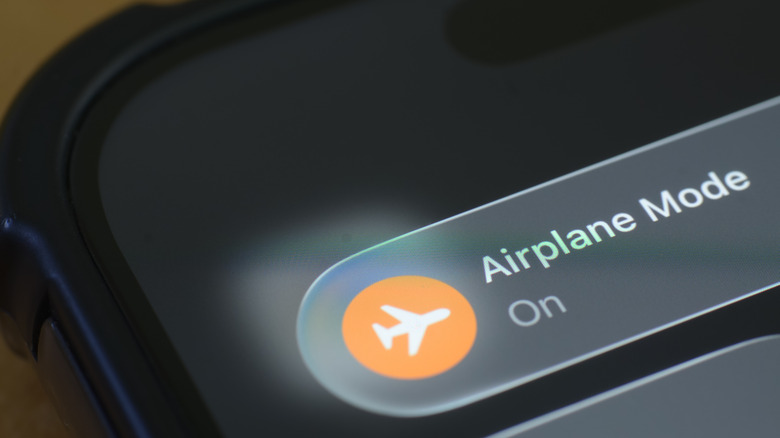
Airplane mode is a bigger saver of a phone's battery life because it's designed to kill all connectivity radios of a device, such as the cellular modem, Wi-Fi, and Bluetooth. This effectively stops any consumption of battery by these components of your phone. Although you can typically turn Wi-Fi and Bluetooth on manually after activating Airplane mode, the cellular modem always remains turned off. This can help reduce your phone's battery consumption, as these communication radios are big battery hogs. The battery savings can be even higher if you are in a poor cell coverage area and your phone's cellular modem is being forced to constantly search for a network and maintain connectivity.
Unlike Airplane mode, Do Not Disturb mode doesn't turn off your phone's connectivity. It only limits audible, visual, or haptic cues that show the arrival of notifications. This means your phone screen doesn't have to wake up every time there is a notification; the vibration motor doesn't have to work; and the speaker doesn't have to output sound. All this can also reduce the phone's battery consumption a bit. However, as your phone's cellular modem is still working, Wi-Fi is connected, and apps are still communicating over the internet to fetch updates periodically, the battery savings are pretty negligible. Any savings you're getting in the Do Not Disturb mode are mostly also available in Airplane mode. So, while Do Not Disturb mode can help save some power, Airplane mode remains the champion when it comes to improving a phone's battery life.