

RedMagic 11 Air Review: The Thin Phone For Gamers
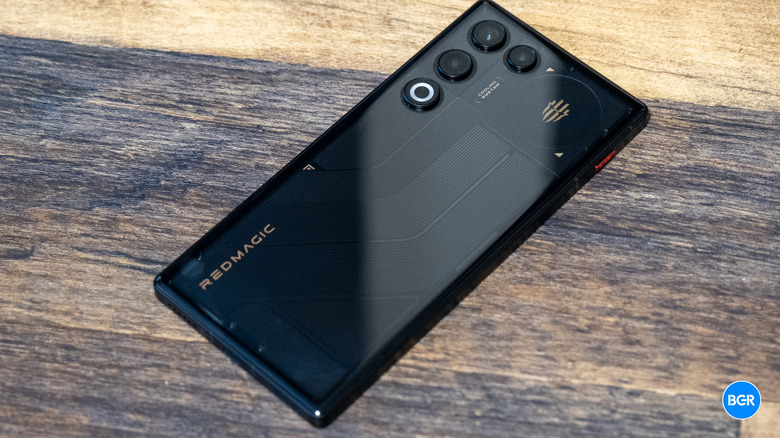
The RedMagic 11 Air was released earlier this year for $499, and it's a pretty interesting phone. Gaming phones are supposed to be chunky, dense slabs. This one is 7.85mm thick and still crams in a 7,000 mAh battery, a cooling fan, and a reasonably high-end chipset.
In other words, while the phone isn't as thin as the likes of the iPhone Air, it's RedMagic's gaming-focused approach to the thin phone trend — aiming to prevent compromises that often have to be made when phones get thinner. Plus, the $499 price tag is pretty compelling for a phone this performant.
The question is whether any of the compromises required to pull this off end up gutting the thing that's supposed to make it special. Is the RedMagic 11 Air a clever bit of engineering that gets the balance right, or a phone that's too thin for its own ambitions?
Design
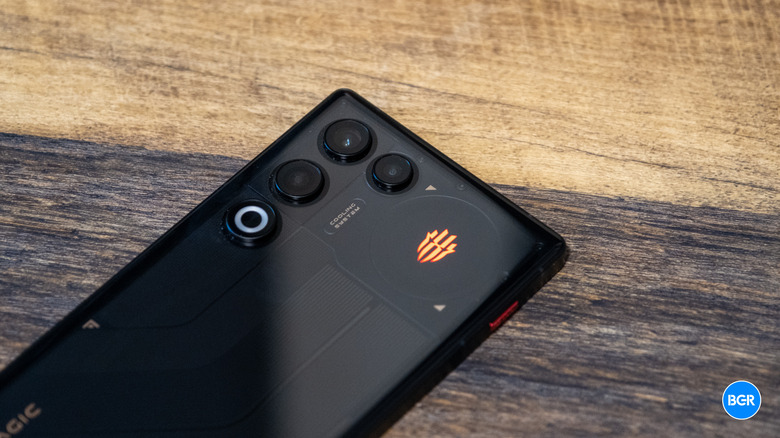
At 163.82 x 76.54 x 7.85mm and 207 grams, the RedMagic 11 Air isn't exactly iPhone Air territory, but it's certainly slimmer than you might expect. The frame is aluminum alloy, the front uses Corning Gorilla Glass 7i, and the rear is a transparent Gorilla Glass 5 panel. IP54 gets you dust and splash resistance, which is fine, though it's a noticeable step down from phones that have higher ratings for actual submersion.
Part of what makes the design of the RedMagic 11 Air unique is its gamer-focused rear panel, but that rear panel isn't quite as eccentric as some of RedMagic's other phones, at least depending on the color you get. The decorative plate beneath the glass shows off simplified thermal components and RedMagic branding, with a customizable RGB ring around the internal fan. It's distinctly "gamer," and while it looks a little cheesy at times, it's relatively reserved. Some like this approach to design.
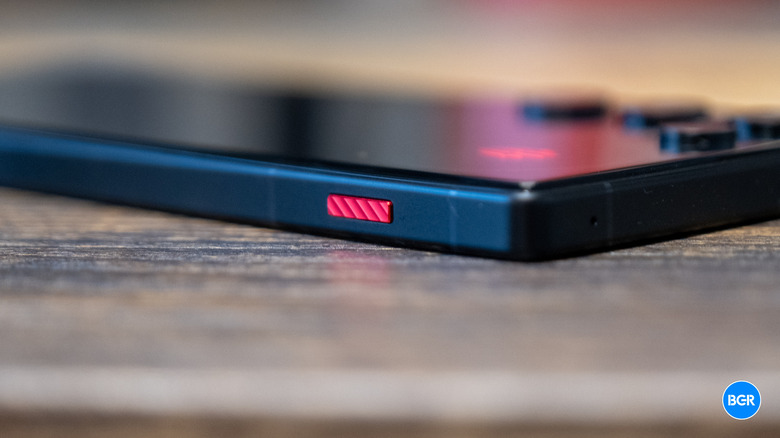
There is one major design element that's different from some other RedMagic phones, and that's the lack of a physical slider on the side. It hasn't been permanently removed from RedMagic devices, but you won't get one on this device. Instead, you'll get another control in the signature red color, which is a button to activate RedMagic's Game Space. I prefer the slider, but it's not really a big deal.
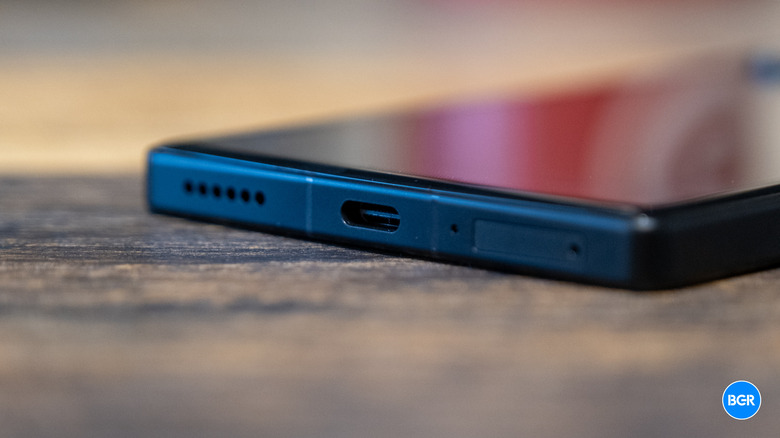
The controls and ports, apart from that Game Space button, are more or less where you'd expect them to be. There's a power button and volume rocker on the right edge, along with a USB-C port on the bottom. The camera module is completely flush with the back panel, and this is the detail that actually matters in daily use. No wobble on a table, no finger cramping in landscape, no awkward ridge digging into your palm during a long session. For a gaming phone, flat is the right call, and RedMagic committed to it fully.
The phone is available in Black Phantom and White Prism, and I have the Black Phantom color. It's not over the top in terms of colorways, but you'll still get unique accents like the RedMagic branding on the back and the red button on the left edge. Like some other RedMagic phones, you'll also get touch surfaces on the left and right sides of the right-hand edge of the phone, which can be used as trigger buttons in gaming.
Generally speaking, the Red Magic 11 Air feels reasonably slim but not dramatically so, and while the rear panel picks up fingerprints very easily, I don't mind the overall look of the phone.
Display
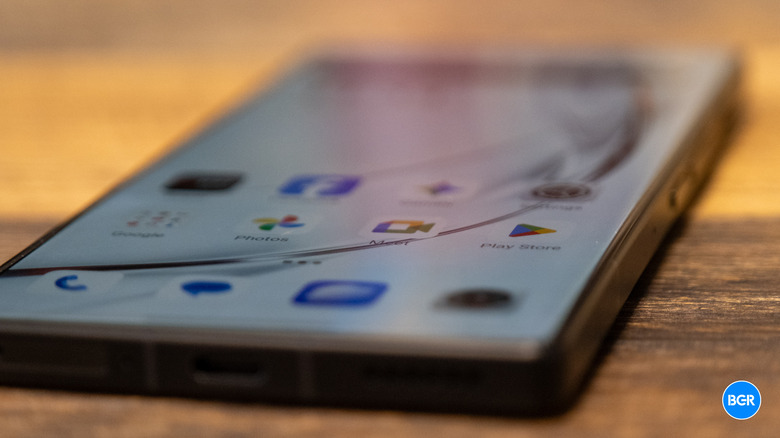
The screen on the RedMagic 11 Air is a 6.85-inch AMOLED panel, and it's one of the best elements of the device. It has a 2688 x 1216 resolution at 431 pixels per inch in a 20:9 aspect ratio. Refresh rate tops out at 144Hz, and according to RedMagic, it has a peak brightness of 1,800 nits. I actually measured slightly higher than that at a two percent window size, though brightness dips at larger window sizes.
One of the more interesting things about the phone's display is that it's completely uninterrupted. We'll get into what that means for the front-facing, under-display camera later (spoiler alert, it's not great). Regardless, you won't have to deal with a hole-punch cutout while gaming.
For the most part, colors are vibrant on the display and details are nice and crisp. An 1,800 nit peak brightness is fine, though it's much lower than plenty of other phones out there that can hit 3,000 nits or more. Still, if you're gaming indoors, you'll easily be able to see what's on the screen. Meanwhile, if you head outdoors, you may find that it's not quite enough. Also, while the colors are vibrant, they're not necessarily super accurate. If you want a punchy look to the colors on the screen, you probably will not mind this, though.
Like some other gaming devices, the RedMagic 11 Air has a higher refresh rate than non-gaming phones. Frankly, I can't tell the difference between 120Hz and 144Hz, and I don't think most others will be able to either. It's not the highest refresh rate of a gaming phone; there are some that have 165Hz displays. Again, I don't think this really matters all that much for the majority of users, including mobile gamers.
Performance
Powering the RedMagic 11 Air is the Qualcomm Snapdragon 8 Elite, which is Qualcomm's flagship chip from 2025. It has been replaced by the Snapdragon 8 Elite Gen 5, which is part of how RedMagic was able to keep the price lower than flagship phones from this year. Interestingly, it's also coupled with a second chip, RedMagic's proprietary RedCore R4 gaming coprocessor, which is aimed at handling frame rate stabilization. All that is coupled with either 12GB or 16GB of RAM.
Day to day, the phone is easily powerful enough. Apps open instantly, multitasking is smooth, and for 95% of people, the chipset is already overkill. As you would expect from a gaming phone, however, it goes a little further than most under sustained workloads. That's because it actually has a built-in fan, and that fan does indeed make a pretty big difference over longer gaming sessions.
How so? Well, while its peak performance wasn't as high as devices with the more recent Snapdragon 8 Elite Gen 5, it was able to sustain higher frame rates indefinitely. After five or six minutes, it had indeed decreased from its peak performance, but from there, it maintained frame rates consistently, and they were higher than the throttled performance of many phones with the newer Qualcomm chip.
The 24,000 RPM fan is the reason this works. There is a trade-off to that fan, though. It's not silent, and unless you're wearing headphones, you'll definitely be able to hear it when you're gaming. I found it to be a little louder than I would have liked, though many gamers might be willing to deal with that fan noise if it means better gaming performance.
Battery and charging
Powering the phone is a 7,000 mAh battery, which is pretty impressive given how thin the device is. Of course, it's a silicon carbon battery, which is a higher-density chemistry than traditional lithium-ion batteries that smartphones have been using for ages.
Real-world endurance is quite good. Light users will easily be able to get through a full day of use, though light users aren't really this phone's intended audience. The battery does drain significantly under heavier load, and the fan takes power to run, but it still managed to get through a decent chunk of gaming without issue and did better than the vast majority of other devices in the same price range.
Wired charging tops out at 80W on the global variant (the Chinese model gets 120W), and I got to a full charge in around 1 hour and 20 minutes. There's no wireless charging at all, which is frustrating to see. Sure, the phone has a thin body, but so does the iPhone Air, and Apple even manages to pack in magnets for MagSafe.
The device does support bypass charging, though. That means that if you plug your phone in while you're gaming, power routes directly to the motherboard rather than running through the battery. That means less wear and tear on the battery cell, which keeps it in good shape for longer periods of time.
Camera
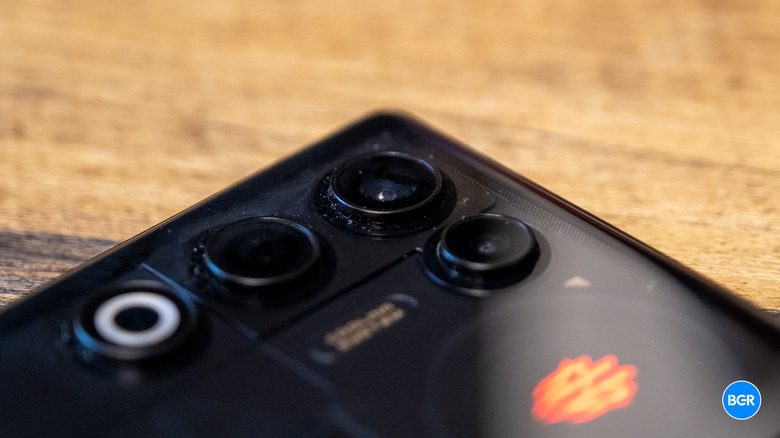
The biggest trade-off that this phone makes is in the camera. It's pretty weak overall. On the back of the phone, you'll get a 50-megapixel main sensor coupled with an 8-megapixel ultrawide with a 112-degree field of view. On the front, there's a 16-megapixel sensor that sits underneath the display.
In good light, the main camera is fine at best. Detail is good enough, exposure is mostly accurate, and colors lean slightly saturated but still believable. Dynamic range is better than expected, which is nice to see.
Low-light performance in general is poor, though. Detail gets lost quickly, even at lower levels of digital zoom. At two times zoom, they're usable, while at four times, they're verging on a mushy mess. By the maximum ten times zoom, photos are really for documentation more than anything else, and certainly not anything you would want to post anywhere.
The 8MP ultrawide is another weak point. On the ultrawide, edge sharpness is sub-par, and once again, low-light performance is pretty rough. Not only that, but video is capped at 1080p on the ultrawide camera. There's no 4K recording at all. In 2026, that's pretty unusual, especially for a phone that costs more than a few hundred dollars.
But even the ultrawide isn't as bad as the under-display front-facing camera. Under-display cameras really haven't improved all that much over the past few years, which is a bit disappointing. You'll get little detail and washed-out colors, and there's bloom around bright objects. This camera is barely good enough for video calls, so really, don't expect much from it.
All that to say, the RedMagic 11 Air is not designed to be a great camera phone — and it isn't one. A decent camera would have been appreciated, but you won't get one here beyond the very basics of low levels of zoom and good lighting.
Software
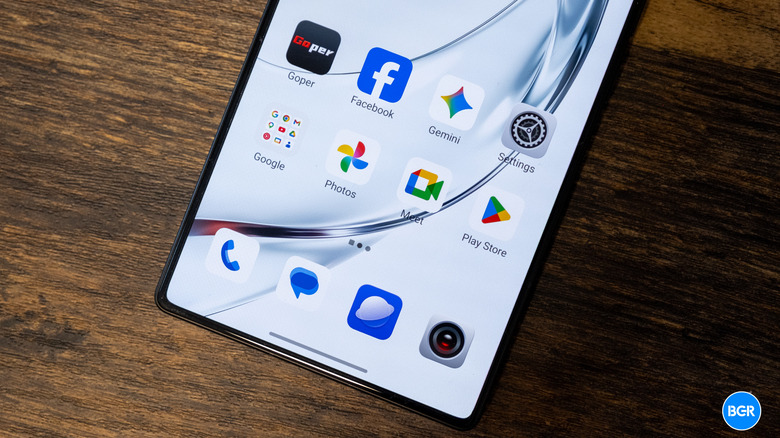
The RedMagic 11 Air runs RedMagic OS 11 on top of Android 16, and it's just fine. It's clean enough but looks a little dated overall, and there is some extra bloat that ships with the phone, though thankfully not too much.
The device also ships with RedMagic's Game Space, which allows you to dial in per-game CPU/GPU performance profiles, control the fan speed manually, map the shoulder triggers, overlay FPS and temperature counters, add crosshairs to shooters, and even run built-in PC emulation. It's genuinely a pretty deep feature. It's also, frankly, more than most people will ever use — even mobile gamers.
The device doesn't lean as hard into AI as some other recent phones, but as an Android device, it's still got Gemini baked into many aspects of its software. You'll get things like Circle to Search, translation, and more, but thankfully not too much cruft from RedMagic on top of that.
The software update commitment is pretty disappointing, though. RedMagic is promising two major Android updates and five years of security patches. That's well behind Samsung and Google, both of which offer substantially longer windows, and it's worth factoring in if you plan to hold onto the phone for more than two or three years.
Conclusions
The RedMagic 11 Air is a pretty interesting device overall. It's targeted squarely at gamers who want solid mobile gaming performance above all else. It's thinner and sleeker than plenty of other gaming phones, too. The trade-offs to all of that, however, come in the form of the camera system, which is below par, along with the lack of wireless charging and limited software support.
If you're looking for a device that prioritizes gaming and don't mind giving up other standard features many other phones in this price range have, then the RedMagic 11 Air is definitely worth considering. If, however, you want something a little more well-rounded, then it might be worth considering something like the Nothing (4a) Pro.
The competition
The RedMagic 11 Pro is the natural step up if you've got another $200 in your budget. It will get you the Snapdragon 8 Elite Gen 5, IPX8 waterproofing, a brighter screen, a better ultrawide camera, and liquid cooling on top of the fan.
There are also devices like the Nothing Phone (4a) Pro, which are not really targeted at mobile gamers and don't perform anywhere near as well as the RedMagic 11 Air. The Nothing Phone (4a) Pro gets you a much better camera and software that I prefer, thanks to its cleaner and more modern feel.
In terms of thin phones, the obvious alternatives are the iPhone Air and the Samsung Galaxy S25 Edge. However, both of those are substantially more expensive than the RedMagic 11 Air. These prioritize being thin above other elements, though the cameras on both are better than what RedMagic offers, even in the case of the iPhone Air, which lacks an ultra-wide camera.
Should I buy the RedMagic 11 Air?
Yes, if you prioritize mobile gaming performance above all else.