

What The RS-232 Port On Your TV Is Actually For
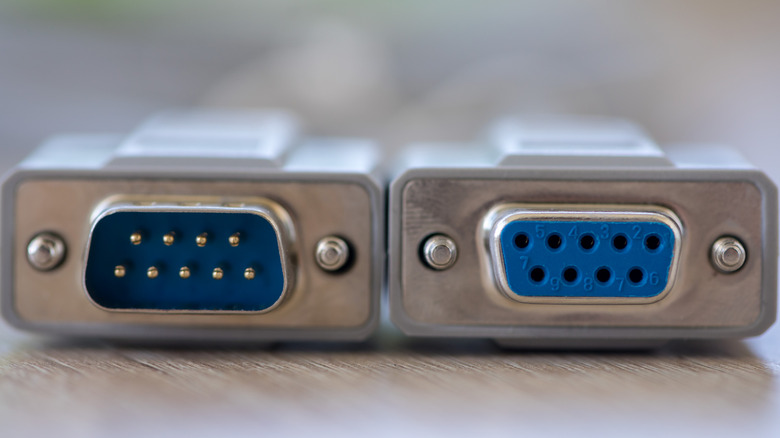
You might have a nine-pin port on the back of your TV, known as an RS-232 serial port, or sometimes just a serial port. This same type of port is commonly used to connect a computer to a printer, but you've probably never used the RS-232 port on your TV. So, what is it actually for?
The RS-232 standard is used specifically to transmit commands from one device to another. Unlike other ports on your TV, it has nothing to do with communicating audio or video signals. Its primary purpose is to reliably control one or multiple TVs via cable from afar. Commercial businesses use RS-232 for automating digital signs or entire walls of screens because it is a simple, reliable serial communication standard that's also inexpensive at scale. Even though RS-232 is often considered the predecessor of USB, there are still many use cases where it is the most practical solution for displaying the same content on multiple screens at once.
There are also cases when the RS-232 port can be used to perform repair diagnostics or correct software bugs in smart TVs. For example, LG has provided documentation that technicians and advanced coders can follow when flashing software updates to faulty panels. This is another instance in which the RS-232 port is intended for professional use only; the idea that an average consumer should try to fix a TV with a DIY solution is one of the biggest tech repair myths you should stop believing.
Using your TV's RS-232 port to automate at home
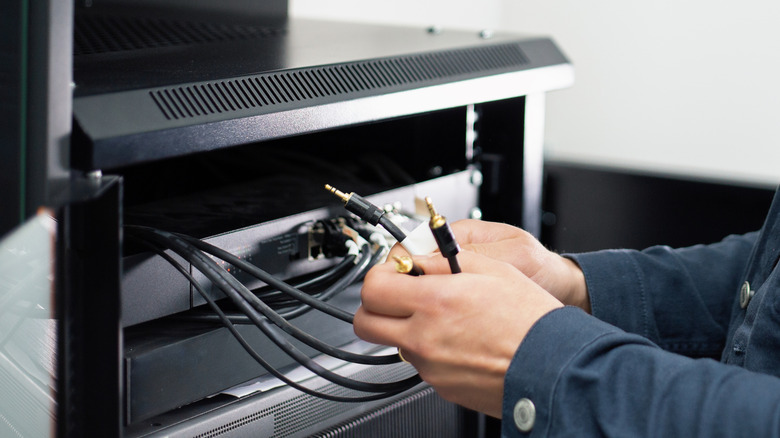
Your TV's RS-232 serial port provides a viable way to integrate the screen into a home automation system. You can even connect multiple devices with RS-232 ports to a computer or smart home controller running a home automation system, and take full advantage of your smart home by bringing together your TV, projector, and audio system into one home theater environment.
However, manufacturers have warned that the RS-232 feature is not intended for use in the normal operation of consumer TVs. This means there is no consumer-accessible support for using the RS-232 port to automate your TV controls. While this shouldn't necessarily deter you from moving forward with your home automation project, manufacturers recommend hiring a professional custom installer when implementing a custom integrated audio/video (A/V) system. Setting up your own automated home theater requires specific A/V programming knowledge that you can't learn in a quick crash course.
The RS-232 standard has been around since the 1960s, but you might have noticed that it's becoming less common in modern TVs from brands like TCL. The TCL QM6K series is one of the best TVs for minimalists in 2026, but neither it nor its popular mid-range counterpart, the QM7K, has an RS-232 port. If you're eager to set up a home automation system that leverages a steady, long-distance serial connection, you might have to shop around to find a modern TV that actually has an RS-232 port.