

5 Major Companies Owned By Meta
Since its founding, Meta hasn't been shy about purchasing various companies. From WhatsApp and Instagram, to smaller unknown companies it's now fully integrated, the social media giant has spent quite a fair bit on buying up the competition. Over 100 purchases have been made, which owner Mark Zuckerberg has said is always to grab the talent, not the company itself.
In 2021, Meta changed its name from Facebook, marking a new era. A new focus on burgeoning tech sectors, like virtual reality (VR) and artificial intelligence (AI), has caused some huge bills to be racked up. It's anticipated that in May 2026, the company will lay off 8000 employees. Part of this is also an increased spending budget, up to $145 billion. In 2025, it spent $72.2 billion as the AI rat race continued.
As of 2026, the organization has around 80,000 employees across all the companies and divisions it owns. Meta is now far more than just the social media startup it began as.

Alongside WhatsApp, it's safe to say that Instagram is one of Meta's biggest purchases. The photo-centric social media app has gone on to accumulate around 3 billion users, and become a go-to app for many. It now includes vertical video with Reels, meant to compete with TikTok, and Threads, which was launched during Elon Musk's tumultuous takeover of Twitter, now X.
Meta purchased Instagram back in 2012 for $1 billion. At the time, it was Meta's largest purchase since buying Snaptu, an application host for internet-capable phones, for $70 million in 2011. Instagram has gone on to be a staple of social media, and can be directly integrated into Facebook if the user chooses.
Instagram has also been a hotbed of reactionary features. Much like Reels and Threads, which were created to keep users away from alternative platforms, Instagram also has Snapchat-like stories and filters. Surprisingly, it's most popular in India, with a reported 414 million users in 2025, with the U.S. coming in second with 172 million users.
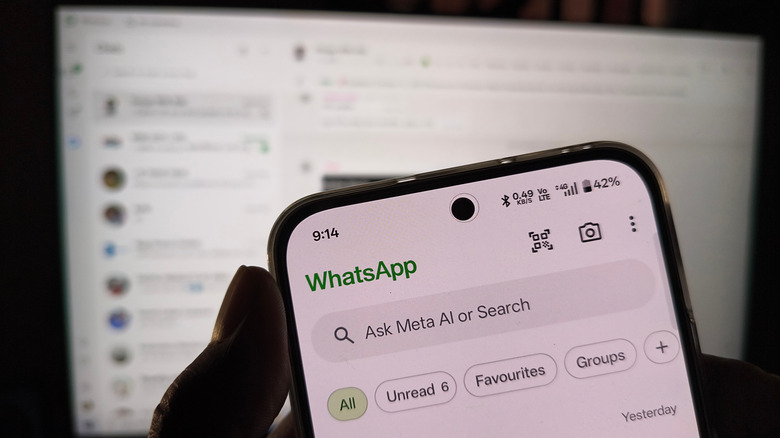
The main mixed device messaging app for most of Europe, India, and the U.K., WhatsApp has over 3 billion users, despite bans in countries like Russia and China. For many worldwide, it's become their primary messaging app, providing a completely free service that also features end-to-end encryption for additional security.
WhatsApp was released in 2009, created by Brian Acton and Jan Koum. The app rapidly grew, despite the original launch version not being stable. In 2013, a year before Meta purchased the company, it had an estimated 400 million monthly users. Then, in 2014, Meta purchased the company for a whopping $19 billion. It made a lot of people very rich, with a venture firm receiving a roughly 5000% return on investment.
The app remains incredibly strong, despite the rest of Meta being in relatively bad health. In May 2026, it rolled out its second subscription service, WhatsApp Plus, bringing customization options to the app, on top of the hidden features WhatsApp have squirreled away. It originally had a $1 subscription fee in 2013, before scrapping it in 2016.
Oculus VR (now Reality Labs)
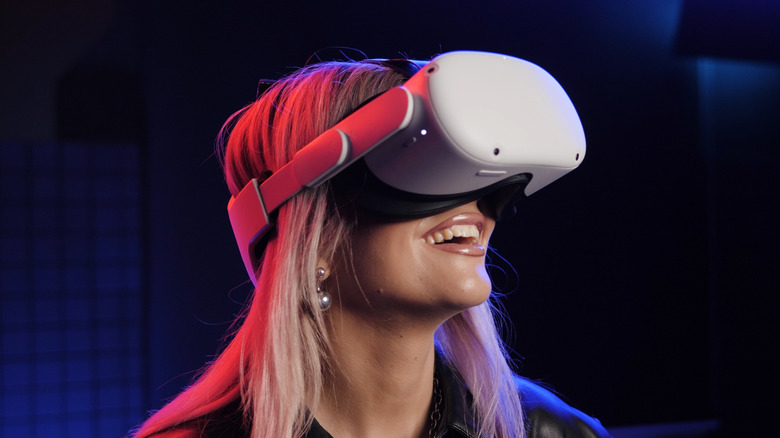
Is it Meta's largest and most important fumble? Maybe, as Reality Labs has now been at the center of billions of dollars burnt on products that never really stuck. Originally Oculus VR, founded by Palmer Luckey, it launched the Oculus Rift in 2016. The headset was a revelation for the virtual reality market, with subsequent headsets improving on the technology.
Oculus was bought for $2 billion in 2014, with Meta going all in on VR in 2021. With the successes of the Oculus Quest in 2019, the company pivoted to becoming a "metaverse" business. Oculus was renamed to Reality Labs in 2021 alongside the Facebook to Meta transition. The division has since lost billions, with an $80 billion loss reported across the board since 2020.
Meta's since laid off 10% of the staff from the unit, along with shuttering several game studios it snapped up, including Ready at Dawn and Twisted Pixel Games. Zuckerberg, seemingly bored with the vertical he pivoted his whole company towards, is now focused on AI.
Beluga (now Facebook Messenger)

An often forgotten fact is that Meta never really built its own chat function for Facebook. Beluga was a group messaging app for smartphones that featured image sharing across iOS and Android devices. In 2011, Beluga was bought by Meta for an unreported sum. None of the original team from Beluga is with the company in 2026, having all left by 2018.
Facebook Messenger has been paramount to crafting the Facebook social platform. Prior to Messenger being a thing, most private communication over Facebook was done through direct messaging, similar to old forums. By rebuilding Beluga as Facebook Messenger, the company finally had its instant messaging app.
Messenger continues to be an important aspect of Facebook, with the app operating independently of the main Facebook app. Its user base does lag behind Facebook in terms of monthly active users, but it still hosts around one billion users as of 2026. However, despite Meta's reputation for gathering data, it still enables end-to-end encryption on messages from Messenger.
Moltbook
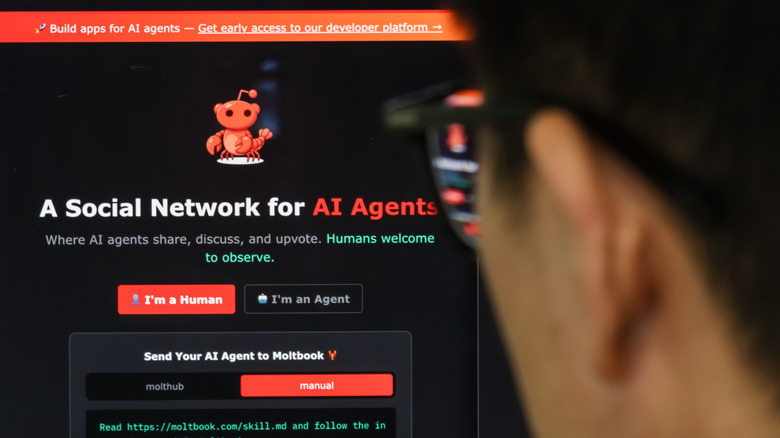
Meta's latest purchase, Moltbook, is an AI agent social media platform. Specifically designed to take input from agents as if they're posting to a message board, Meta snapped it up for an undisclosed sum. Much like most of Meta's AI fare, there's no clear indication of what the company intends to do with Moltbook, other than opening up "new ways for AI agents to work for people and businesses."
Moltbook initially went viral alongside the advent of OpenClaw, an all-in-one AI assistant. This can create an "agent," which is a way to "focus" an AI model on specific tasks. For instance, OpenClaw can be directed to interact with WhatsApp, or take full control of the PC it's stored on. OpenClaw can be directed, alongside non-OpenClaw agents, to post to Moltbook as if it were real.
Moltbook currently claims to have over 200,000 human-verified agents on the platform, and nearly 3 million total. The platform has been a hive of activity, with some spotting plots for singularity. However, reports from outlets about the platform have poked holes in how easy it is to manipulate, with CNBC, The Verge, and MIT Technology Review calling into question the authenticity of it being entirely AI agent-driven. Wired also proved how easy it was to manipulate the platform's content.