

China's New Breakthrough Could Power Drones Mid-Air With Microwaves
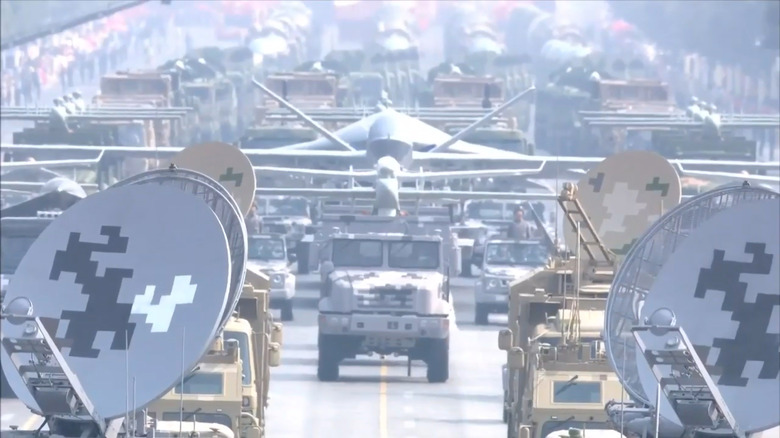
Chinese developers have produced a power transmission platform that could enable its military to expand its drone operations. Developed by researchers at China's Xidian University, it utilizes a car-mounted transmission system to emit microwaves that charge drones mid-air. Although the results of the study were mixed, experts believe that the system could be a preliminary step toward producing unmanned aerial vehicles (UAVs) that can patrol the skies for indefinite periods.
Of course, China isn't the only country looking to build energy transmission technologies. The U.S. Defense Advanced Research Projects Agency (DARPA), for instance, has invested in developing tech capable of transmitting 800 watts of power to targets more than 5 miles away, setting a global record. Because in-air recharge capabilities can enhance a variety of military operations, they are likely to become a major pillar of global drone programs. Although such advancements may change the shape of drone operations in the long term, the current slate of technologies continues to suffer from efficiency issues.
Ultimately, China's ongoing energy transmission efforts exemplify how technologies like drones, robotics, and artificial intelligence are swiftly changing the military landscape. As these innovations make their way into military drones, the scale and scope of warfare will continue to dramatically expand. Already, these changes are rendering catastrophic consequences across the Middle East, Africa, and Eurasia. In the Russia-Ukraine conflict, for instance, a frontline stalemate has given way to increasingly long-distance drone attacks, some of which have totaled over 1,000 miles away from the front lines. Orchestrating such attacks, without the costly overhead of missile systems, has proven critical to modern strategic playbooks. Microwave technologies could further revolutionize these conflicts, serving as both charging systems and drone defense weapons.
Microwaving drone attacks
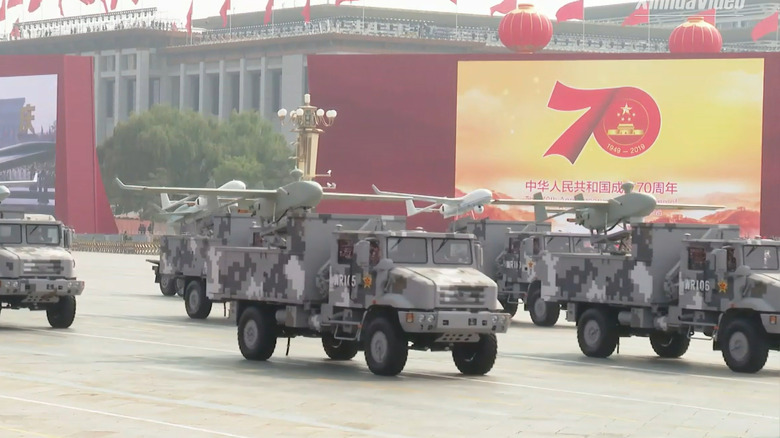
China's energy transmission project was conducted by researchers at Xidian University, a public research university with deep ties to China's People's Liberation Army via the State Administration of Science, Technology and Industry for National Defense (SASTIND). The platform, which will likely operate on a land-based vehicle used to launch and charge drone swarms, can potentially sustain the operations of fixed-wing drones for over three hours. Using a microwave emission system, it can beam microwaves to antennas located on the bottom or rear of a drone, thus charging the drone while still in flight.
The technology addresses an acute problem plaguing drone operations. For the most part, military drones are powered by lithium-ion batteries, whose finite energy density constrains operations. In fact, the immense need for lithium-ion batteries has forced the U.S. military to completely rethink its approach to the technology. Such problems are particularly acute for reconnaissance and defense missions. With limited recharging options available, soldiers may be faced with the dangerous prospect of retrieving drones unable to return before their batteries fail. Furthermore, the need for charging equipment can place additional constraints on operations and pose major logistical challenges.
This is not to say that China's microwave system is a foolproof solution. For one thing, only 3% to 5% of the device's energy was absorbed by its target. Environmental factors, such as wind, also proved challenging. Still, the developing technology is a positive indicator for scientists looking to expand the mission capability of drone operations. Critically, the team was able to overcome critical alignment issues while both the drone and its emitter were in motion via advanced GPS and flight control systems.
In search of a charge
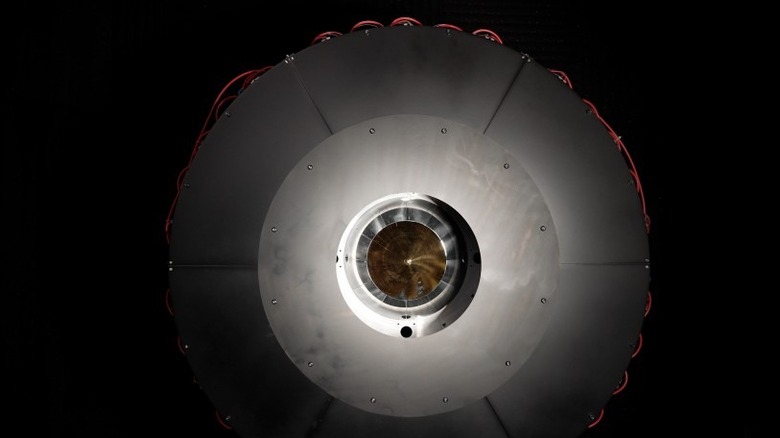
The breakthrough comes as China races to bolster its drone capabilities. In-flight charging is sure to constitute a major pillar of global military drone programs. In the United States, for instance, DARPA's POWER program looks to charge UAVs through a "wireless energy web" that conducts long distance transmissions "from a ground-sourced laser through multiple airborne nodes and back down to a ground receiver." According to a DARPA project summary, the Pentagon believes such capabilities could open "a novel design space for platform capabilities unbounded by fuel limitations," delivering the ability to "instantly beam power from a location where it can be easily generated to wherever it's needed." However, like China's recent experiments, such technologies have suffered from efficiency issues.
Of course, directed energy beams aren't the only novel technology capable of solving drones' recharging problems. One U.S. Army patent shows designs for drones capable of charging other UAVs mid-flight via central power banks. The U.S. Navy has even proposed using solar panels to power drones, achieving multi-day flights in July 2025. Moreover, this year, DARPA requested the defense industry build containerized systems capable of launching, recovering, and charging drone constellations. Such capabilities would mirror techniques executed by Ukraine and Israel in recent attacks on Russian airbases and Iranian nuclear sites, respectively.
Ultimately, building drone systems that can prolong the distance and duration of operations will be critical in gaining a leg up in the escalating drone race. Already, drone warfare has tangibly changed the scale and scope of military operations. If countries intend to keep up, they'll need to craft novel solutions to execute and defend against drone sorties. Extending battery life should be just one of several innovations in the pipeline.