

This Is The Cheapest Way To Get Into 3D Printing
We may receive a commission on purchases made from links.
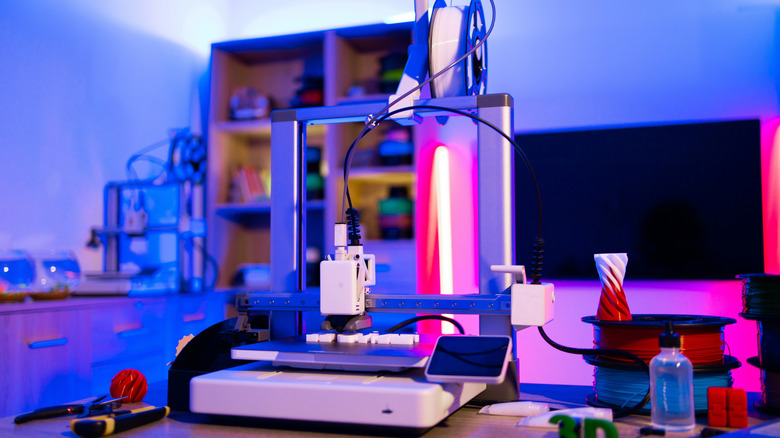
Diving into 3D printing offers access to a fascinating technology and a potentially excellent avenue for creative expression. As both a relatively young technology and a fairly elaborate one, though, getting into 3D printing isn't quite as cheap as some other hobbies or side hustles. While it's not exactly a drop in the bucket, you can get into 3D printing in a basic capacity by purchasing a no-frills, budget printer, sticking to the cheapest, most-readily available materials, and utilizing free, pre-made designs.
As 3D printing has risen in both popularity and ubiquity, multiple brands and manufacturers have gradually started to lower the bar of entry, offering simple, all-in-one packages you can pick up to get your foot in the door. You're still going to spend at least a couple hundred dollars for your initial investment no matter what, but that's compared to spending upwards of $1,000. Of course, this is all assuming you don't just pay someone to use their printer instead, but that option is better suited for occasional printing rather than embracing the hobby in earnest.
Use affordable printers, basic materials, and free designs
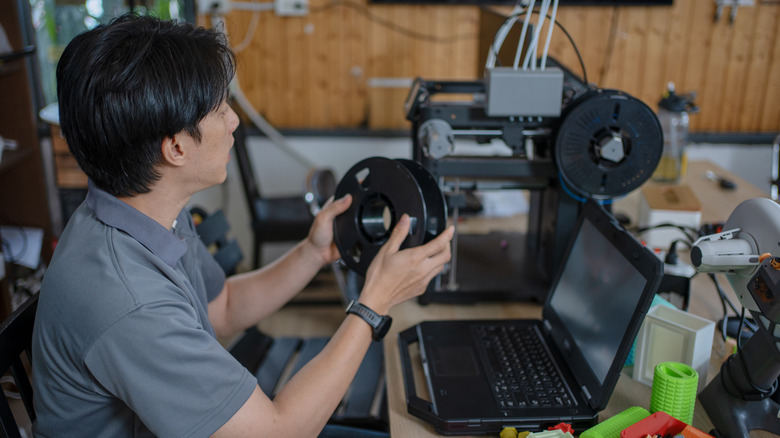
Broadly speaking, getting into 3D printing requires three specific elements: the printer itself, the materials you print, and the design you program in. The toughest decision is selecting your device. There are a lot of different 3D printers available, to put it mildly, running the gamut of sizes, extra functions, and overall complexity. Depending on what you want to use it for, you could be looking at a price tag anywhere from under $100 to more than $1,000. For beginners, it would be best to stick to reliable, budget-friendly models, such as Creality's Ender 3 V3, priced at a reasonable $219, or the Bambu Lab A1, for $299.99.
Once you have a printer to call your own, the next order of business is materials. You can't print anything without thermoplastic filament, which can get consumed faster than you expect, so you'll want to buy at least a couple of spools to start with. PLA filament will generally run you around $20-30 per kilogram (approx. $44-66 per pound), but you may be able to get it cheaper depending on the brand and color. Creality can provide again here, with a two-pack of its black and white PLA costing $30 on Amazon.
Finally, in order to print anything, you'll need a design. The complexity of the design will directly affect the cost. An elaborate, custom-ordered design could easily cost over $90, with prices only going up if you're paying a designer for hourly rates. If you want to save money here, either do the designing yourself in a program like Blender or download a free pre-made file from a 3D-printing enthusiast site.
Learn on someone else's device
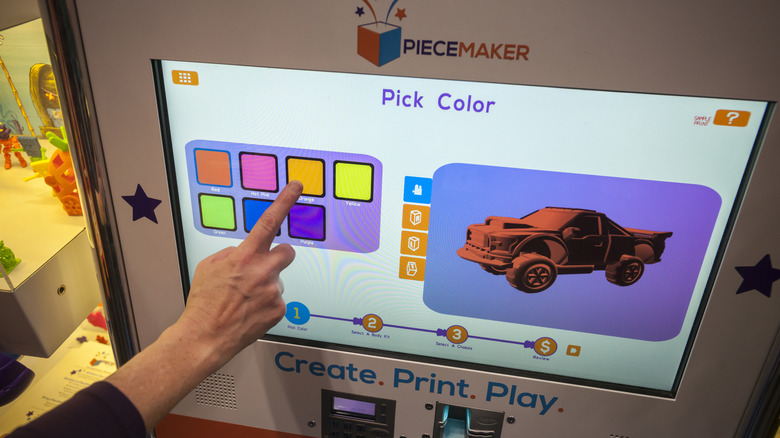
If the steep up-front costs and the potential for recurrent costs is intimidating, there is an alternative to owning your own 3D printer: paying someone else to use theirs. A great way to get into 3D printing before making that initial major investment is to seek out public-use printers and take them for a quick spin. You may be able to find a simple printer you can make basic prints on at your local library or university, which could be free to use or charge a flat printing fee.
For something more elaborate, you can search in your home's vicinity using Makerspace Directory for comprehensive 3D printing services, as well as Makerspaces and Hackerspaces, where you can book time on the communal printer. You can even connect to individuals who own 3D printers to book private jobs, so long as you're willing to cover the cost of materials. If you just want to get something quick and simple fabricated, these are all more economical options than owning your own printer, but, naturally, they don't offer the same kind of freedom or satisfaction you get from having a printer all your own.