

Your Next Amazon Kindle Might Feature A Battery You Can Replace Yourself
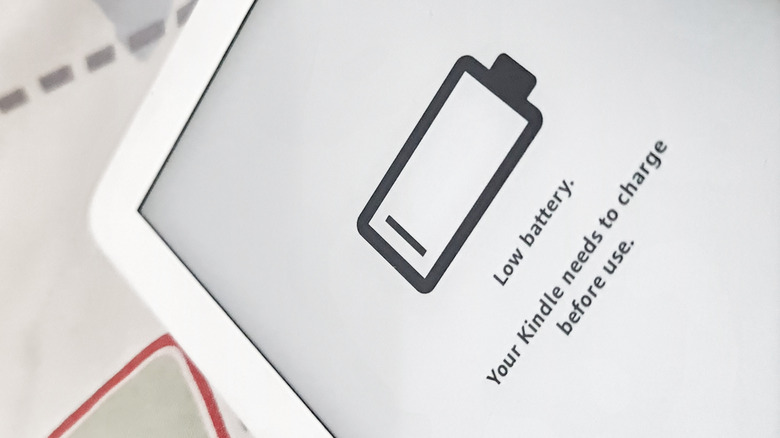
Most tablets and mobile devices are completely sealed off, so you can't replace components like the batteries. That's unfortunate since batteries naturally degrade over repeated charge cycles. A new software update for Amazon's Kindle series might suggest that won't be the case in future devices, though. In Kindle's 5.19.4 software update, there is a brief mention of user-replaceable batteries, as reported by Good E Reader.
More specifically, the text describes how to identify and deal with a non-working battery and coaches users through purchasing a replacement and installing it. It even mentions scanning a QR code to open a store page for the appropriate batteries. The original Kindle e-readers (First Generation) did have user-replaceable batteries – iFixit even has a guide for doing so. Newer devices are much less intuitive in that regard, with backings that are sealed shut versus the original model's easily removable back plate.
Degrading batteries are a major concern for the longevity of older devices and are necessary to consider when taking into account the average lifespan of a Kindle. Upcoming Kindle devices may include designs with replaceable batteries if the update text is any indication. This is likely happening so Amazon's Kindles adhere to a new European Union law, going into effect in February 2027, which requires all smartphones and tablets to offer replaceable batteries — and the ability to swap them out with no specialized tools required.
Why easily replaceable batteries might be a good change
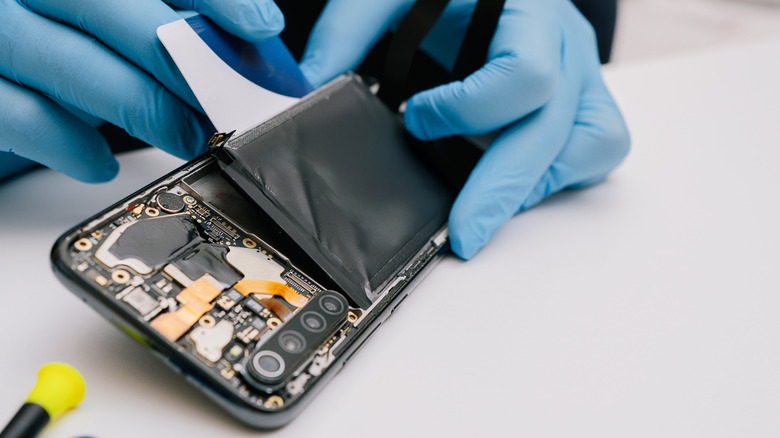
Battery degradation is natural, and it occurs whether you follow healthy battery practices or not, regardless of material and design quality. It's a complex process that involves many factors, not just charge cycles, though that does play a major role. Batteries naturally lose capacity over time when they're resting and not in use, but also from deep discharges, when they're emptied, due to overcharging, and environmental conditions like extreme temperature exposure or even heat buildup during use.
The point is that batteries get worse the more you use them, and when a device is sealed, without any intuitive way to replace a battery, it's going to eventually stop being useful. The devices with the most longevity are usually those that come with a replacement-friendly design. A high degree of repairability is also a net positive for the planet and humanity. There's less e-waste when a device can be revived or repaired.
Taking that full circle to a new line of Kindle devices with user-replaceable batteries, sure, it adheres to European laws, but it's also a net positive overall for modern devices. Believe it or not, there are still quite a few Android phones that have removable batteries in 2026. Although there are some concerns about this sort of thing showing up in devices that previously didn't have it. Some also feel it's a bad idea for the EU to force Apple into making phones with this functionality, as it could reduce things like their water-resistance and smart engineering.