

AI Might Finally Have A Real Use By Extending Your EV's Battery Life
AI has been embroiled in a number of controversies of late, from inducing mental fatigue to actively making users less intelligent. There have also been conflicts within the U.S. government over the use of AI in defense systems. There's also ongoing discourse around AI training on the work of artists, damaging the environment, or jeopardizing jobs across a number of industries. However, the news surrounding this seemingly inevitable AI boom isn't all bad. AI does have a number of potentially helpful applications.
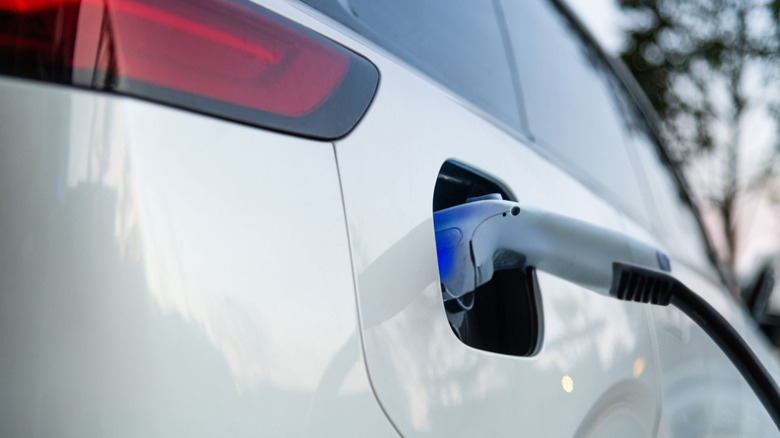
One of the most recent developments is environmentally friendly: helping to charge the lithium-ion batteries in electric vehicles in a way that extends those batteries' lifespans, without increasing charge time. A research team at Chalmers University of Technology in Sweden released a report that explains a new technique to allow EV batteries to be fast-charged while mitigating some of the deleterious effects rapid charging normally has on them.
The intelligence behind smarter EV charging
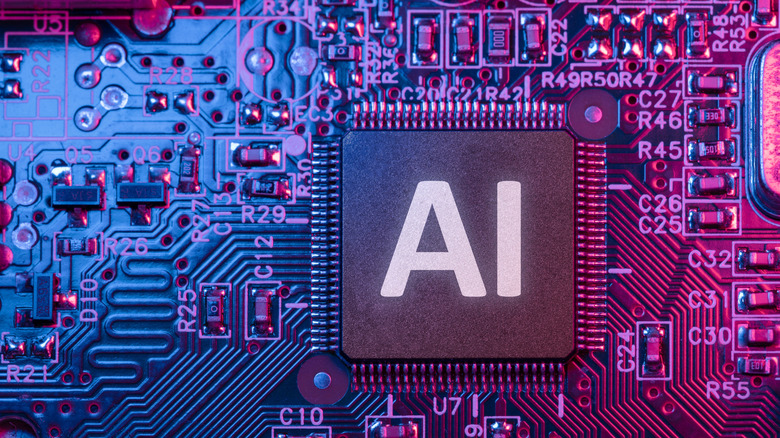
EV charging systems already rely on software through what's known as a battery management system (BMS). Lithium-ion batteries rely on the BMS to ensure that they can charge safely. The software carefully monitors factors such as voltage, current, charging cycles, and temperature. However, a traditional BMS relies on fixed mathematical models and predefined safety limits rather than adaptable factors.
Introducing AI to a BMS allows the software to learn and adapt based on large amounts of real-world battery data. Machine learning models make use of this library of data to predict how specific charging behaviors affect long-term battery health under different conditions and dynamically alter charging voltage and other parameters. For example, charging an EV battery at high speed during hot weather can accelerate degradation. An AI-powered system could detect higher ambient temperatures and slightly modify charging current or thermal management settings to reduce stress on the battery.
Because the BMS continuously monitors parameters such as voltage, temperature, charging behavior, State of Charge (SoC), and State of Health (SoH), AI-driven battery management can adapt charging behavior to the condition and usage history of each individual vehicle. This helps to optimize performance, charging speed, and long-term battery health on a per-vehicle basis.
Longer battery life may solve one of EVs biggest problems
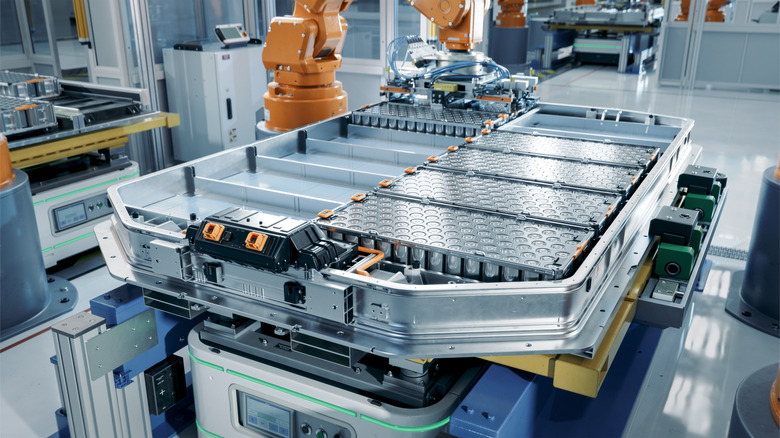
One of the major hurdles facing broad EV adoption is battery life. Buyers are concerned about degradation over time leading to a steady decrease in vehicle range or massive replacement costs for exhausted battery packs. AI-enhanced battery management could lead to extended lifespans for EV batteries and potentially lower add-on costs associated with EV ownership.
Research by the team in Sweden indicated that AI-calculated charging may extend the life of a standard lithium-ion EV battery by as much as 23%, without substantially increasing charging time. Longer-lasting batteries could decrease environmental pressure tied to mining and battery production by lowering replacement frequency.
That said, significant challenges remain. AI systems require enormous amounts of high-quality data to train effectively, and automakers must ensure these models (and the software applications that they drive on the consumer side) remain safe and reliable under common operating conditions. Some researchers are already examining how AI battery systems can comply with evolving automotive safety standards.