

AI Is Actually Moving Jobs Out The Tech Industry - Here's Why
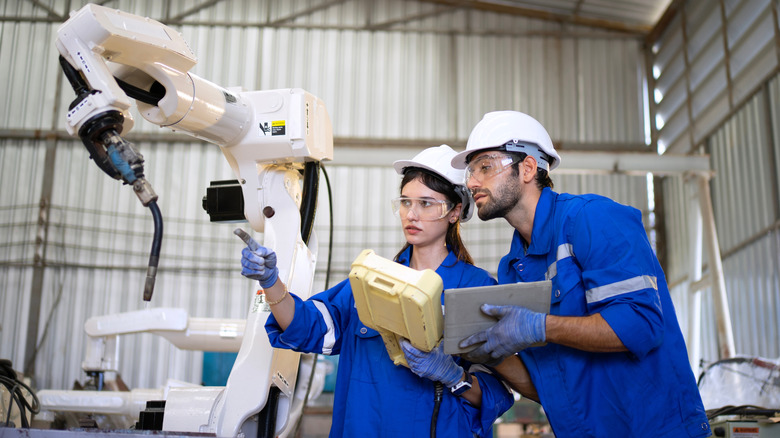
Artificial intelligence is certainly the current frontier of tech. A global survey conducted by McKinsey & Company suggests that 88% of companies are using AI in at least one business function. LinkedIn's Labor Market Report (link will download a PDF to your device) also indicates that there are 1.3 million tech experts working in AI engineering or similar roles. But that's a very AI-focused view of the overall job market. The bigger picture shows that AI is actually moving jobs out of the tech industry and back into trades.
Skilled trade workers have seen wage growth of up to 30% in the U.S. and are on equal financial ground with many traditional office jobs. In fact, the demand for blue-collar workers is higher than what the workforce can supply. A projection from Associated Builders and Contractors indicates that the construction industry must attract nearly 350,000 workers to address the current shortage.
The AI economy requires a robust physical infrastructure, and blue-collar workers are the only ones who can build it. Not only that, but blue-collar workers are the ones who are seeing AI enhance their jobs rather than replace them. A report from Top Employers Institute (link will download a PDF to your device) shows that up to 80% of blue-collar employees believe that AI will benefit their respective industries. They don't seem to see AI as a threat, likely because they are working in essential AI-proof careers.
Why white-collar jobs are being lost to AI

Despite the promise of a brighter AI-powered future, reports show that AI is responsible for as many as 16,000 U.S. job cuts per month. Historically, many of these have been tech layoffs blamed on AI. The most prominent example of this in recent events is the laying off of 8,000 employees at Meta as part of the company's "AI-first" transformation.
White-collar workers are the ones you can most easily imagine building and utilizing AI on a daily basis. So, why are white-collar roles being lost to AI? Statistics shared by National University indicate that "23.5% of U.S. companies have replaced workers with ChatGPT or similar AI tools," while 40% of businesses expect to further reduce their workforce once AI becomes capable of automating tasks.
Artificial intelligence works in the digital space — the same space where most office workers conduct their business as well. That's why the potential for it to replace white-collar workers is so high. But as Randstad CEO Sander van 't Noordende said in an interview with CNBC, "AI cannot build its own data centers." It wasn't too long ago that we questioned whether artificial intelligence might become essential for job security. Now, the answer is becoming clear: blue-collar workers might be the only ones with any job security whatsoever.