

4 EVs That Will Be Considered Classics In The Future
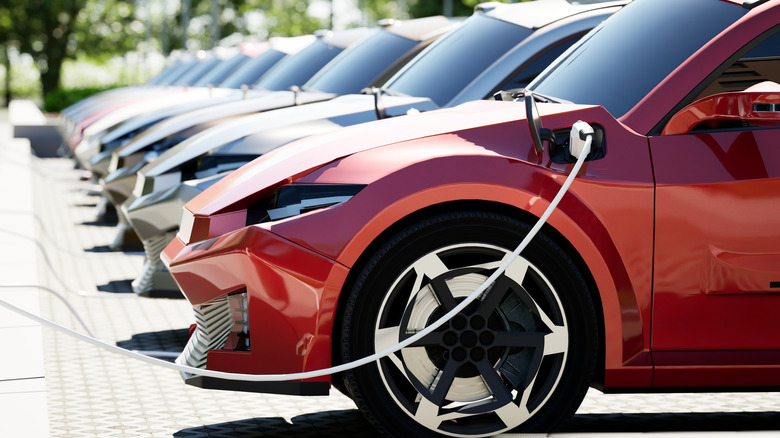
Electric vehicle technology still feels far too young for any EVs to truly approach "classic" status, but the day when we look fondly back on the legends of the field isn't that far off. After all, the first electric production vehicle was technically introduced way back in 1888 — the Flocken Elektrowagen. While it was more of a carriage than a car, it helped set the stage for the current EV Renaissance we're enjoying almost 140 years later.
There are a handful of modern EVs that are already enjoying the rarity, historical importance, and cultural footprint to mark them out as potential future classics. The pace of EV innovation and iteration is also speedy enough (with 3,000-mile-range EVs on the horizon) that we'll probably have a crop of certified classics far sooner than the internal combustion era. We're already getting there in many cases, with the earliest and most significant electric models positioned not just as transportation platforms, but as turning points in performance, design, and brand identity. They may not be the safest EVs or the cheapest EVs you can buy right now, but they're the cars most likely to stand the test of time.
OG Tesla Roadster
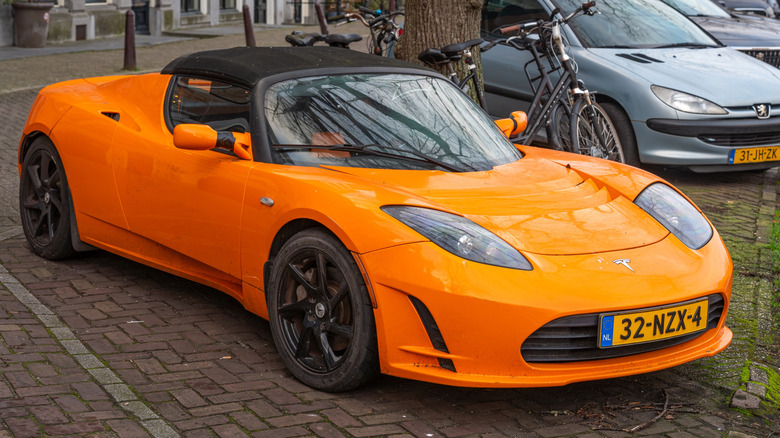
The original Tesla Roadster is the clearest early EV future classic because it's the car that brought the modern era of electric performance to market. Though Tesla only turned out 2,450 examples, giving it real scarcity, the model's place as the brand's first production car makes it historically important in a way that transcends collector appeal. The OG Roadster proved that an EV could be desirable and aspirational at a time when electric cars were still mostly treated as compliance appliances, when one of the main concerns around them was "but do they have any pickup?"
Classics are often remembered for starting something bigger than themselves, not just for being the best version of their type. The Roadster was never just about numbers; it was the car that demonstrated Tesla's ability to turn battery power into a hot, marketable product. Even damaged examples have sold for serious cash, and pristine ones have climbed much higher, a sign that the collector market has already started to assign historical value. In the future, the Roadster will likely be seen as the EV equivalent of a breakthrough first edition: imperfect, influential, and collectible.
2017 Chevy Bolt
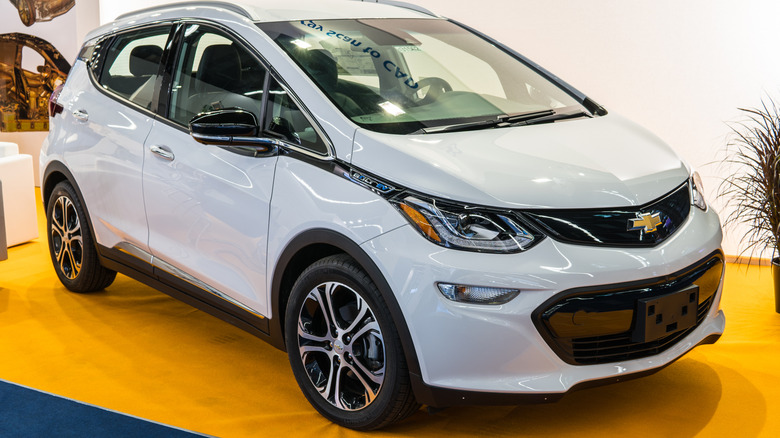
The Chevy Bolt, and in particular the 2017 model, has ensured itself a place in the EV hall of fame largely because of how it delivered long-range EVs to the masses. It was the first affordable EV with more than 200 miles of EPA‑rated range, making EV ownership practical and attainable for many buyers that would otherwise have eschewed the electric revolution. It was also one of the early EVs to make the case that owning an electric car wasn't only comparable to owning an internal combustion equivalent, but was in many ways a superior option.
Motor Trend named the 2017 Chevy Bolt its car of the year, hailing it as one of the earliest examples of an affordable EV that eliminated range anxiety. In a follow-up thirteen months after the publication's review, Motor Trend called the Bolt "the best EV for the money you can buy today," helping to secure its status as a future classic.
First‑generation Nissan Leaf
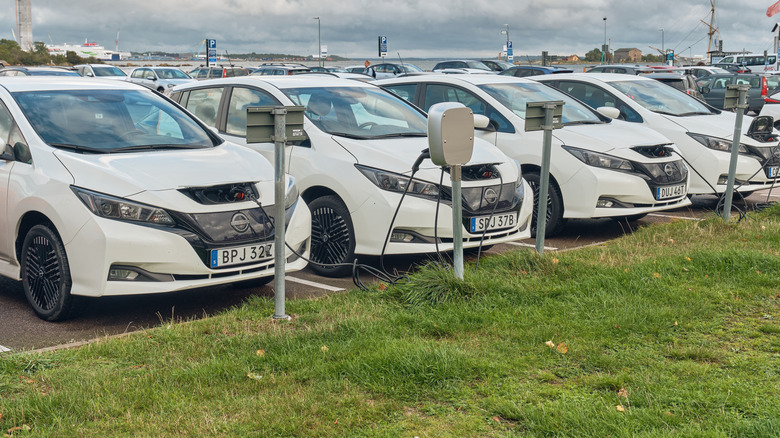
Similar to the Chevy Bolt, the first generation of the Nissan Leaf will be remembered not so much for its appeal to elite collectors as for its role in delivering EVs to a mass market. The Leaf represents one of the first mass‑market, series‑produced battery‑electric family cars, and it helped to secure mainstream status for electric vehicles when the technology was still very much in its infancy. The Leaf represents something of an inflection point in the electric vehicle market, where EVs stopped being purely a novelty or existing in the realm of concept cars or as tech demos and started actually appearing in the driveways of average consumers.
Everything about the design of the Leaf speaks to its role as a practical choice and everyday driver for average consumers, from its modest, simple design to smart accessibility choices like including the charging port on the very front of the car. The first-generation Leaf is an authentic artifact of the first wave of modern EV adoption.
Mustang Mach‑E
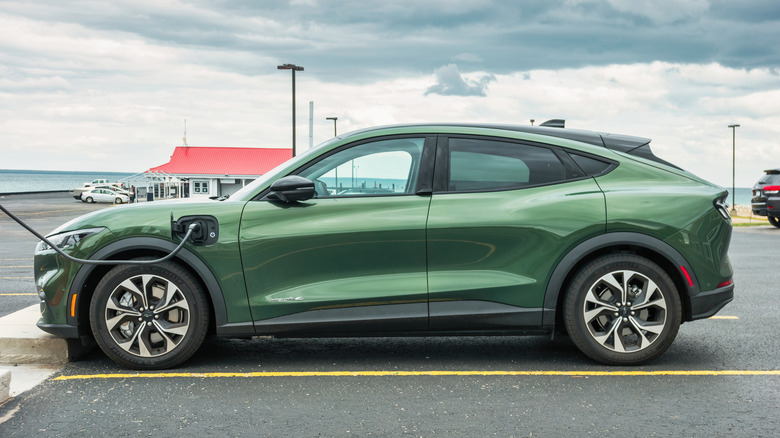
The Mach-E will be remembered as a classic in large part because of how it represents the intersection of American muscle car culture and forward-looking technological innovation. It brought a classic nameplate to the electric vehicle market, showing that EVs were able to reach into sectors of the market that had been previously inaccessible.
Consumer adoption has proven that the Mach-E was a smart gamble for Ford, with sales in 2024 outstripping sales of gas-powered Mustangs by over 17%. The Mach-E is a blend of classic Mustang style, substantial performance (including GT‑spec trims with 480+ horsepower), and modern EV utility. It manages to walk a fine line, combining sleek aesthetics with practical extras like a rear hatch and flat-floor cargo area. It's the exact cocktail that leads to any vehicle, be it combustion powered or electric, being remembered decades after its introduction: iconic branding, strong sales, and a clear place in the EV‑transition timeline.