

Yellowstone's Lawless 'Train Station' Is Based On A Real Region In The American West
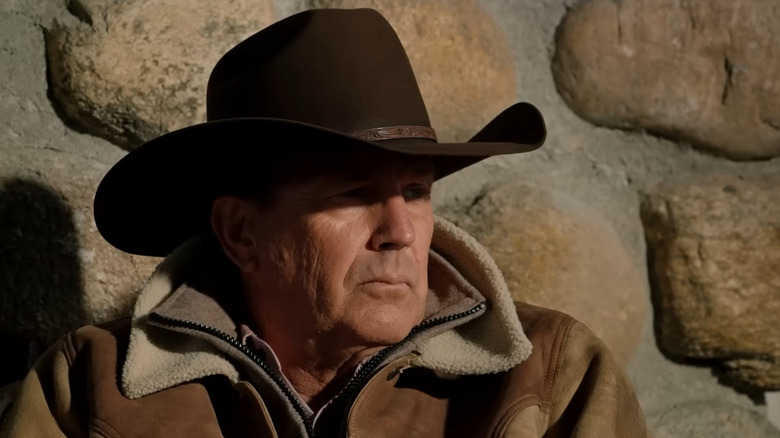
Even if you don't like the Western movie genre, Paramount's neo-western drama TV series "Yellowstone" is captivating to watch. For five seasons, we watched the powerful, fiercely loyal, and undeniably complicated Dutton family strive to protect their huge Montana ranch from those who encroach on their land. Though the gripping flagship series finished in 2024, the Dutton family exploits didn't end there. There have been prequels – "1883" (one of the best miniseries on Paramount Plus) and "1923" (which has its second season debut to a perfect critic score) — and there have been sequels – "Marshals" and "Dutton Ranch" — and there are at least two more spin-offs in the works.
Regardless of the time period, there's one thing for certain: the Dutton family will do whatever it takes to protect their land and their legacy and, in "Yellowstone," that means committing the occasional murder. Fortunately, the Duttons and their branded workers have the perfect spot for executing those who cross them — or simply disposing of their bodies — without repercussion: the "Train Station." This lawless canyon area provides a legal loophole that prevents criminal prosecution, and you might be surprised to learn that it's based on a real-life location.
What is 'Train Station' in the Yellowstone TV show?
Discovered by mining tycoon Donald Whitmore in 1923, the "Train Station" is a rural canyon area that sits beyond the Montana border in Wyoming where the Dutton family can dispose of bodies, or commit murders, without legal consequence. That's because it is government-owned land, with no-one living within 100 miles. Or, as Lloyd Pierce puts it: "It's a county with no people, no sheriff, and no 12 jurors of your peers."
The Sixth Amendment of the U.S. Constitution states that, in all criminal prosecutions, the accused has "the right to a speedy and public trial, by an impartial jury of the State and district wherein the crime shall have been committed." The important part of this amendment (as it relates to this topic), is that jurors must come from the district where the crime has been committed — it's also referred to as the Vicinage Clause. With no residents living in the district, the "Train Station" falls into a legal gray area of the Sixth Amendment, which means crimes are unable to be prosecuted. In other words, it's the perfect place to dump a body.
The real place the Train Station is based on
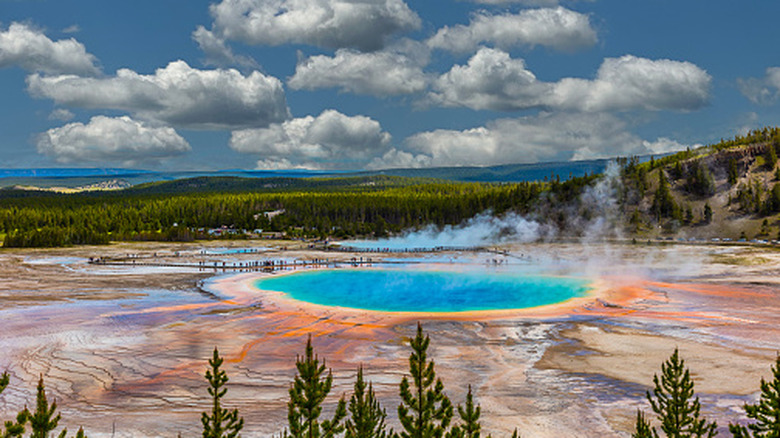
The Dutton's so-called "Train Station" is actually based on a real place in Yellowstone National Park, a 50-square-mile area located in the Idaho section of the park referred to as the "Zone of Death." The national park is under the jurisdiction of the District Court of Wyoming, and it's the only district court that includes lands in multiple states.
So, if someone should commit a crime in the "Zone of Death," they are entitled to a trial by their peers as per the Sixth Amendment, which, in this case, would be those living in the Idaho section of the Wyoming District Court. The problem is, no one lives in this area and therefore a jury couldn't be formed. So, the person who committed the crime could, potentially, walk away free.
In 2005, Michigan State law professor Brian Kalt published an article on this legal loophole in the Georgetown Law Journal, titled "The Perfect Crime," which coined the term "Zone of Death" and drew attention to the issue. However, in a 2008 follow-up article titled "Tabloid Constitutionalism: How a Bill Doesn't Become Law," Kalt revealed that despite his attempts to lobby Congress to change the law and close the loophole, the "Zone of Death" remains.