

Old Smartphones Are Being Used In An Unexpected Way To Protect Nature

Smartphones give users the power to search the internet, make phone calls, send direct messages, and snap a photo within seconds. They're a powerful piece of technology that provides a little more convenience in day-to-day life. Yet in the hands of a professor and research team at the University of Massachusetts Amherst's Manning College of Information and Computer Sciences (CICS), smartphones are being used in a rather unique way. Old smartphones that no one is using are being turned into cameras and sensors to scan the environment.
The technology will be used to detect and track how climate change impacts nature, such as trees and rivers. It's a partnership with the PhenoCam network at Northern Arizona University and GaugeCam at the University of Nebraska at Lincoln. It's being done in an environmentally friendly way that is kind to nature. The phone batteries are being removed and replaced with a case that is powered by a battery-free system. In its place is a capacitor array powered by solar and wind harvesters built into the case itself. Both the capacitor array and case are designed to be biodegradable as well. It's a clever way to repurpose your old phone and helps scientists track data without buying expensive monitoring cameras.
The details of these ecosystem monitors
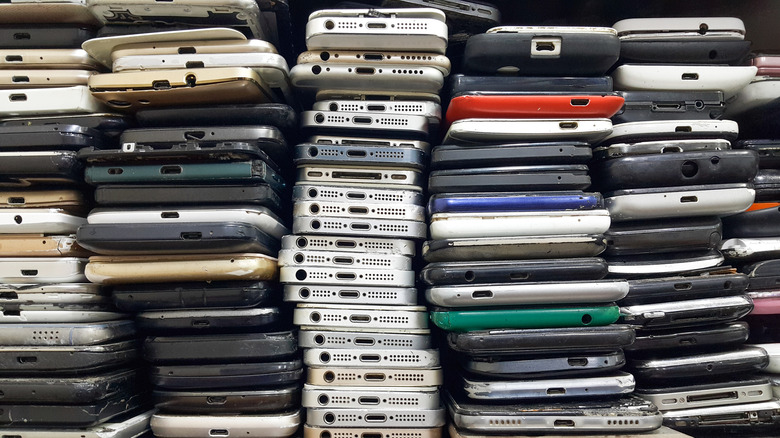
Created by VP Nguyen, assistant professor at the University of Massachusetts Amherst, the goal is to use repurposed smartphones as cameras to monitor the environment. Through a $600,000 grant from the U.S. National Science Foundation, the project focuses on using renewable energy and battery-free devices to detect changes in nature. More specifically, by observing trees, scientists are looking to gain information that will help preserve and restore the planet. The research focuses on monitoring the health of individual trees to see what effect climate change has on them.
This data can be used to get more precise details for analyzing the environment. Alongside using old smartphone cameras, the project looks to develop implantable sensing arrays, tree wearables, long-range communication, and ways for AI to provide continuous calibration, all focused on the health of plants. Nguyen says it's an important factor in conserving agriculture, horticulture, and the environment. The project is all in an effort to better protect the environment, and researchers are looking at various ways to make it all sustainable, similar to how there is self-eating plastic to cut down on waste. With the average American changing their phone out every two years or so, there's a lot of technological waste that Nguyen wants to prevent.
This isn't the first time phones have been used to help the ecosystem
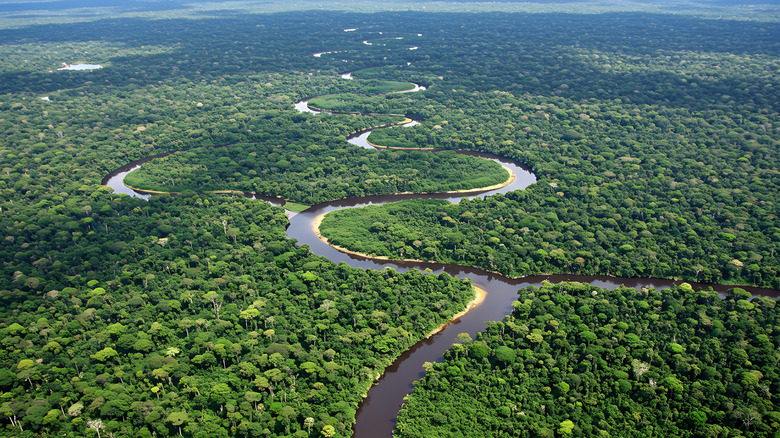
Using old smartphones to help protect the environment isn't a new concept, but it's no less important. Rainforest Connection uses technology to monitor the ecosystem, preventing illegal logging, poaching, and even tracking wildfires. Engineers developed a way to use smartphones to listen to the forest by adding solar panels, external microphones, and customized software to them. This created a network of smartphones that could hear throughout the rainforest in a way people weren't able to.
By placing the smartphones in the tree canopy, they're able to pick up a wider array of sounds. Building what was called the Guardian 1 (G1), the phones offered real-time bioacoustic monitoring that stretched across a three-square-mile radius. Not only can the Guardians detect the sound of chainsaws, engines, or gunshots, but technology like it is also being used to discover new species and has recorded more than 300 million minutes of rainforest audio in an effort for better protection. While people are keeping their smartphones for longer, old phones are being put to good use. Technology is able to live on in another life thanks to the efforts of researchers who are helping prevent potential waste by using it to better serve and protect the planet.