

Why Nuclear-Powered Pacemakers Are More Practical Than You'd Think
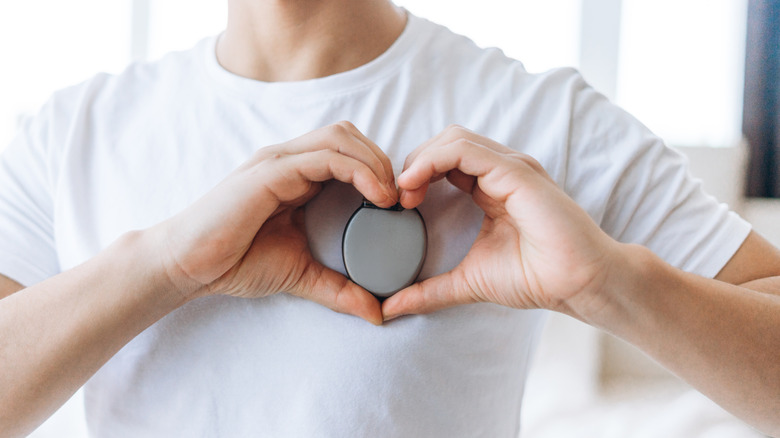
While modern pacemakers have become impressively compact and reliable, they still depend on finite batteries that eventually wear out. For many patients, that window of battery life is between five to 15 years, and when the battery stops working, you need another surgery to replace it. And while you should have a quicker recovery time when getting the battery changed out, wouldn't it be better if a pacemaker's battery lasted your entire life instead? That was the idea behind nuclear-powered pacemakers when they hit the medical scene in the 1970s, and the idea makes a lot of sense.
When they were implanted in the 1970s, the nuclear-powered pacemakers were meant to last several years, with at least one patient's pacemaker continuing to run for 35 years after it was implanted. That's over double the battery life of a modern-day pacemaker's life expectancy, which would mean less intervention and fewer surgeries for patients with nuclear pacemakers. Not only would that help cut down on the cost of maintaining the pacemakers, but it would also reduce the risk of any negative side effects associated with the surgeries surrounding modern-day pacemakers.
Nuclear-powered pacemakers are perfectly safe

Despite the loaded name, a nuclear-powered pacemaker is a far cry from the powerful reactors that you might think of when you hear the word nuclear. In fact, the small plutonium-based batteries inside of the pacemakers were made up of only around a tenth of a gram of plutonoium-238 — the same material used to power NASA's Voyager 2 probe, which has continued to explore space for almost 50 years. It has a half-life of 87.7 years, and generates energy using the heat that is created as it decays.
Not only did its half-life make Pu-238 a useful option for powering the pacemakers, but it only emits alpha particles, which are actually very easy to shield from. When the medical industry tested them in the 1970s, the nuclear-powered pacemakers were placed in a titanium casing, which mitigated the potential radiation threat to the body. At the surface, the dosage rate that the patient received would be equal to just the dosage received from a dental x-ray. Considering the lack of risk, and the inherent increase in battery life that they would offer, nuclear-powered pacemakers would make a lot of sense, especially for patients who are going to need a pacemaker for the next 30 to 40 years of their life.
Regulations are holding things back

At the moment, regulations are the biggest thing holding back the potential of nuclear-powered pacemakers. That's because Pu-238 is a manmade material. Not only that, but it is extremely expensive to produce. Combine that with the nuclear radiation that it gives off, and even though it can be blocked using the right type of casing, regulations around nuclear material remain strict. The experiment was shut down back in the 1980s because of the difficulty of tracking the material after the pacemakers were implanted in the patients. In many cases, the pacemakers were actually outlasting the patients, and even the hospitals that implanted them.
This raised some safety concerns over where the plutonium used in the devices might end up, and how it might affect the environment. The lack of flexibility in the regulation of nuclear waste, even in small doses like those used for the pacemakers, is what many attribute the decline of Pu-238 batteries to. However, with new research into nuclear batteries once more increasing, and a better understanding of how long nuclear waste lasts, perhaps the idea of nuclear-powered pacemakers could find new life.