

How Long Does Nuclear Waste Last?
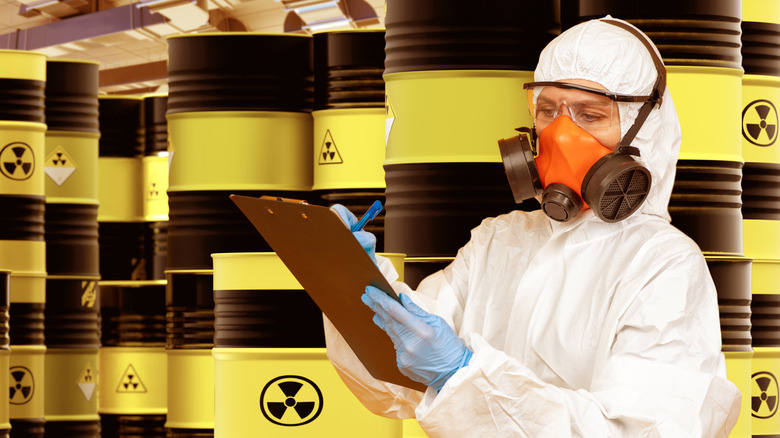
When nuclear power is used to generate electricity, a small amount of waste is created in the process. Because nuclear fuel is dense, only a small amount is needed to produce massive amounts of electricity. The ratio of waste to energy generated is one reason that nuclear power has been such a popular alternative to other options, such as fossil fuels like coal. However, nuclear waste continues to be one of the biggest problems surrounding the use of nuclear reactors, especially since nuclear waste remains dangerous for years, decades, or even centuries after disposal.
The biggest reason for this is because some nuclear byproducts have long half-lives, which is the time it takes for half the radioactive atoms in the waste to decay. This can vary depending on the specific byproduct. Some isotopes may decay in hours or as quick as minutes. However, some of the more common isotopes like strontium-90 and cesium-137 have half-lives of 30 years.
Other types of byproducts can have much longer half-lives. For example, when uranium atoms absorb neutrons in a nuclear reactor, one of the most common byproducts is plutonium. However, it could be any number of types of plutonium, of which, the five most common are plutonium-238, plutonium-239, plutonium-240, plutonium-241, and plutonium-242. Each of these have different half-lives, too. Plutonium-241 has a half-life of 14.4 years while plutonium-239 has a half-life of over 24,000 years. Ultimately, the length of time that it takes for nuclear waste to decay varies depending on the exact type of isotopes involved.
Can nuclear waste decay be sped up?
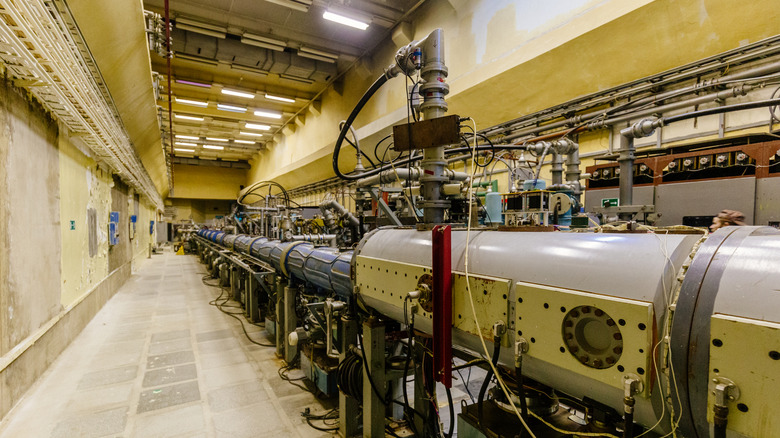
While there has been some positive research into the possibility of speeding up the decay of nuclear waste (a study published in 2004 suggests that it may be possible to do so), scientists are still working on the specifics. There have been promising efforts in this movement recently, with research like the NEWTON project, which hopes to use particle accelerators to change dangerous radioactive isotypes with longer half-lives into less radioactive isotopes that have shorter half-lives. That would allow scientists to shorten the decay of certain nuclear materials from 100,000 years to roughly 300 years.
There are still some ways that nuclear waste can be useful, too. Countries like France, Japan, and Germany recycle plutonium to help generate electricity. However, as scientists search for safe ways to speed up the decay rate, it's important to mitigate the risks of exposing groundwater, plant life, and human lives to the radiation present in high-level nuclear waste such as spent fuel rods.
Safe storage is still important
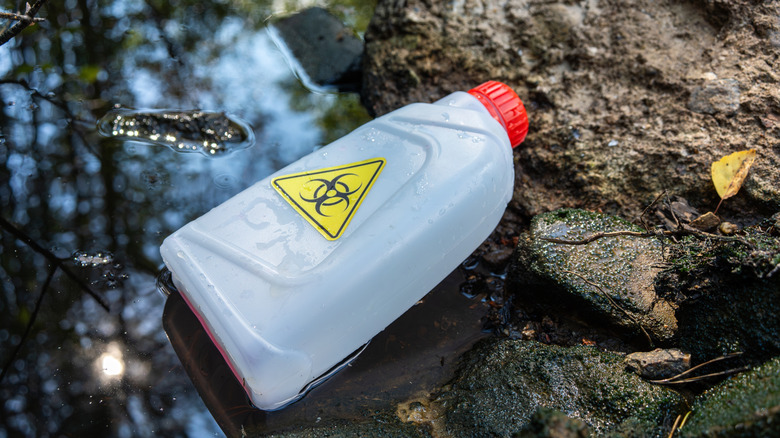
Even with attempts to speed up decay, nuclear waste still needs to be properly stored or else there are risks of contaminating the surrounding environment. Plutonium, one of the primary types of nuclear waste, is considered the most dangerous substance in the world. As such, transporting and storing it safely without having radiation leak into the surrounding environment is paramount. Plutonium itself is typically stored by stabilizing the isotope in a solid oxide and then sealing it within several corrosion-resistant containers. This prevents leaks and oxidation, allowing for the material to be stored safely while it decays.
The U.S. Government Accountability Office estimates that the United States has around 100,000 tons of spent nuclear fuel from commercial power plants, and with interest in nuclear power rising again, and the U.S. looking to build next-gen nuclear reactors, that tonnage is going to increase. Being able to store all of that safely means finding new ways to approach the problem, such as building underground storage bunkers for radioactive materials. Some have even suggested sending nuclear waste to space for long-term disposal, however the costs attributed to such a plan make it unfeasible, according to the U.S. Department of Energy.