

Part Of A SpaceX Rocket Will Be Hitting The Moon At Mach 7, According To Experts
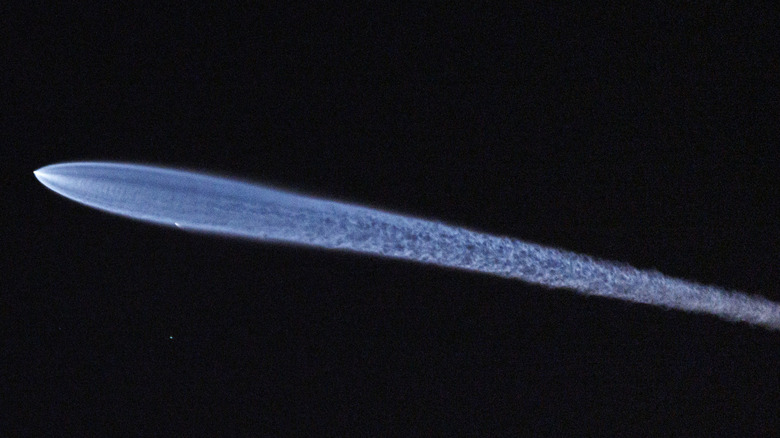
The upper stage of a SpaceX Falcon 9 rocket is set to impact the Moon at over seven times the speed of sound in August this year. The object has been tracked by noted astronomer Bill Gray, who published the details of the event on the Project Pluto website. Gray noted that it was first identified as a Falcon 9 upper stage by his software in September 2025 and confirmed to have an impact trajectory with the Moon.
The object was first tracked by the U.S. Space Force's tracking and cataloging system, showing that the object was the 10th rocket to launch to orbit in January 2025, and the fourth piece of hardware to be tracked from it. The launch in question was a SpaceX Falcon 9 that launched on January 15, 2025, to deliver Firefly Aerospace's Blue Ghost Mission 1 lander and the Hakuto-R Mission 2 lander to the lunar surface. The Blue Ghost mission lander went on to land successfully, while the Hakuto-R Mission lander crashed on the surface.
The Falcon 9's upper stage was tracked traveling at a velocity of 5,400 mph (or just over Mach 7) and will vaporize when it hits the Moon, leaving nothing but a small crater and some scattered rocks. This is not the first time Gray had predicted such an impact — the Chinese Chang'e-5 T1 upper stage was tracked until it impacted the Moon back in March 2022.
Why accidental moon impacts matter
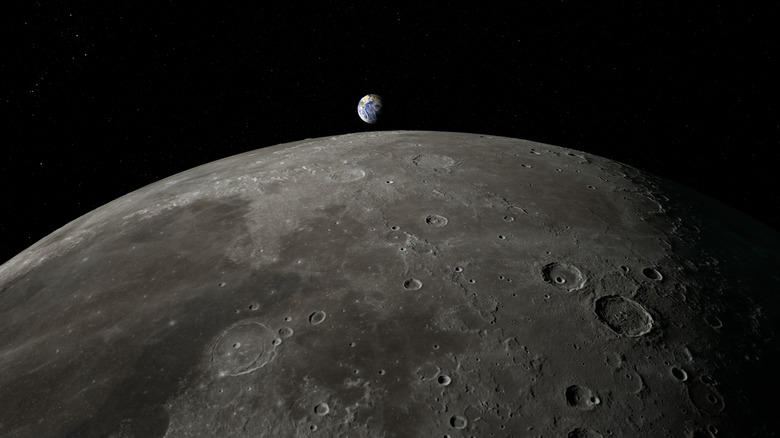
While the scale of the Falcon 9's second stage impact will leave few concerned, this kind of accidental impact will become a real problem in the near future. NASA intends to establish a fully functioning lunar base as part of its commitment to achieve the National Space Policy. With that mission, there will come an increased cadence of launches to the Moon, meaning it will be up to government agencies and commercial space companies to ensure that rocket stages are disposed of by using controlled disposal trajectories.
NASA currently tracks space debris on a permanent basis, with special focus on objects that may conflict with the International Space Station (ISS). Debris strikes on the ISS can have disastrous outcomes, and the ISS is known to regularly conduct orbital altitude adjustments to avoid space junk.
In a time where Lunar missions are flown regularly, space junk avoidance will become critical. The U.S. Space Force may be required to start tracking debris further afield to help mitigate the risk of debris impacts on spacecraft traveling to and from the Moon, as well as impacts on the surface when the Moon base is eventually established.
Space junk in the spotlight
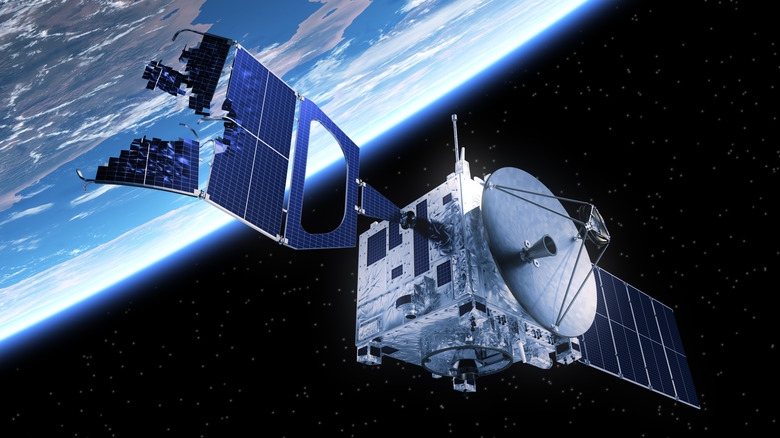
Many government agencies are showing growing concern over the presence and rising dangers of space junk. According to a 2025 European Space Agency (ESA) report, space traffic has seen notable changes since 2015 with the introduction of commercial satellite constellations like SpaceX's Starlink. The company confirmed earlier this year that it had reached a 10,000-satellite constellation in Earth orbit. SpaceX in particular has become very successful at launching orbital payloads with its Falcon 9 rocket, holding a Guinness World Record for the longest streak of orbital launches without failure. The ESA report highlighted the dangers around the upswing in space traffic and detailed several unintended collisions between operational payloads and space debris — making the presence of space debris significantly more difficult to track.
With space junk becoming a significant problem in the modern space era, several concepts have already been developed to deal with this issue, conceptualizing the use of giant nets, electromagnets, and even harpoons. None of these concepts have materialized yet. In addition to the dangers posed in spaceflight, there have been several occurrences of space junk deorbiting through the Earth's atmosphere and landing in random locations around the globe. The risks are becoming increasingly likely that accidental orbital space junk could harm individuals or property on the ground in future.
One such incident occurred on January 17, 2025, when an unidentified piece of debris re-entered the atmosphere and fell in a Kenyan village, later thought to be part of an Indian rocket. Space agencies use a highly remote area of the South Pacific Ocean, nicknamed "Point Nemo," to deorbit parts of rockets and satellites that have reached the end of their life cycle. While most controlled disposals of space junk have used this oceanic corridor effectively, there are still thousands of pieces of space junk that could enter the atmosphere at any time.