

4 Of The Worst Gen Z Technology Myths That Simply Aren't True

Friction between different generations is nothing new. In fact, elders have been at odds with the youngest for centuries. Though millennials took the brunt of this intergenerational pressure for the past two decades by being labeled as entitled and lazy, they're well into their thirties and forties now and have already earned their stripes, so to speak. This means that it's Gen Z's turn to carry the mantle of stereotypes.
As expected, Zoomers are now the lazy, unreliable ones. While a part of the criticism stems from the anticipated "these kids" attitude, Gen Z also has to deal with their unique position as the first digital-native generation. Thus, there's no shortage of older colleagues ardently holding on to the worst Gen Z technology myths that simply aren't true.
Gen Z is glued to their screens and can't communicate? Well, data shows that most actually prefer in-person interactions. Can't concentrate? Use AI for everything? All of those are relatively easy to dispute. But why do these matter, exactly? For starters, it leads to shame. One of the most prevalent Gen Z myths is that their status as digital natives automatically grants them magical "computer wiz" powers. As a result, they experience a hefty dose of embarrassment and inadequacy when facing certain tech-related issues, especially in the workplace.
Gen Z is glued to their screens

Ask any older person (including aging millennials still rocking skinny jeans) what they think about Gen Z. Chances are, they'll just mention phones and TikTok. The myth of the younger crowd rotting their brains while mindlessly scrolling is there, and most Zoomers are aware of this perception.
Although Gen Z indeed represents the majority demographic on social media platforms like TikTok, and 59% believe they are addicted to these apps according to a survey, it may not be a generation-only issue. In fact, around 44% of Millennials feel they are social media addicts, and surprisingly, so do 26% of Baby Boomers (per a PlayersTime survey). Put differently, it's not just the youngsters being hypnotized by the dopamine-hacking platforms. Gen Z may spend over six hours staring at a screen (Millennials spend approximately five and a half, and Gen X spends around an hour less), but around 66% of them are also looking to shake the habit (per a Harmony Healthcare IT survey).
Zoomers are hyper-aware of the reliance on technology and are increasingly nostalgic for decades they haven't even lived through. Thus, it's no surprise that they're one of the driving forces behind the retro revival, such as the offline music craze in the era of streaming. Despite all the challenges, data shows that 91% of Gen Z prefer in-person interactions, proving they're no less "human" than the older generations.
Gen Z has a short attention span

While some Gen Zers might treat Google as a relic and jump to TikTok for their queries, it's easy to assume this automatically indicates they can only handle short-form content. Consequently, the assumption that seems like a natural progression is that because of their preference for TikToks, they also have a short attention span. Yet, this would be a classic faulty causation fallacy, which didn't stop the myth from becoming widespread online.
Dispelling this myth is relatively straightforward because it's just another example of the "kids these days" attitude. For example, Millennials were obsessed with Vine, which, for the uninitiated, was a proto-TikTok that had a 6-second limit. Gen X had MTV (which was also blamed for killing attention spans), and Baby Boomers probably experienced similar criticism from the past generations about comic books or their affinity for shorter 45 RPM records — it's a story older than time.
Data also doesn't support the narrative. About 59% of Zoomers reported using short-form videos as discovery tools for longer videos, according to YouTube Culture and Trend Report (PDF) 2022. The trend isn't just limited to detailed true crime podcasts that Gen Z is eating up, as it also extends to reading (BookTok, anyone?). The younger crowd may not care about the same things as their older colleagues or family members do, but claiming it's due to a shortening attention span is disingenuous. At the very least, it pushes the critics into the territory of an "old man yelling at the cloud," which is never a good look.
Gen Z uses AI for everything
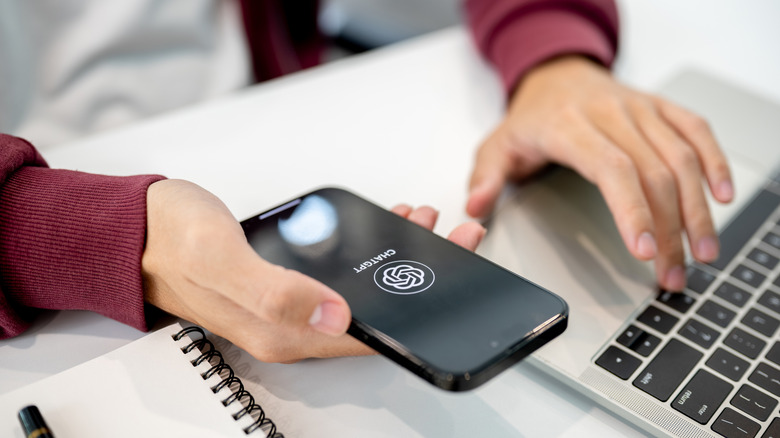
Because a portion of Gen Z had the opportunity to test-drive ChatGPT during college days, it's logical to assume they basically rely on it for everything, right? According to an EduBrain survey, only 25% of Zoomers use it daily. Additionally, millennials are generally more hyped about AI, with 35% using the tech every day.
Similar to how they're trying to unshackle themselves from phones, Gen Z is very iffy on AI technology, despite still using it. Some believe it could make them lazier and less smart, and there are even significant concerns about how AI will impact their wider critical-thinking skills. Many young people notoriously can't stand AI – which is a sentiment that may be partially born out of fears of AI destroying the job market. So it's funny how they're accused of being AI-friendly by the older generations.
This isn't a way to disparage the "elders", though. Some argue Gen Z has more reasons to fear AI due to their recent entry into the workforce. Since Gen X and Millennials are more established in middle management positions, they may not be as exposed to risk as those in entry-level and junior roles. Regardless of why the kids are pushing back against the technology, it's simply untrue that Gen Z is more likely to "cheat" in the workplace, especially as Millennials represent a bigger user base.
Gen Z is inherently good at tech

While the worst Gen Z myths are nothing more than empty criticism that most youngsters could simply brush off with a simple "Ok, Karen," it doesn't mean stereotypes aren't causing active harm. Because they practically grew up with modern tech, it's automatically presumed that the young kids are proficient in its use. However, not only do Gen Z individuals struggle with typing (so much so that they developed a weird thumb typing technique, courtesy of smartphones), but they also have trouble conceptualizing traditional file systems.
Gen Z individuals are also aware of this — only 32% believe they have adequate workplace digital skills, while just 17% believe their AI skills are up to scratch, according to a Salesforce data. In other words, being raised on user-friendly apps made Gen Z less proficient with older office systems, and even physical machines like copiers. As a result, younger individuals feel inadequate in traditional workplace settings. Dubbed the "tech shame," this can be overwhelming for many who feel that colleagues expect them to know the stuff, and in turn, could discourage struggling workers from asking for help.
Ultimately, Millennials and past generations likely experienced their own version of tech shame in addition to being stamped with a label of being lazy. The lines will likely fade as younger Gen Z individuals also start their adult journey. Yet, that still doesn't mean the elders should make their lives needlessly harder by propagating myths that are nothing more than cultural misunderstandings. We've all been there, but with each generation, the kids ultimately turn out quite all right after a few years in the adult world.