

Smart Vs. Manual Thermostats: Which Is Better For Your Energy Bills?
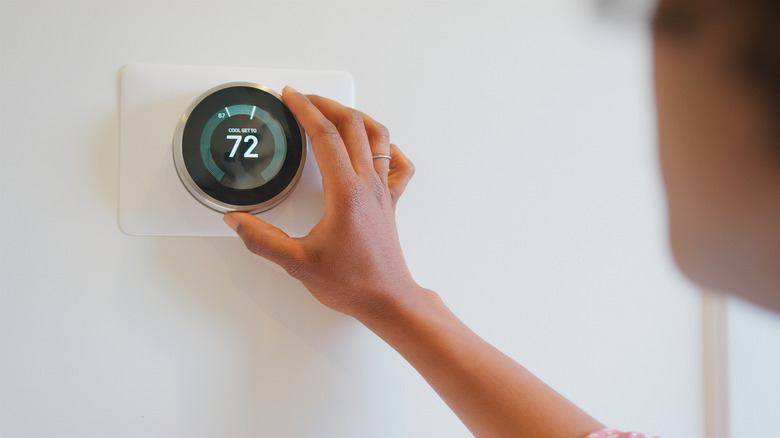
A smart thermostat isn't necessarily just a convenient alternative to a traditional thermostat. Along with offering features and functionality that other thermostats don't, a smart thermostat can theoretically reduce a user's energy bills. The word "theoretically" is doing some heavy lifting there. If you're questioning whether a manual or smart thermostat is better for your bank account, it's worth knowing why the way a homeowner uses a smart thermostat plays a major role in any utility bill savings they might gain.
The main point to understand is that a smart thermostat genuinely can help you cut down on energy costs. Whether it actually achieves this goal depends in large part on whether you properly leverage its potential. Although the specific features of a smart thermostat can vary from one unit to another, familiarizing yourself with — and actually using — the key features of your smart thermostat will determine whether making the upgrade to a smart thermostat is actually better for your energy bills. Researching ways to get the most out of your smart thermostat will help you further enjoy the perks this device can offer, but let's run down the basics here.
Use your smart thermostat correctly to lower energy bills
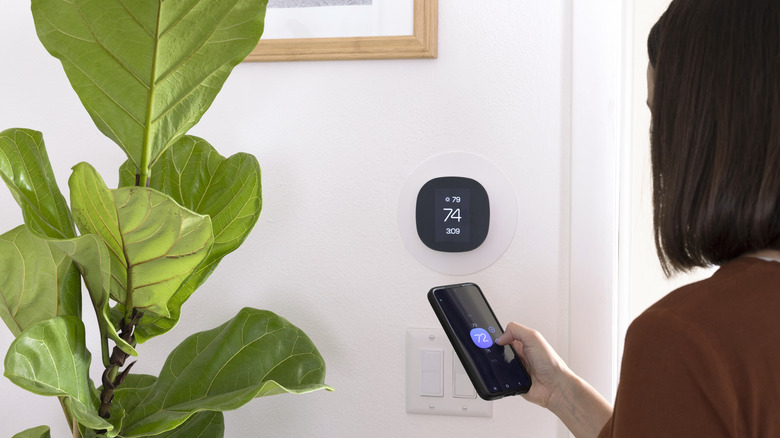
A common feature of smart thermostats is the option to program temperature settings based on factors like your daily schedule. However, many traditional thermostats are already programmable. The reason some users nevertheless save money with a smart thermostat, despite a traditional thermostat offering similar features, is that smart thermostats make adjusting the temperature and programming easier. Usually, with a smart thermostat, a user can adjust these settings remotely via an app. Because it's easier to control your home's temperature with a smart thermostat, you're more likely to consistently make the types of adjustments that result in long-term savings.
Be aware that advanced smart thermostat features can potentially reduce your energy bills to an even greater degree. For example, some smart thermostats generate reports or notifications designed to help users optimize their energy usage. Although less common, there are also smart thermostats that detect when users are home, adjusting their temperatures accordingly.
The takeaway here should be that a smart thermostat can definitely save you money. Whether it actually does so comes down to how you use it. Once you've researched models and picked one with the right features for your needs, make it a point to actually take advantage of those features to ensure your unit ultimately pays for itself. Reviewing smart thermostat rankings can also help you be confident you're investing in a unit that's worth your money and has a proven track record of saving users money.