

Apple Working On New Security Feature To Prevent iPhone Snatching
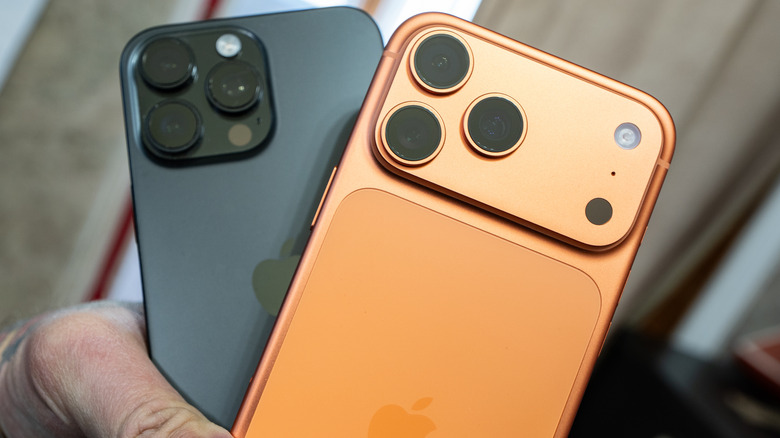
Apple's iPhone has long been a prime target for thieves. This is, in part, because the iPhone tends to have a higher resale value than similarly positioned Android devices. For example, a 256 GB iPhone 15 Pro on the smartphone trade-in site Bankmycell still has a trade-in value of $527. In contrast, Samsung's Galaxy S23 Ultra — which was released the same year as the iPhone 15 Pro — has a trade-in value in the range of $295. The iPhone's ability to retain value, together with strong demand for the device, has created an environment where iPhone theft remains an ongoing problem in large cities around the world.
To help alleviate the issue, Apple is reportedly working on a feature that will hopefully dissuade potential thieves from abruptly grabbing iPhones from unsuspecting users and running off, or in situations where an iPhone is yanked away under duress or the threat of force. This type of crime is typically referred to as a "snatch and grab," and it can be particularly problematic as some of Apple's existing security mechanisms, such as Activation Lock, are less helpful if a phone is snatched while unlocked. As a result, Apple is reportedly working on a new feature that would enable the iPhone's accelerometer to detect when the device is abruptly grabbed out of a user's hands.
How Apple's new iPhone security feature may work
Word of the feature was first brought to light by 9to5Mac. At this point, it remains unclear whether this will be introduced at WWDC in early June or is still in the exploratory phase. The original report says the feature is "under active development," which suggests it will see the light of day sooner rather than later.
The feature certainly sounds intriguing at first glance. In practice, though, the software would have to be impressively precise to distinguish between a "snatch and grab" and other scenarios that might involve someone using their device normally. After all, the feature could become more of a nuisance if it automatically locks anytime someone holding an iPhone waves their hand excitedly.
It's also worth noting that Apple may incorporate some guardrails to prevent the feature from activating when not needed. For instance, the feature will reportedly take into account whether the device is on a user's home Wi-Fi network, a scenario that would make a "snatch and grab" situation less likely. The feature might also check whether, after the accelerometer detects notable movement, the device is moving farther away from the owner's Apple Watch.
Apple has gradually made the iPhone harder to steal
Over the past few years, Apple has slowly but surely added new features that, taken together, are designed to make the iPhone harder to steal. The most recent example is Stolen Device Protection. Originally released with iOS 17.3 about two years ago, the feature prevents a thief from immediately changing important and sensitive iPhone settings. If a device is in a new location, accessing sensitive data such as passwords and financial information requires the user to authenticate with Face ID or Touch ID. Notably, this is required even if the iPhone is unlocked. Further, biometric authentication is the only way to access this type of information; even if a thief knows your passcode, it alone isn't enough for them to gain access.
Another feature baked into Stolen Device Protection is that certain actions, such as changing your Apple ID password, may require a one-hour delay. This helps prevent common scenarios in which a would-be thief attempts to change a user's Apple ID while the victim is present. Apple also adds that the one-hour delay allows time for the victim to report the device as lost or stolen. Stolen Device Protection is turned off by default, but you can activate it by going to Settings > Face ID & Passcode, and then scrolling to the bottom where you'll find an option to toggle it on.