

Planning To Buy A Gaming Handheld? Wait For These Next-Gen Chips
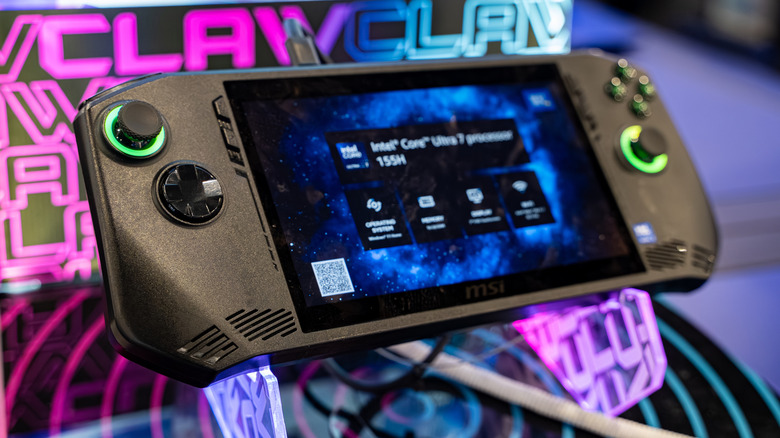
These days, being a gamer can be rough. With the cost of components frequently skyrocketing due to artificial intelligence demand, electronics enthusiasts are feeling the squeeze, gamers especially. Nintendo announced a price increase for the Nintendo Switch 2 at the top of May, and the Steam Deck recently returned to the market with a massive price hike. However, those interested in handheld gaming devices may want to hold off on a new purchase, as Intel has announced a series of processors designed for handheld gaming.
Announced in a press release on May 28, Intel is delivering the Arc G-Series brand of processors, which are designed specifically for handheld gaming devices. Built off the architecture of the Intel Core Ultra Series 3, the first wave of units includes the Intel Arc G3 and the Intel Arc G3 Extreme, both of which run Windows 11. Along with specs that deliver better power efficiency and performance for handhelds, Intel's new processor lineup also includes XeSS 3.
Intel plans to share more details about these processors during Computex 2026, which is taking place in Taipei, Taiwan, between June 2 and June 5. From there, consumers should expect to see the Intel Arc G-Series processors in handheld consoles starting in June, as well. More devices will continue to be revealed throughout 2026, though notable consoles first receiving the Arc G-Series include OneXPlayer, the Acer Predator Atlas 8, and the MSI Claw 8 EX AI+.
Intel brings its own CPUs built for handheld gaming
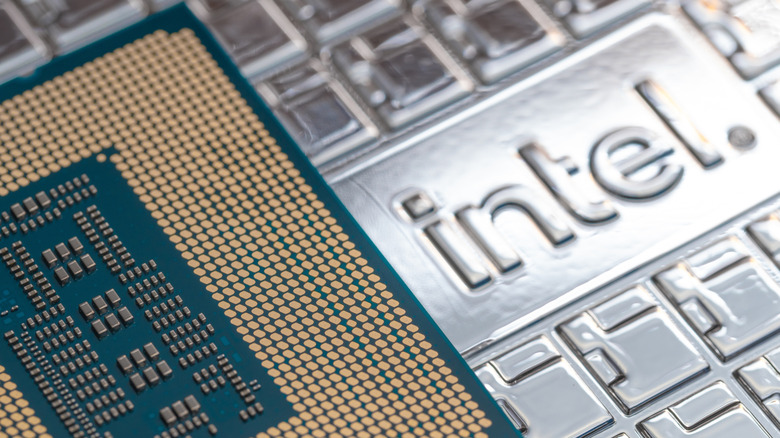
Intel's new lineup of Arc G-Series processors is built on Intel's Xe3 architecture and includes Intel Arc B390 graphics. Along with Day-0 driver support for libraries, these processors include an Xbox mode that helps deliver a full-screen experience on Windows 11 PCs that more closely replicates consoles. G-Series processors also feature Intel Precompiled Shaders that retrieve prebuilt files directly from Intel's cloud servers for speedier game launches.
Additionally, Intel touts that G-Series processors feature a logic node with two performance cores, eight efficiency cores, and four Low-Power efficiency cores. For connectivity, there's dual Bluetooth 6 and Intel Thunderbolt 4 support, including Thunderbolt Share for up to 40 Gbps bandwidth. Additionally, Intel Wi-Fi 7 R2 is also supported. XeSS 3 includes XeSS Super Resolution, which delivers AI-powered upscaling. XeSS Multi-Frame Generation, meanwhile, promises smoother gaming by adding more interpolated frames, whereas Xe Low Latency delivers faster input response times for gamers.
While this new tech may not help bring down processor costs (Intel raised the prices of its CPUs by 15% back in March), Intel may just deliver a vastly improved gaming experience that can rival AMD's silicon output. Keep in mind that it's not just CPUs facing supply issues, as SSD and graphics card prices are also soaring. Though it may not be hard to find an Android handheld that's cheaper than the Switch 2, those wanting to play games at the bleeding edge of tech may want to see what the future brings.