

Sony 1000X The Collexion: Why Sony Built A Flagship Above The XM Line
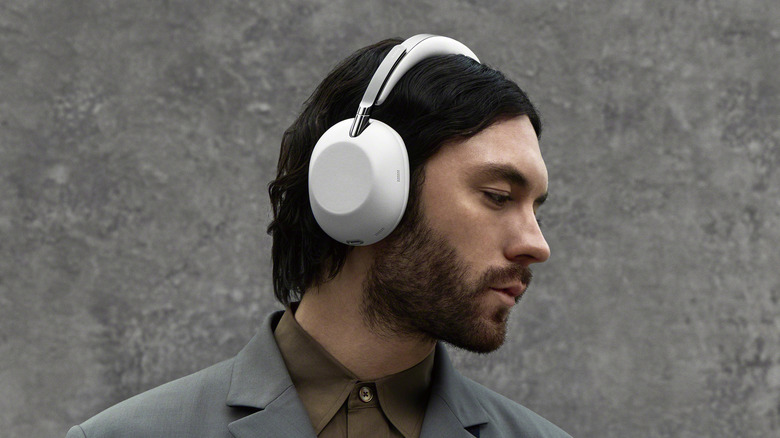
Sony's new 1000X The Collexion headphones are the clearest statement the company has made yet about what it actually thinks "premium" headphones can be. Decidedly, the headphones are not the WH-1000XM7. Instead, they're a separate, more expensive product line aimed at a specific kind of buyer. At an event Sony put on in Tokyo in celebration of the launch of the headphones and the tenth anniversary of the 1000X line, I was able to speak to Tyler Ishida, Senior General Manager of Sony's Personal Entertainment Marketing Division, about the new headphones and the direction that they could take Sony's headphones as a whole.
That definition of premium has been changing dramatically under Sony's feet for a decade, ever since the first 1000X arrived in 2016. The Collexion headphones are Sony's attempt to win over the fashion-focused crowd — a crowd that might otherwise go for something like the cheaper AirPods Max 2.
But, as Ishida put it, the headphones are "not about competing with others and so on, or other models from us. We want to make sure that this is the right product for this audience that can feel and understand the premium."
A decade of moving targets

When the 1000X first launched, the sell was simple — noise cancelling, like what Bose was offering, but with a tech-first approach. Ishida was, by his own account, one of the target buyers. "People are traveling a lot nowadays, including myself at that time — back in 2016, I'd go out from my house on Monday morning, going to the airport in Tokyo, and then I come back on Thursday afternoon or Friday morning.
"So I'm always traveling. Definitely the noise cancelling element — at that time, there was no Wi-Fi on a plane. So, when you're on the plane, you can really rest. And to get the best rest, you have good noise cancelling, and that's where we really focused on that product."
That was the bar. It's a much higher bar now, and not just because the ANC arms race has made every flagship at least competent. The question of what makes a $400-plus pair of headphones worth buying has expanded well beyond how effectively they can silence a plane cabin.
What premium means now

The shift Ishida describes is one the whole category has experienced, but he frames it more directly than most product executives would. Headphones stopped being a tech purchase and started being a fashion purchase — or at least, a fashion purchase as much as a tech one.
"I do remember one time I was watching some Super Bowl, and before the [game], I think there was a kind of channel where people were talking about how the players are coming into the stadium. And I was just looking at people coming in with a headphone. Many people. They are not saying anything about it. So, it's becoming a little bit more of a fashion statement as well. I think that gradually changed this industry."
That, of course, frames Sony's approach with The Collexion. The goal is to focus on fashion and build quality rather than design being an afterthought. It also explains the trade-off that Sony is willing to defend. The Collexion's battery life comes in a bit under that of the XM6, which is the kind of thing that would normally be a problem on a spec sheet. Ishida doesn't dodge it.
"I know that many people may say, 'yeah, the battery or whatever' — but yes, we do understand that, [and still] this is what we believe is what should be." In other words, Sony made a call, and the call was that the rest of the package — the materials, the build, the sound — matters more for this audience than squeezing in extra battery life. As a headphone reviewer, I struggle to separate the two — but I can at least see where Ishida's coming from.
The ecosystem question
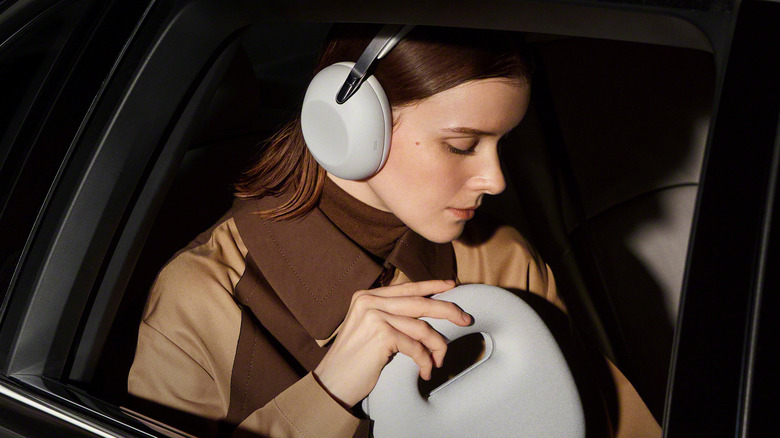
Perhaps the biggest change in the headphone space over the past 10 years has more to do with ecosystem than anything else. Apple's AirPods were an instant hit, and the AirPods line has only expanded, showing that having tight control over an ecosystem can indeed lead to better features. There are others making that play, too. Sonos has integration with its soundbars, for example.
When I asked how Sony competes in a world where ecosystem features are increasingly the reason people pick a pair of headphones, Ishida didn't pretend Sony had an answer that matched those companies on their own terms.
"It's challenging to answer, because once it comes to ecosystem, you have to have everything. Do we want to have everything as well? Or do we want to be specifically good in certain areas to make sure that, even though there's an ecosystem, there's still an element that you want to use our product? I think that's very important."
Sony, as a group, actually has more pieces than most — PlayStation, Bravia TVs, the music business, the camera business — but Ishida isn't pitching some unified Sony ecosystem play in the Apple mold. He's making the case for being better at everything else, to where the ecosystem doesn't matter as much. That, of course, could be a very tough sell to customers who really do want everything.
But it's consistent with how Ishida talks about competition more broadly: "If there is no competitiveness in the market or in the industry, that means that industry is already [done]. There's no demand." In other words, the goal isn't to beat Apple at being Apple. It's to build the headphones that someone buys anyway.
Why this isn't the XM7
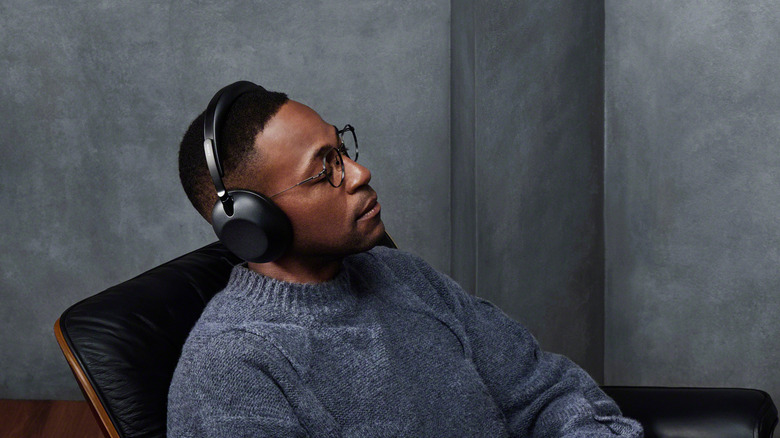
So, why didn't these headphones end up being the WH-1000XM7? Apparently, they never would have to begin with — but that doesn't necessarily mean that they don't pave the way for Sony's cheaper next-generation headphones.
"For sure, we did not think of Mark 7. Did we specifically make this collection as a 10-year anniversary, or did it just build from us wanting to create a flagship? When we are trying to create the flagship, the right product — through when we are developing or considering all of that, it just happens to be that, you know? This could be the right moment for us to bring this type of product. Because if we just suddenly bring in a flagship, it's just called a flagship. But with all the technology that we have built for the past 10 years, really knowing this market of premium, what should be the right product — it kind of all combined together: the 10 years and the flagship all together."
The 10-year alignment, in other words, wasn't necessarily the point — but it worked out. The Collexion exists because Sony wanted to make a flagship that sat above the XM line — and the anniversary turned out to be a tidy moment to ship it. The XM line remains its own thing, on its own cadence.
What trickles down

What does this mean if you're waiting on the XM7, which will presumably arrive at a more familiar and affordable price point? Some of what Sony built into The Collexion will probably make its way down — though Ishida is careful to say it depends on what makes sense.
"Obviously the materials and so on are different [from the XM line], so whether we should bring it down, or we should keep it in the premium — that's a different story. But especially if some element of the sound quality... if that makes more sense and if that could be brought down and cascaded down for the next generation of the other 1000X headphones, we will definitely do so."
Basically, the materials and the design language probably stay up top, at least for now. Anything around the tech under the hood, however, is more likely to show up on the XM7. That's not necessarily surprising — the 1000X headphones have long been a tech-first product.
Say what you will about that approach. Obviously, those buying an expensive pair of headphones probably want both the tech and the design. Regardless, I certainly think that there's more room for premium design and build quality in the world of wireless headphones.