

9 Reasons Robot Vacuums Just Aren't Worth The Cost
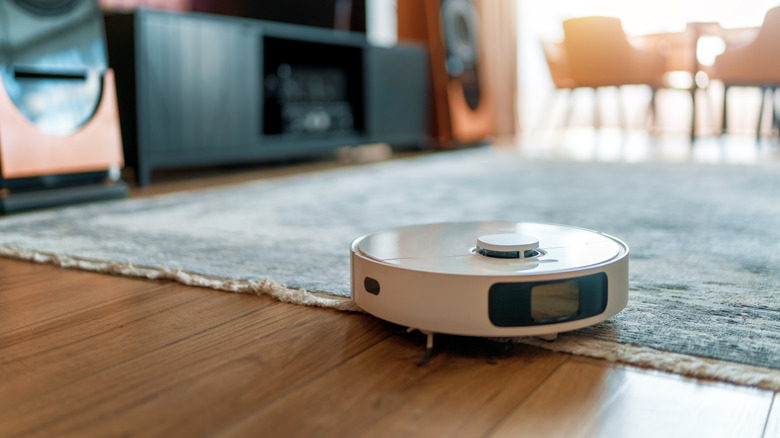
Like a number of smart home items introduced over the last decade, robot vacuums haven't quite lived up the hype. These devices can do some jobs efficiently under ideal conditions and on the right floor surfaces, and they can even be programmed to work while you're away so you can come home to a spotless floor (just be sure to avoid these common robot vacuum mistakes). The problem is they can't fully replace an upright, proper vacuum just yet.
And we speak from experience. We've tested a wide range of robot vacuums, ranging from budget to high-end models as well as those that empty themselves or include "mopping" functionality (which is usually no more than dragging a wet wipe around). Sometimes the old ways are best. Here are nine reasons why we think robot vacuum aren't worth the cost and why, at least for now, you should just stick with a traditional upright vacuum and mop.
1. They still can't do stairs
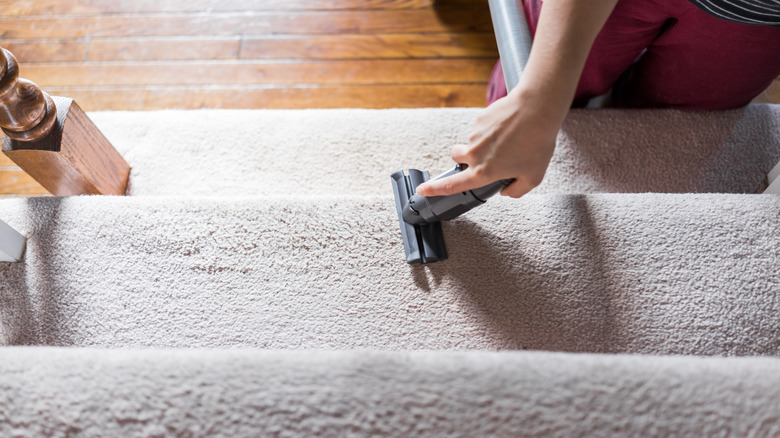
For multi-level homes, robot vacuums have two major shortcomings: not being able to clean the stairs and requiring assistance to ascend or descend. In recent years, the annual Consumer Electronics Show (CES) in Las Vegas has showcased some next-generation robot vacuums that can actually navigate stairs, but the robots' abilities come with major caveats. The most promising example so far is the jumping and dancing Roborock Saros Rover, which can climb stairs thanks to a pair of wheels on extendable legs. It can even turn sideways and leave one leg on the previous step for stability as it makes some attempt to vacuum the stairs. However, it doesn't appear to be able to descend the stairs, and there's no current timeline for availability.
Another idea is the Dreame Cyber X, which is an entirely separate robot that acts as a carrier for your vacuum using chainsaw-like legs. The robot vacuum needs to drive inside the Cyber X first, be lifted up or down, then continue its job. It's an interesting concept and fascinating to watch, but, again, it's impractical since you need another device — a robot vacuum already needs a fair bit of floor space for its charging dock. Worse yet, Dreame has promised the Cyber X robot vacuum transporter will be cost around $1,200 when it goes on sale in the second half of 2026. For that price, you might as well just buy a separate robot vacuum for each floor.
2. They're just not powerful enough
When it comes to any vacuum doing its job properly, suction power is very important, for obvious reasons. Suction power is measured is pascals, or Pa, and while the earliest robovacs could barely hit 1,000 Pa, newer models can do much better — such as the Roborock Saros Z70 that claims to go as high as 22,000 Pa. That sounds impressive on paper, but despite the quoted figures, they still don't seem to perform all that well in action.
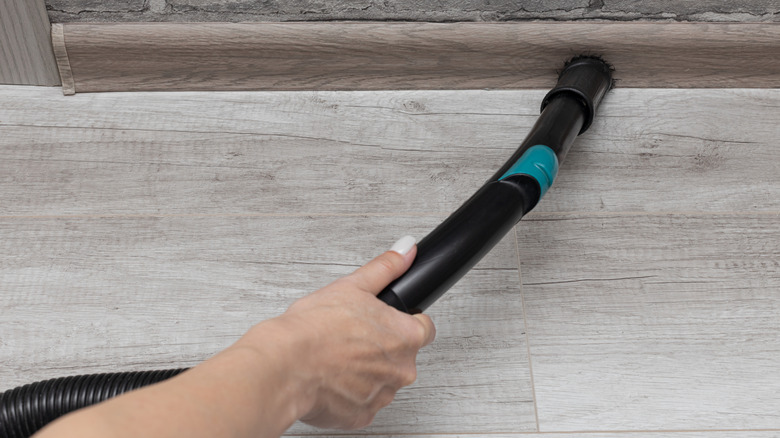
For a home with hardwood or tiled floors, a robot vacuum can work wonders to do a quick, daily clean, especially in dusty climates. But because all that suction power is spread out on in wide area in the middle of the device, they're still limited when it comes to corners, edges, and those little areas that you'd normally the crevice tool for. This shows that suction power is not the only metric to use when shopping for a robot vacuum, as other factors matter, too, such as agitation, the size of the brushes, and the overall shape of the device. So, maybe don't throw out your regular vacuum just yet.
3. They take up a lot of space
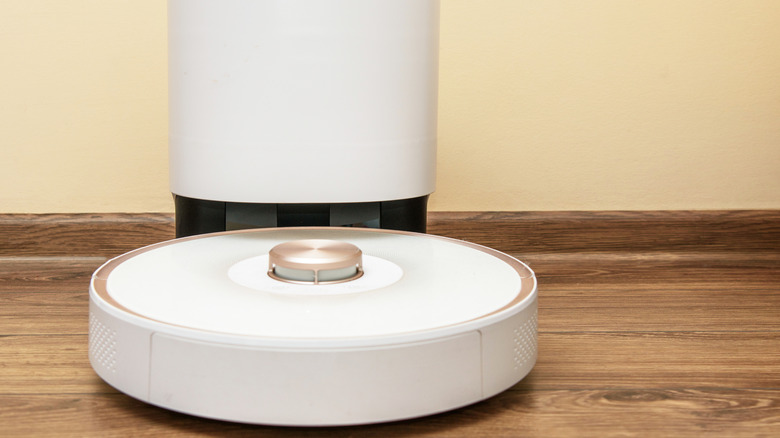
The real estate that a robot vacuum takes up in a room is another reason these devices aren't worth the cost. Even the most basic robovacs command about as much floor space as a lamp or end table, but fancier devices are even bigger. Truly autonomous vacuums have a large base station that automatically empties the dust box when required, and while it eliminates the need of a user to manually empty the box, the station needs to be bigger to perform its duties. And some robot vacuums equipped with a mopping function even need to be connected to the home's plumbing system in order to provide fresh water and dispose of dirty water.
In both scenarios, these base stations tend to have a pretty large footprint, and unlike a regular vacuum that can be hidden away in a closet when not in use, a robot vacuum needs to be able to safely navigate to its charging dock at all times. You can't hide it behind a door or in the cupboard under the stairs. In a cramped apartment where floor space is at a premium, that's difficult to justify. The base stations can so big and unsightly, in fact, that there are companies that build a specific category of furniture that act as a more decorative base for robot vacuums.
4. You need to clean them
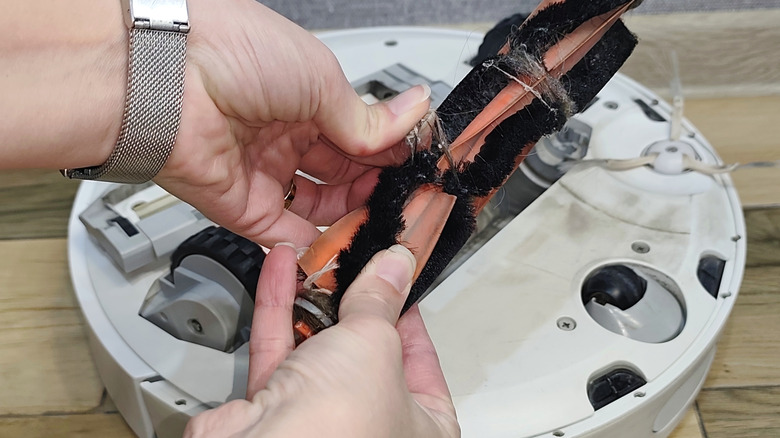
Every week (or sooner if you have anyone with long hair in the house), you'll need to clean your robot vacuum. The smaller agitation brushes are more susceptible to trapping all those hairs compared to an upright vacuum, so much so that they accumulate and stop it spinning. You probably won't get an error from this, but you will notice the device is not performing as well. The spinning brushes on the side do this, too.
Whether it's hair, thread, or some other type of small debris, it can be a hassle to get it removed from the brushes. While this isn't a problem unique to a robot vacuum, the remedy can be more involved than on a typical stand-up vacuum as there tends to be more moving parts on the bottom of a robovac. The process of cleaning these brushes may vary depending on the device you own, but it generally involves removing the main agitation bar and the outer brushes to remove any debris caught in these mechanisms. This whole process of cleaning your robot cleaner can take ten to fifteen minutes. So much for added convenience.
5. You still need to tidy up first

Socks. Shoelaces. Dolls. Lego bricks. Charging cables. The average family home has plenty of stuff scattered about, which need to be picked up before vacuuming. Again, this isn't unique to a robot vacuum, but since these autonomous devices go in more places and do a worse job of navigation obstacles, tidying up before running a robovac is a more tedious job. There's nothing worse than getting an error message that the robot vacuum is stuck and then go on an adventure trying to find the device.
Vacuuming the house yourself isn't fun, but it's better than following the robot vacuum around to clear its path or hunting it down when it gets stuck. As you're running the vacuum, you can either pick up debris as you go along or just shove it out the way, but robot vacuums are really picky about these things and frequently get tangled by the most mundane of obstacles. Want it to vacuum under the table? Better pull out all of the chairs first. You end up spending the same amount of time and effort that you would if you just vacuumed yourself. Weren't you supposed to be saving time?
6. You have to micromanage them
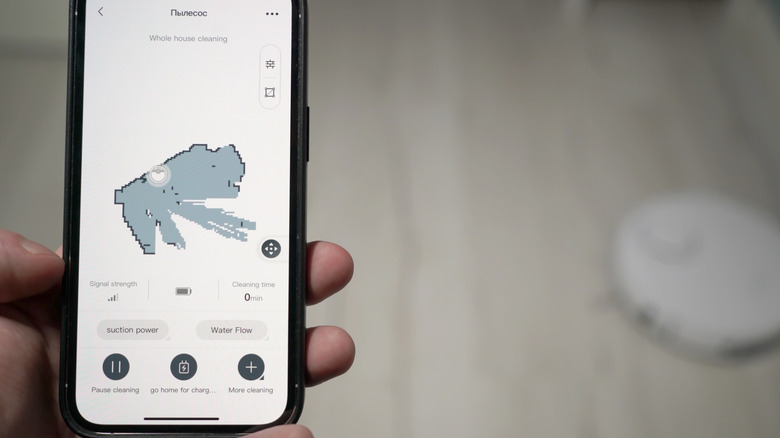
No-go areas, smart home connectivity, re-scanning a floor map and manually drawing areas of hard floor or carpet — these are all annoying little software features you'll have to deal with when you get a robot vacuum. For the newest generation of smart robot vacuum to work, the device needs to know the layout of your home. The first robot vacuums were entirely random, going in a straight line until they hit something, and often taking hours to do a single room. They're smarter now, for sure, but along with those smarts comes a need to micromanage everything through the manufacturer's app.
So, before you can even use your vacuum, you'll need to let it run around and map the layout. If you often move furniture, expect to hear "positioning failed." This means the vacuum will need to remap a room every time something moves. And if the company goes out of business, which is pretty common when it comes to smart devices, the cloud services associated that mapping breaks, too.
7. They suffer from battery degradation
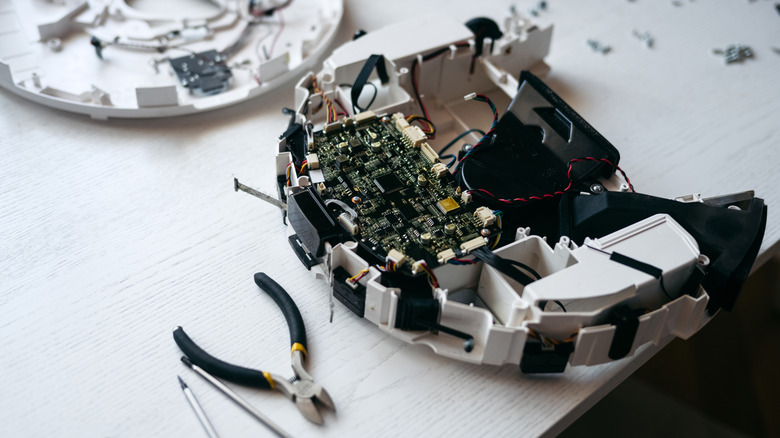
Any device with a rechargeable battery eventually suffers from some sort of battery degradation, and that's the sad truth for robot vacuums — as well as cordless upright vacuums. Since a traditional vacuum cleaner plugs into the wall, power supply and run times are the least of your worries. Robot vacuums don't last forever, and the batteries can't be easily changed. If you run them often (as you have to if you actually want to keep the floor clean with minimal suction power), their battery will cycle a lot. Depending on how often you run the device, you might start to notice severe battery degradation within just a couple of years.
And that's just the battery. Some users report their robovacs failing after a year because the plastic gears wore down. Some people are still rocking vacuums from the '70s, because they're pretty simple devices that don't have a lot of moving parts to break or sensitive electronic components. The powerful motors spin around, suck stuff up, and throw it into a bag. You need to replace the bag when it gets full, but they're so common and inexpensive that it's not a huge inconvenience.
8. They don't know which waste to avoid
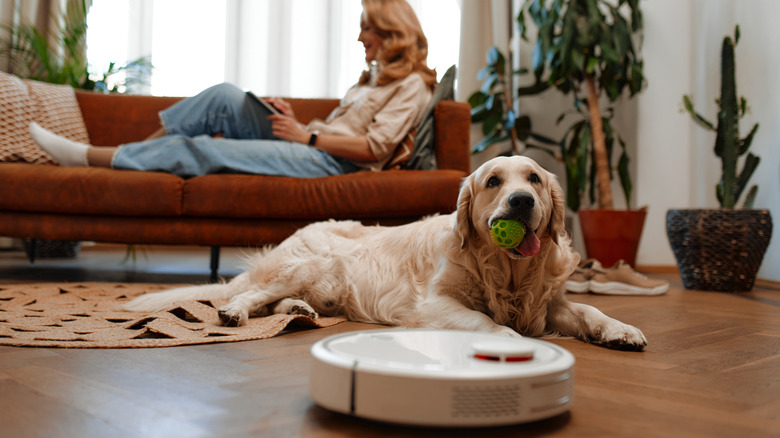
You may not have heard the term "poopocalyse" before, but pet owners should be especially wary of a robot vacuum if their pet is prone to accidents. Many robot vacuums rely on a simple touch or radar sensors. If they hit something hard like a wall, they turn. If they hit something soft, they don't know about it. That means they'll just spin right over any mess with predictably horrific results. It's not just the floor and carpet you'll need to worry about either as the animal's mess will be worked into the wheels, spinners, brush, and dust box.
Some devices, like the Ecovacs Deebot X8 Omni that we reviewed, are equipped with a camera and AI computer vision models that are trained on specific obstacles to avoid. They'll even steer clear of shoelaces so as not to clog up the spinner brushes. Even those systems aren't infallible, though, and can still run over obstacles with consequences that range from a minor inconvenience to utter disgust.
9. The consumables can be expensive

Most upright vacuum cleaners have bagless chambers these days, but there are some that still have a replaceable bag you can pick up at just about any big box store — sometimes they're usually generic, cheap replacements that'll work with a whole range of vacuums. That generally isn't the case for replacement parts for robot vacuums. If you have a major brand, you can normally find these parts (like bags and brushes) in the store, but if it's a newer model or has some unique features, the replacements might only be available from manufacturer at a much higher cost.
And don't forget to check the device's self-cleaning docking station, if you have model so equipped. Those docking stations have their own internal vacuum to suck the waste out, and they use a vacuum bag to store the waste which needs replacing. For the average family home, this might need replacing every month, and with some costing up to $20 for a four pack with no third-party alternatives, that's just another pseudo subscription charge you don't need in your life. After all, if the robot vacuum isn't saving time, effort, or money, are they really worth it?