

The Average Lifespan Of A USB-C Port Is Actually Quite Long, If You Take Care Of It
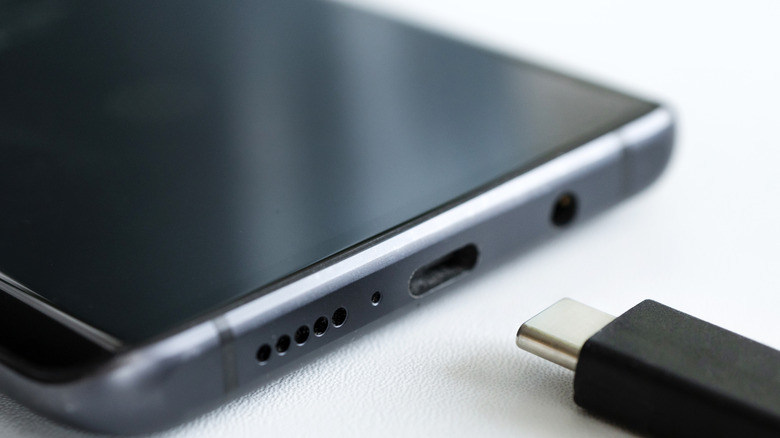
For many, the letter "C" in "USB-C" may seem like a mystery. Yet, the simplicity of the naming scheme (C is just a continuation of previous names such as USB-A and USB-B) also extends to its design. It's compact, reversible, and capable of delivering high rates of both data and power. It was so good that it became the de facto standard on many devices by the tail end of the 2010s. That still didn't stop some online users from questioning the overall durability of USB-C ports, though.
In reality, there isn't much to question. The average lifespan of a USB-C port is probably much longer than you think. Rated for approximately 10,000 uses, USB-C is super durable, and with proper care, will last you a long time. The key part here is "proper care." Yes, it can withstand a lot, but it's still a USB connector and it still has a breaking point. So, it doesn't hurt to handle the port with care and keep your USB-C port clean to extend its lifespan and ensure it continues functioning as efficiently as possible.
Why do USB-C ports have such a high average lifespan?
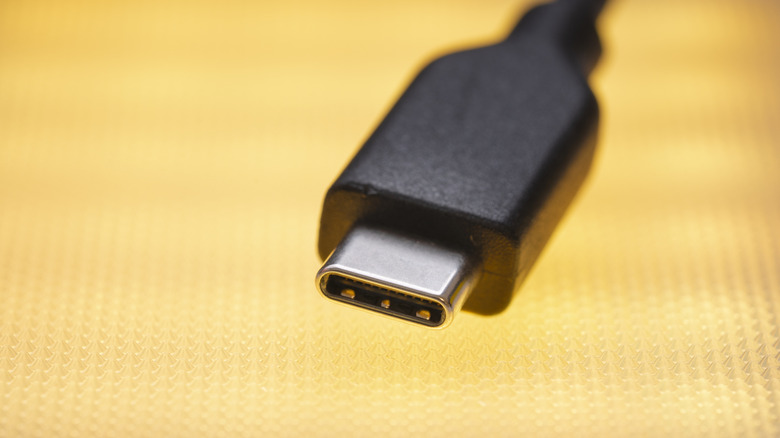
It's not surprising that USB-C ports are on everything now, as their versatility and durability are simply too alluring for manufacturers to pass up. While other factors like the reinforced metal do influence the 10,000-use average lifespan, the design itself does most of the heavy lifting. Due to the oval, symmetrical shape, you can plug in a USB-C cable in both directions. Naturally, this eliminates the common problem found on previous iterations, where you'd often end up shoving the wrong side of the connector into the port with full force. This might seem minute, but missing the plug accounted for much of the strain on connector types like micro USB.
Because of USB-C's reversible nature, you likely won't experience many "misses" when plugging in the cable. Thus, the pins and solder joints in the port are less prone to failure, which helps extend the port's overall lifespan. Though there's no shortage of users complaining that the ports feel flimsy, this is often the result of either using a low-quality cable or the port itself being dirty.
How to extend the lifespan of a USB-C port
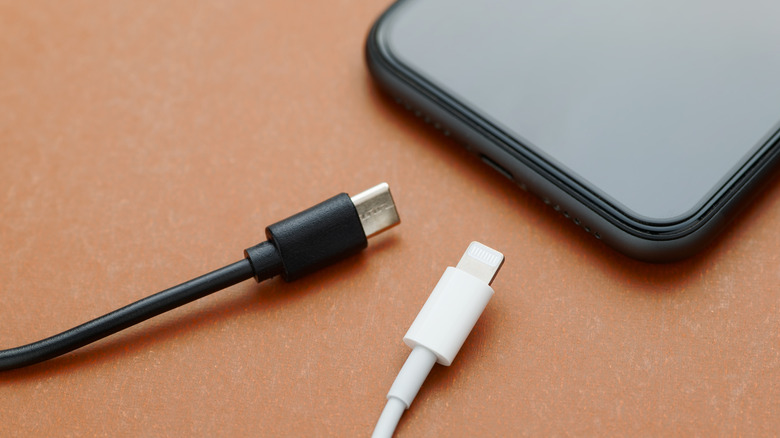
The average lifespan of a USB-C port is 10,000 insertions (meaning it's very likely the port will outlive the device), yet it's not impervious to damage. For instance, moisture can corrode the pins, but in many cases, physical damage is the biggest problem. Yanking the cable like a madman or twisting the connector at a weird angle while it's in the port could damage the contacts. Thus, being a bit more gentle when handling devices could spare you a trip to a professional technician.
Dirt can also be a huge problem for USB-C ports. If you suspect your device's USB charging port is broken, before freaking out, take a can of compressed air and blow out any lint or dirt that may have accumulated in there. USB-C ports are quite low-maintenance in most cases, so doing this occasionally (especially if you carry the device in your pocket often) can go a long way in ensuring the port reaches its twilight years.