

China Plans To Hunt For Water At The Lunar South Pole
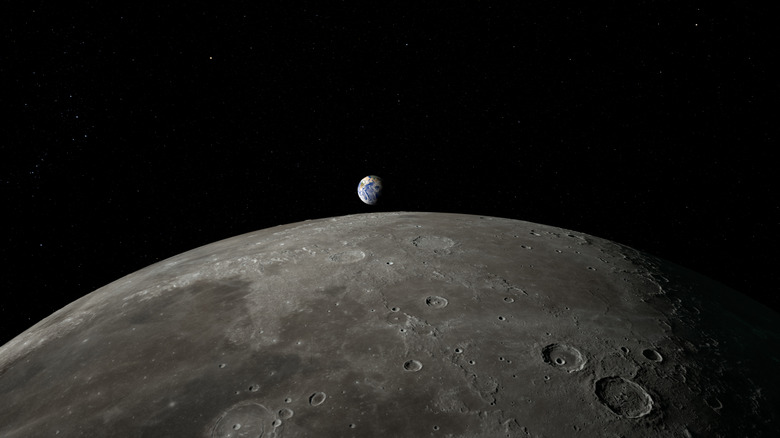
The moon has become an increasingly popular place in the space exploration industry of late. NASA wants to build a permanent moon base, and now China is turning some of its focus to the lunar surface as well. In fact, the latest news on China's space exploration goals shows that the nation wants to start looking for water with one of its next expeditions.
China's Chang'e-7 space mission — which is slated to launch sometime in 2026 — will focus on the first direct attempt to find water on the lunar surface. As with the upcoming Artemis missions, Chang'e-7 will focus on the moon's south pole, where NASA plans to send astronauts in five years. The mission's aim will include mapping resources within the area, as well as searching for water ice in the moon's permanent dark areas. NASA's VIPER mission will focus on similar goals, however Chang'e-7 is expected to launch earlier, which could give China an advantage.
Why finding water on the moon is so important
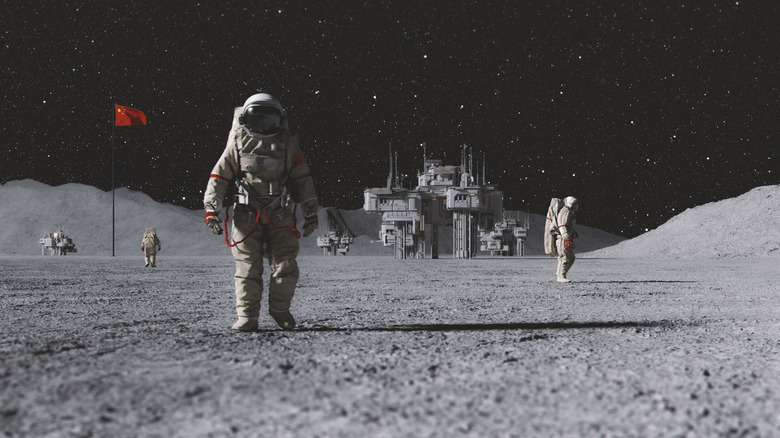
The hunt for water on the moon continues to be a primary direction for space exploration as it would put one of the most vital resources humans need in a relatively accessible location for long-term space endeavors. If humanity can find water ice on the moon and create a way to process it into liquid, it would mean one less resource that astronauts need to carry with them from Earth into space.
With NASA looking to build bases on the moon, it would also put this critical resource in far closer proximity. The James Webb Telescope has already discovered water in space, and scientists say there's definitely ice on the moon's surface. So, the Change'e-7's mission isn't about proving that water exists, it's about locating a source so humans can put it to use.
The mission is expected to settle near the Shackleton crater, though China has not confirmed this, and is aiming for a technically difficult 100-meter landing accuracy, or better, to help with the challenge of visiting a shadowed crater. This builds on the success of the Chang'e-6 space mission that saw an uncrewed craft land on the far side of the moon.
How China will search for water on the moon
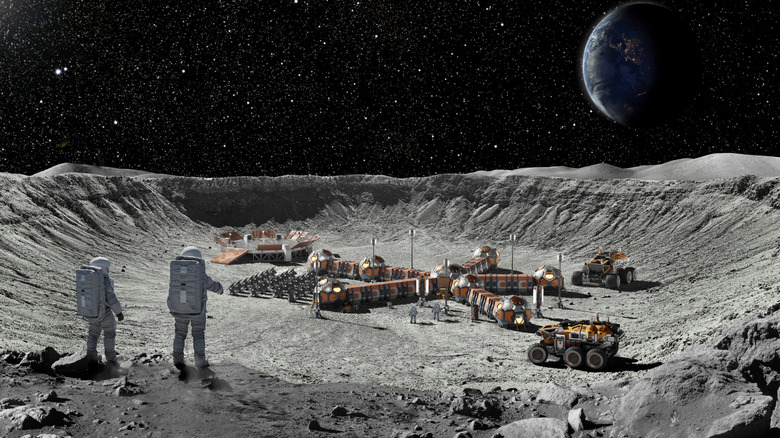
To complete its mission and successfully find water ice on the lunar south pole, Chang'e-7 will use several different scientific payloads and spacecraft. This includes a high-resolution mapping camera, a wide-band infrared spectrum analyzer, and a hyperspectral imager. These will assist in the lunar lander's ability to analyze potential water ice deposits located in the dark craters of the moon's surface.
Chang'e-7 is equipped with a lunar seismograph, to detect moonquakes, as well as a topography camera for mapping the terrain around its landing area. Because the lunar south pole remains dark most of the time — thanks to the sun's location low on the horizon — the solar-powered Chang'e-7 is designed to hop along the surface, flying to new locations and following the available sunlight.
Once it lands, the spacecraft will move to an undisturbed location and drill into the moon's surface in search of water ice deposits for analysis. Confirming the existence of a water source on the moon is paramount to the future of moon-based space exploration, which includes plans by NASA to build a nuclear reactor on the the lunar surface. Easy access to water would be vital to making such a plan come true.