

Scientists Are Using 3D Printing To Try And Bring Back Extinct Animals
The list of items you can build with 3D printing seems to grow every day. Plenty of obscure sites with 3D printing projects let hobbyists print out their own miniatures and toys, and engineers can now 3D print unexpectedly large objects such as houses and skeleton replicas. Recently, scientists invented a 3D printing technique they think can resurrect the dodo. Though don't expect to print out your own with your home printer.
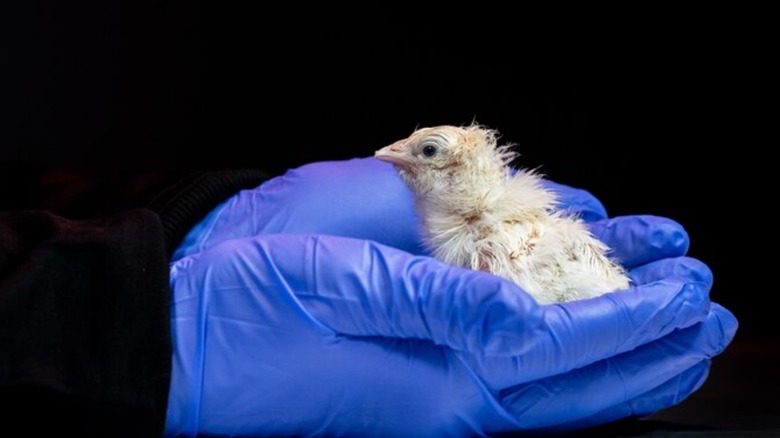
Recently, Colossal Biosciences (the company that is trying to revive the wooly mammoth) designed what it claims is an "artificial egg system." This invention is a 3D printed lattice that is coated with a semi-permeable membrane that allows oxygen to pass through but not moisture. Colossal Bioscience's claim is no mere boast, however; the company transferred the contents of fertilized chicken eggs into their 3D-printed equivalents, and the chickens hatched successfully.
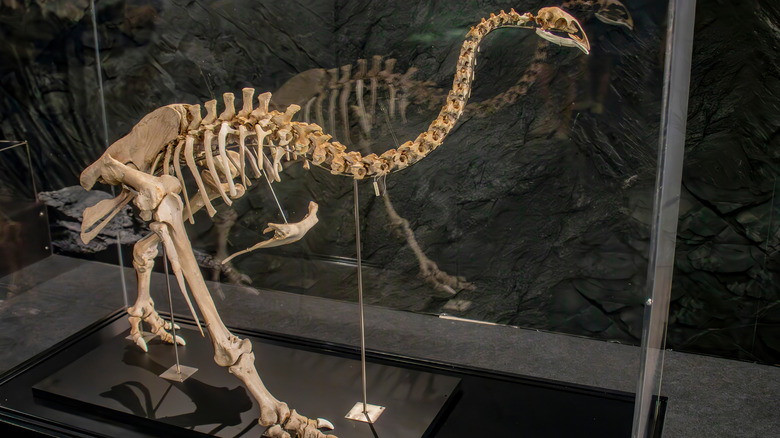
According to Colossal Biosciences, the 3D-printed eggs have numerous applications, partially because they can be printed in any size. These eggs can support the conservation efforts of endangered bird species, but the organization is focusing on efforts to resurrect long-dead species, specifically the moa and the dodo. Colossal Biosciences admits we will probably only get as far as animals that superficially resemble these creatures, but the company is confident their new eggs will play a vital role in the creation and in vitro development of these resurrected species.
A bit of science fiction held up by some actual science fact
Scientists have criticized Colossal Biosciences in the past for the company's pie-in-the-sky dreams. Who can forget when the company allegedly revived the dire wolf, only for geneticists to shoot down these claims? But that doesn't mean Colossal Bioscience's invention lacks any merit.
Technically speaking, scientists have been able to grow chicken embryos in artificial eggs since 1998, but prior methods had one limitation in common: They didn't provide enough oxygen. Researchers always had to supplement the gas growing chickens received, which caused no shortage of problems — stillbirths were a common occurrence. However, Colossal Bioscience's semi-permeable printed eggs provide more oxygen than other surrogate eggshells, which could potentially allow anything inside to grow naturally without further intervention.
Even if geneticists figured out how to develop a functional moa or dodo, many scientists doubt they could survive in the yolk of existing animals. Colossal Bioscience's 3D-printed egg could solve this problem by pooling the yolk from numerous eggs into one large artificial one, but as it stands, the organization's invention might be better suited to helping conservation efforts of endangered birds. At least then scientists won't have to edit DNA to recreate an extinct species or sacrifice multiple eggs to support a large fetus.