

Do Phone Sanitizer Machines Actually Work?
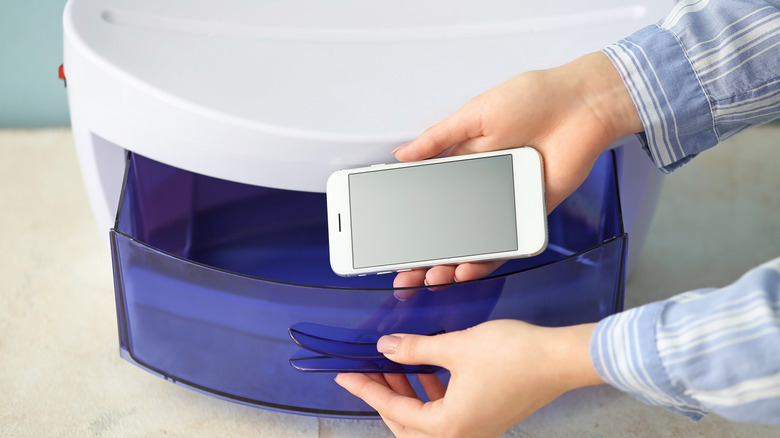
Since many of us put off cleaning our gadgets for way too long, chances are, you're carrying around a smartphone that's grosser than you want to think about. Phone sanitizer machines present a compelling solution to an issue that "may pose serious risks for public health and biosecurity," per a study published by Scientific Reports. These devices use ultraviolet (UV) light, specifically UV-C light bulbs, to kill bacteria and viruses on your phone's surface. That method is used in hospitals to sanitize tools and surfaces. But while reputable phone sanitizer machines do work, there are other considerations that make them not worth the cost for most people.
For a UV phone sanitizer to actually work, it needs to emit light with certain wavelengths. UV-C light ranges from 100-280 nanometers, but 200-280 nm is what eliminates germs by damaging their DNA and RNA. Boxes are also far superior to wands, as containing the UV light makes the process safer and more effective.
While you can get cheap sanitizer boxes and wands for as little as $15 on Amazon, it's important to remember that UV light can harm the skin and eyes. Wands and cheaply made boxes can be dangerous, but the worthwhile ones are pricey. Popular options like PhoneSoap ($89.95), Deep Purple ($179.95), and Cleanstation ($200) work well. But at the same time, it's hard to recommend spending that much on one when there are equally effective and far more affordable alternatives for deep cleaning your phone safely.
How to clean and disinfect your phone without a sanitizer machine
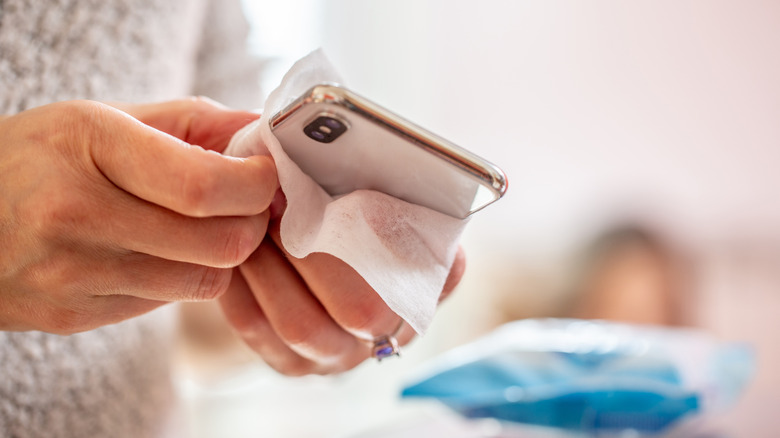
You don't need additional equipment to sanitize your phone when you probably have cleaning supplies in your home right now that will work just as well. A study published in Cureus found that UV phone sanitizers and disinfectant wipes with 70% isopropyl alcohol are both effective, with researchers concluding the difference "wasn't statistically significant." Phone manufacturers like Samsung, Google, and Apple also suggest 75% ethyl alcohol wipes or even common household ones like Clorox disinfecting wipes.
Before you get started, turn your phone off and keep it unplugged while you clean it as a precaution. You should also wipe your device with a microfiber cloth before disinfecting it to remove fingerprints. Water and some mild soap (like hand or dish soap) can help, but make sure to use a lint-free cloth that is damp (not wet), and take care to not get liquid in any openings. Additionally, a toothbrush can help you clean your phone's speakers without damaging them.
There are a couple of things to avoid when disinfecting your phone. Never apply water or any other liquid directly to your device, especially the screen. Harsh cleaners like bleach, hand sanitizer, vinegar, and kitchen disinfectants can damage your phone, as can rough cloths like paper towels. Finally, don't use compressed air on your smartphone, particularly in its ports.