

4 New Features Coming To Your Samsung Galaxy Watch
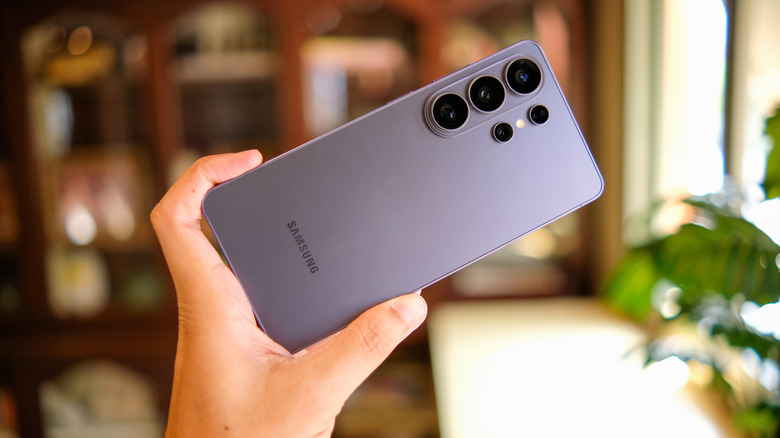
Samsung released a slew of new AI-powered features to its Galaxy Watch lineup in 2026, including several new health-focused updates. The new features are set to arrive on Galaxy Watches starting June 8, and Samsung says they will help turn your smartwatch into a "proactive, intelligent health partner." It will accomplish this goal by putting more health data at your fingertips while also using AI to help gather, sort, and break down exactly what all that information means.
Each of these new features appears to focus on telling the story of your body's ongoing health with greater fluidity and personalization. Samsung says they'll release the newest Galaxy Watch first, with older models like the Galaxy Watch 8 Classic getting the features later. These new features are all part of Samsung's attempts to extend what you rely on your Galaxy Watch and the Galaxy platform as a whole to accomplish. On top of these new features, Samsung also recently started testing a new way to use Galaxy Watches to help prevent muscle loss from GLP-1s.
Vitals
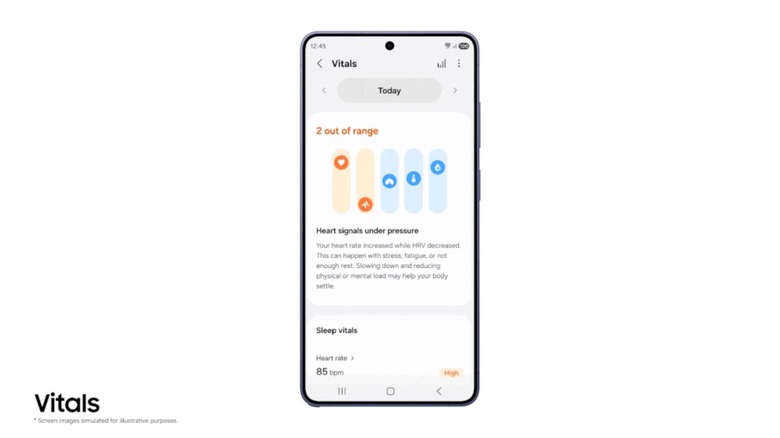
One of the first new features Samsung wants to add to your Galaxy Watch is an overview of your body's vital information. The system already does this with some of the health metrics that your body gives off to track your daily Energy Score. However, according to Samsung's breakdown of upcoming Galaxy Watch features, it will soon start tracking at least five important "overnight bio-signals," including heart rate, respiratory rate, heart rate variability, blood oxygen, and skin temperature. It will then compare the measured numbers against a standard resting baseline to provide an overview of your vitals.
Samsung says this feature should give you a better way to understand the signals that your body gives off. In turn, that should allow you to spot meaningful changes from the norm, which should give you indications of when your body might be struggling for some reason. The biggest thing here is that Samsung doesn't want the overview of your vitals to lend to alert fatigue, so it sounds like the system will also use AI to determine when notifications should be sent and when they should be ignored.
Daily Cardio Load
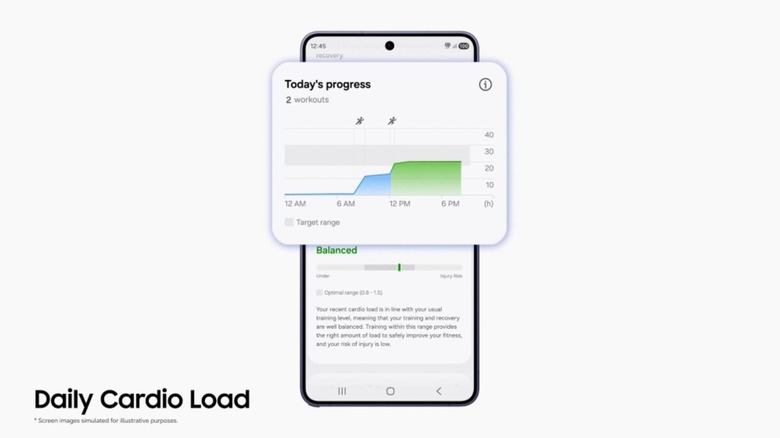
The new Daily Cardio Load functionality is designed to help anyone trying to push themselves during their cardio and aerobic exercises. The idea behind this, according to Samsung, is to make training your cardiovascular system simpler and reduce the risk of injury. The system does this by measuring your body's accumulated cardiovascular strain and then calculating your maximum daily load and training capacity.
From there, the AI will help you set optimal goals for your training and break down much-needed rest periods. This should help ensure that your body does not tire out too quickly or become overstrained from the training you're putting it through. Based on the images we've seen of these changes so far, it seems Samsung will even break this information down in a handy graph, allowing you to take a quick look at your workouts for the day. This should help you keep track of what you've done and what you may still want to do to keep up with your training.
Heart Health Score
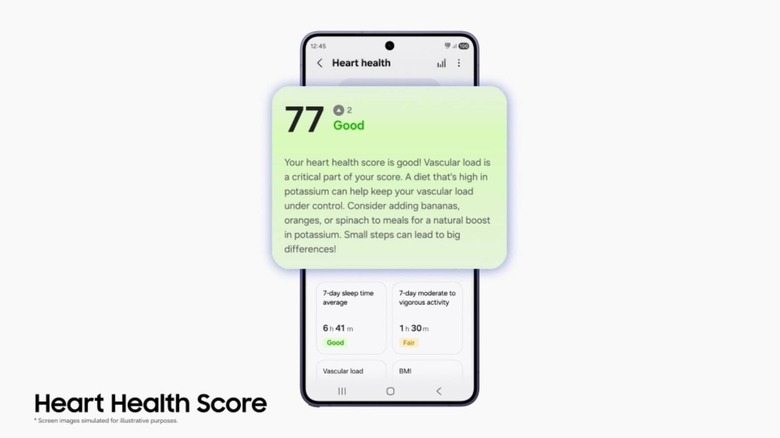
Samsung says this third feature is more focused on improving your long-term wellness by helping you focus on the current status of your heart health. This feature builds on Samsung's previously introduced Vascular Load functionality, turning it into a single daily metric that provides deeper insights into the data Vascular Load also covers. The metric will be measured based on your sleep, activity, and stress levels, and will be combined with your body composition data to provide a useful metric for you to track.
The entire point of this new feature is to help you create a unified score you can use to identify your healthy and unhealthy habits. That way you can quickly see what is impacting your long-term health. Like many of the other features on this list, this one is all designed to help you keep track of your body's current state and what is affecting it. Other smartwatches, like the Apple Watch, can also track similar heart-focused metrics, as well as health metrics you might not have known existed.
Fitness Index and more
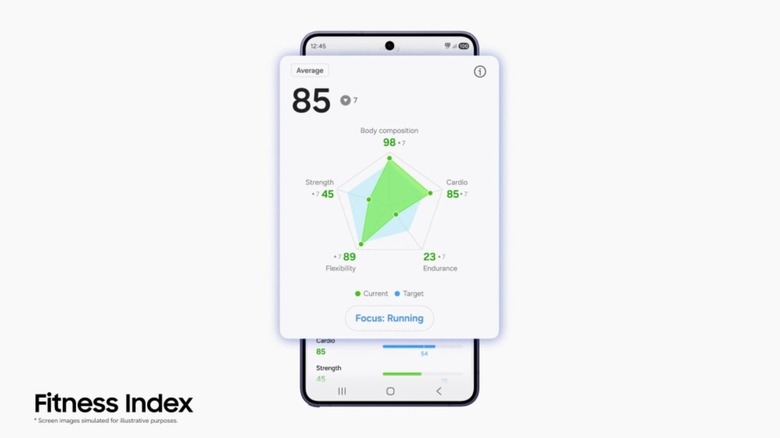
Your Samsung Watch can already do a lot, but once these new features arrive, you'll also be able to track a new metric called Fitness Index. This particular metric looks at your various exercise routines and analyzes heart rate, VO2 max (which Samsung says is a "key measure of aerobic fitness"), and even your daily steps. It will then analyze this data against your peers', allowing the system to identify clear physical weaknesses and strengths so you know where to focus on improving.
Fitness Index, as well as the other items on this list, is part of Samsung's attempt to make Samsung Health a more personal experience. Providing all these details should make it much easier to keep track of your health with your Samsung Galaxy Watch. Other, lesser-highlighted features coming to the Galaxy Watch include a new Antioxidant Index, which will provide a new map of your body's ongoing nutritional intake, as well as a new AGEs Index to provide a longer-term picture of how your lifestyle choices are affecting your body, both positively and negatively.