

5 Disadvantages Of 16-Inch Laptops You Should Know About

When it comes to buying a laptop, many people instinctively feel that a larger screen is the way to go. After all, a big display is generally easier to work on as it offers more screen real estate for reduced eye strain, as well as larger images and videos for a more comfortable viewing experience. But there are disadvantages to selecting a bigger laptop, some more obvious than others. Apple brought wider attention to the idea of larger laptops in 2019 with the launch of the 16-inch MacBook Pro.
Since then, 16 inches has emerged as a popular large-screen size in many laptop lineups, while 18-inch models like the MSI Titan 18 HX and Dell's M18 R1 remain more specialized flagships. According to recent data from market.us, the 15-16.9-inch screen size dominates the global market with a 38% share, making it the most popular category by some way. Next is the 13-14.9-inch size with 21% of the market, while compact laptops (11-12.9 inches) account for 11%. Laptops 17 inches or larger make up the remaining 12%. Bigger laptops clearly have their fans, but larger laptops aren't all they're made out to be.
Extra weight and bulk means poorer portability
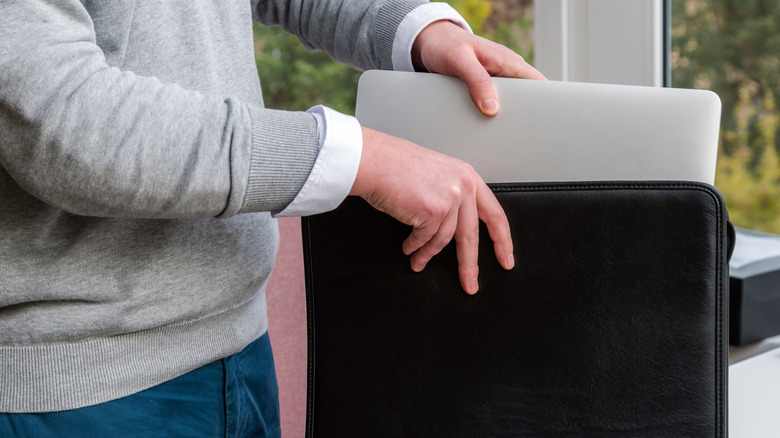
That large laptop display may look gorgeous, but if you're planning to take the laptop out and about, you'll probably discover some portability challenges with it. Using the previously mentioned 16-inch MacBook Pro as an example, Apple's largest laptop tips the scales at a hefty 4.7 pounds (2.7 kg), which is heavier than a two-liter bottle of water (4.4 pounds/2 kg). The current 14-inch MacBook Pro, meanwhile, weighs 3.4 pounds (1.6 kg), and lighter still is the 13-inch MacBook Air, which comes in at 2.7 pounds (1.2 kg). Would you really fancy lugging around such a heavy bit of kit, especially if you have other things to carry, too?
On top of that, you might need another, larger bag to carry it in. And if you take it on a plane, it may be more of a challenge to use on the tray table than a smaller laptop, especially if you're traveling in coach and the person in front of you reclines their seat. The heaviness and reduced portability of a larger laptop are certainly aspects to consider if you're thinking of using it in locations other than your home.
More chance of physical issues with a larger display
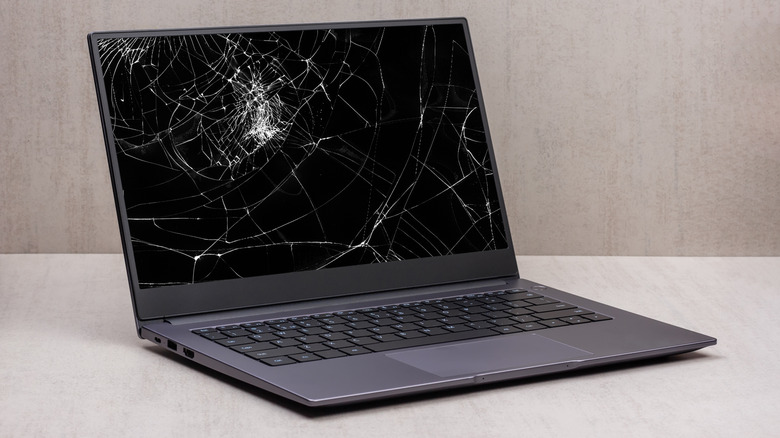
A larger screen may be more suited to your work or leisure style, but simple math says that more surface area means there's an increased chance of physical issues occurring. A 16-inch screen has about 30% more surface area than a 14-inch one, which means there's more physical display area that could be scratched, dented, or suffer pressure marks. You might think there'd be a higher risk of dead pixels, too, but that depends more on the total pixel count and manufacturing quality than its physical size alone.
Beyond screen damage, larger laptops could also be more prone to flexing, and so a 16-inch lid is more likely to bend if it has a heavy load placed upon it or experiences pressure from other items inside a bag. It's also worth noting that if the display ever fails entirely, it's going to cost more to replace a larger one than a smaller one on a laptop from the same product line.
While it may be tempting to conclude that a larger panel means a less structurally sound laptop, this really depends on things like the chassis material, any special reinforcement, and the display thickness. If you do opt for a 16-inch laptop or something similarly large, be sure it's going to be robust enough for how you're likely to use, transport, and store it.
Harder to use on a lap

As its name suggests, a laptop should actually be easy to use on your lap. But due to its sheer size, a large 16-inch machine is going to be harder to perch comfortably — and safely — on your lap than a smaller model. The larger footprint of a 16-inch laptop means the sides of the chassis are likely to overhang your thighs, making it less stable if you start shifting around in your seat.
Also, if you curl up in bed with a laptop, or lounge around on a sofa, a larger, heavier laptop will be harder to handle and could even end up slipping out of your hand or sliding onto the floor as you try to get more comfortable with the unwieldy device. Another factor to consider is the larger underside surface area, which can transfer more heat overall to your legs due to the increased contact area.
This is actually one of the reasons why some people believe you should never use a laptop on your lap. In many ways, a large 16-inch laptop can actually feel like a desktop replacement. That's fine if you're only going to use it at home, though if that's the case, buying a full-fledged desktop usually offers more bang for your buck compared to a laptop with similar specs.
More attractive to thieves and robbers
Having a smartphone snatched out of your hand by a thief is bad enough, but having a laptop swiped clean off a table outside a cafe is no fun either. Some places are more prone to these kinds of crimes than others, but premium products like high-end laptops can be the target of opportunistic thieves looking for an easy haul. That's because generally speaking, the larger the laptop, the more it's likely to be worth if they sell it.
With Apple's high-end 16-inch model, for example, starting at $2,699 and going all the way up to $7,349 with configurations, it may be particularly attractive to thieves. The same goes for premium Windows laptops. The Dell XPS 16 and the Razer Blade 16, for example, start at $2,449 and $3,999, respectively, making them equally attractive to criminals. Of course, using any laptop in public spaces, regardless of the size, comes with risks. If you're thinking of using your laptop in spots like cafes and parks, be sure to keep your wits about you and never leave it unattended, whether it's on a table or in a bag.
Larger laptops often cost more

You won't be surprised to learn that a 16-inch laptop costs more than the same model with a smaller screen, but you may be taken aback by the size of that price difference. Again, looking at some of Apple's laptops as an example, the 16-inch MacBook Pro starts at $2,699, while the 14-inch version will set you back at least $1,699. The 13-inch MacBook Air, on the other hand, starts at a much more reasonable $1,099. That's a sizable $1,600 difference between the base models of the 16-inch MacBook Pro and 13-inch MacBook Air, with the latter still a highly capable machine.
Of course, the price difference doesn't just come down to the display size, as the 16-inch model offers more processing power, better graphics performance, and more memory than the other two models. If you can afford it and you're good with all of the other drawbacks, by all means, go for the priciest option, but also ask yourself if the laptop you're interested in is ridiculously overpowered.
After all, for most everyday tasks such as web browsing, email, document creation, and video streaming, a smaller, mid-range laptop will handle everything just fine, plus it's easier to take it everywhere you go. If you do want something with a bit of beef and don't need a large display, then consider a budget laptop that's more powerful than the MacBook Air.