

The Surprising Alternative To Google That Gen Z Is Using

Search engines like Google allow users to look up just about anything they can imagine on the World Wide Web. It's been that way since the company was created in 1998 by two Stanford University students. Today, things have shifted in where and how people are searching for information. Instead of using Google with its AI overviews pulling from all over the web to answer searches, Gen Z is using apps like TikTok and Instagram to inform them of things to do, where to go, and what to eat.
In a study by Adobe Express, the company surveyed more than 800 people and 200 small US business owners to uncover how people are using TikTok and AI-powered engines to make online searches. The report discovered that around one in two consumers, or 49%, say they use TikTok as a search engine, with 25% of Gen Z saying that TikTok is actually an effective search alternative.
The age group was also more likely to use Reddit as a search engine, with 38% of Gen Z preferring the online discussion forum. Even so, a large majority of the group (89%) still uses Google when compared to using other search engines or social media.
Why some users prefer social media as a search engine
Search engines are a quick way to find details about an event or the hours of local restaurants and shops. They are tools to help users make decisions about where to go, what to do, and how to get there. Social media does the same thing, but it also includes access to millions of videos and photos posted by actual people to help make more informed decisions.
Social media is meant to capture attention, with TikTok in particular leaning hard into short videos posted by users. If a viewer scrolls across someone enjoying an event, eating a meal at a restaurant, or showing off clothing they just bought, they are more likely to connect with that individual and follow them, especially if they both have similar interests. The Adobe Express study found that 26% of viewers were likely drawn to TikTok instead of search engines due to its use of short videos, with 21% using it for storytelling, and 17% for its interactivity.
With easy access to apps like TikTok and Instagram where real people are sharing information, Gen Z is turning to advice from actual people. It could be a reason why Gen Z can't stand AI on search engines like Google. Information that comes from a trusted and well-liked source through bite-sized videos is easier and faster to obtain than reading a long-form article.
Is Google losing trust with Gen Z?
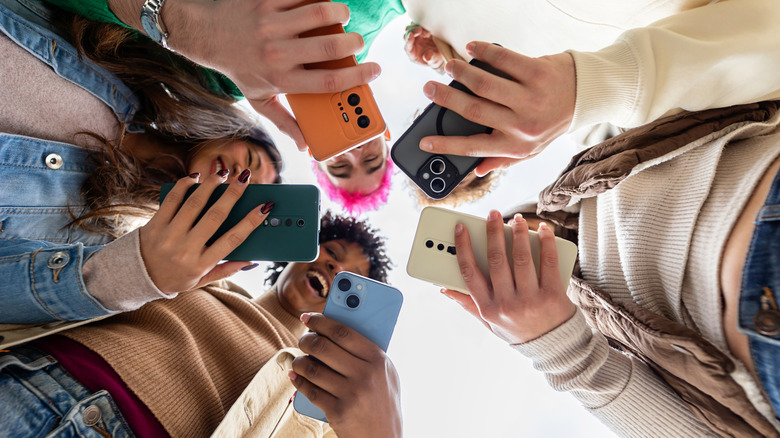
Younger audiences may be turning away from Google's search and map options. Instead, they use their phones to pull up Instagram or TikTok and search a string of keywords like, "find me a place to have lunch." Videos will then show them people eating at restaurants nearby, sharing the food and talking about how good or bad it is.
In 2022, Google's current Chief Technologist, Prabhakar Raghavan, spoke about what Google is doing to entice the younger generation to use its service. One push is showing videos after searches that link directly to TikTok. The system uses AI to link directly to parts of the video as recommendations for users, too. But with users already using the social apps to find information and with the ability to search in them, it's becoming less and less likely they will turn to Google, especially with its use of AI.
Using a search engine takes time and, on sites like Google, can include several links, AI-generated text, and even AI-generated ads. Gen Z would rather skip the advertisements, AI, and lengthy articles to get to an actual person giving advice or knowledge through short videos either chosen by the user or served through the algorithm. Over time, the platform suggestions become more valuable as the algorithm learns more about the user. And, of course, users can always tweak their setups, such as using hidden Instagram features, to fine-tune the experience. Overall, the younger generation seems to prefer a more human-focused experience, and that's exactly what social apps like Instagram and TikTok provide.