

Why Is Google's Pixel 'A' Series So Much Cheaper?
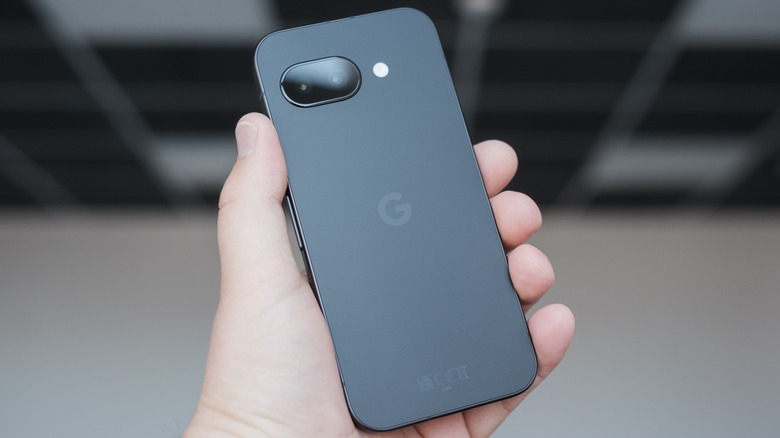
Google has a very solid lineup of budget phones that closely resemble its main Pixel models. The company denotes these strong mid-range smartphones as the Pixel A series, which you will see with a lowercase "a" next to the numbered name. While they look and sometimes feel the same as their older siblings in the flagship, there are enough differences to justify the price difference, making them cheaper than the alternative base entry main line. The easiest comparison is Samsung's Fan Edition (FE) phones.
Usually, Pixel A phones are manufactured with less luxurious or expensive materials, lower RAM, a slightly less powerful system on a chip, weaker cameras, and sometimes the omission of premium software features found in its flagship series. Depending on someone's smartphone needs, the cut corners can either be worth it or a deal-breaker — or the differences between the cheaper alternatives to the expensive ones might not even be noticeable.
Where are the corners being cut?
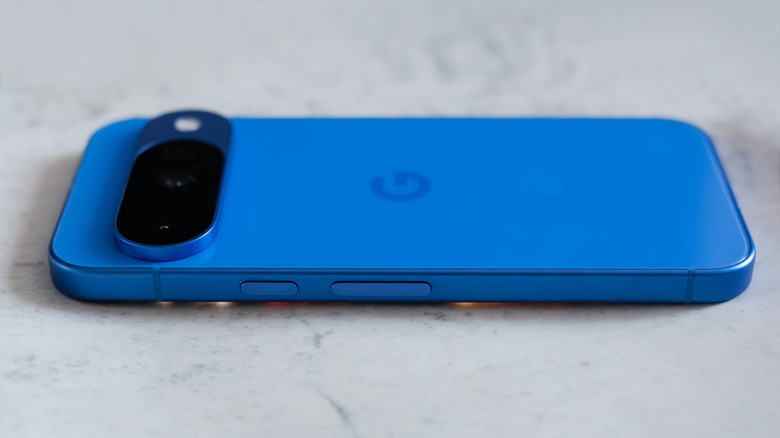
Let's look at the Google Pixel 10a as a primary example, since it is the newest A series that's often considered a competitive, high-value phone compared to similarly priced options. The Google Pixel 10a is sold for $500, while the starting price for the standard Google Pixel 10 with 128GB is $700. At a baseline, the Google Pixel 10a is powered by the Google Tensor G4 and comes with 8GB of RAM, 128GB of starting storage, and a 5100 mAh battery. It is also equipped with a 6.3-inch Actua pOLED display, capable of a 120Hz refresh rate. The camera uses a dual rear camera system and a front-facing lens that measures 48MP, 13MP, and 13MP, respectively.
Compare all those specs to the Google Pixel 10. The flagship base entry is powered by the Google Tensor G5, has 12GB of RAM (though some of this is reserved for AI functions), has 128GB of starting storage, and a 4970 mAh battery. It also has a 6.3-inch Actua LTPS OLED display, capable of up to 120Hz refresh rate. The cameras are more evolved, since the phone uses a triple camera in the rear, including a telephoto camera that the Pixel 10a doesn't have, and one in the front, at 50MP, 13MP, 10.8MP (telephoto), and 13MP (front).
Lastly, we have to consider their design and premium materials, which vary considerably between these two phones. The Pixel 10a has thicker bezels and weaker glass protection than the Pixel 10 (with the Corning Gorilla Glass 7i in the former versus the Corning Gorilla Glass Victus 2 in the latter).
Are the cutbacks used to downsize the price worth it?
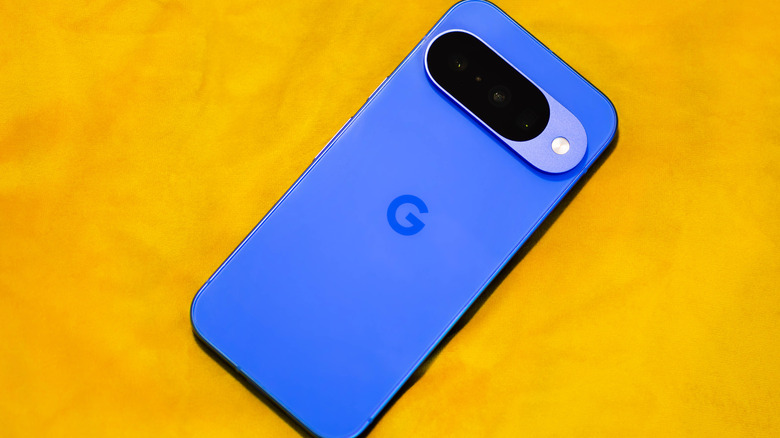
The downsides of the Pixel A series are sometimes still worth it. It all depends on your personal needs and values for owning a phone. The biggest difference between the Pixel 10a and Pixel 10, aside from the bezel size and listed specs, is the camera system. While the panel types (plastic versus glass substrates), glass protection, and Tensor chip are also different, with the Pixel 10a being worse in all of those areas, the contrast isn't too noticeable to the average consumer during daily use.
For photos and video, while the Pixel 10 has an extra telephoto lens thatadds more versatility, pictures should still look nearly identical. So, in the grand scheme of things, the $200 price jump might not be worth it — though it will still be situational, since the Google Pixel 10 is technically better in almost every aspect – but in reality, that's quite a bit of money. Then, of course, you can sometimes hit it lucky and find one at a steeper discount, in which case, you just buy the Pixel 10, which is objectively better.