

Scientists Harnessed The Power Of The Dead With 3D 'Necroprinting'
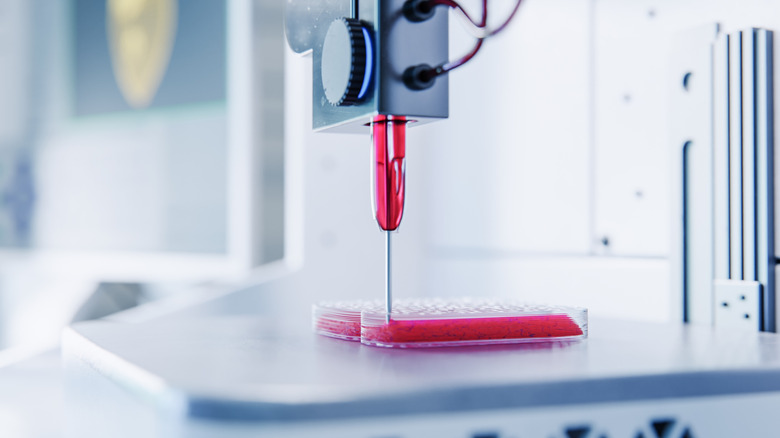
Inventors often look to nature for inspiration. For instance, scientists created a material that sucks CO2 out of the air by examining how plants absorb carbon dioxide — and filling the material with cyanobacteria. But sometimes science gets a little creepy and uses the bodies of dead animals. In 2025, researchers published a paper on Science Advances about how they used mosquitos to perform something known as "necroprinting." When you hear that word, you might assume it involves grinding up the insects and turning them into a printable material. This couldn't be further from the truth.
In reality, 3D necroprinting skips commercially available extruder nozzles in favor of harvested mosquito proboscides. If you're wondering why anyone would use the mouth parts of one of the world's most annoying insects for 3D printing, it's because they can print finer sections than the best 3D printers you can buy. When researchers used the 3D necroprinting technique, they managed to extrude line widths as thin as 20 micrometers (μm). That's barely bigger than a grain of pollen. Furthermore, the proboscis printer managed to extrude materials at pressures of 60 kPa, or nearly 9 pounds of force per square inch.
Why researchers went with mosquito proboscides
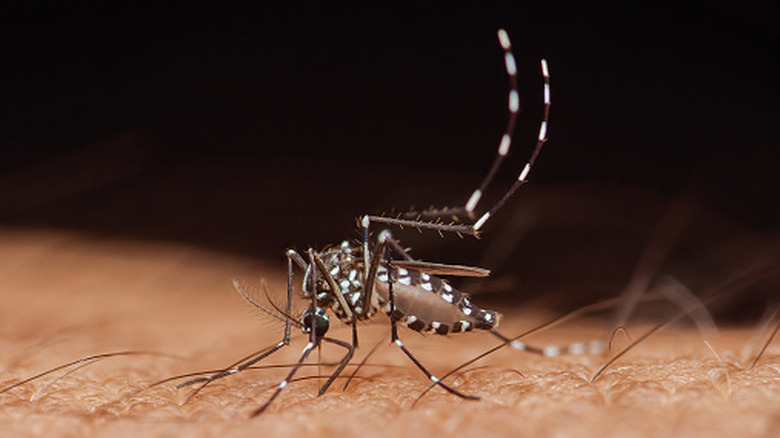
The proboscis is hardly unique to mosquitoes. Plenty of other insects use these mouth parts to feed, so why did researchers choose a mosquito for this 3D printer application? The same reason mosquitoes are so dang annoying. Female mosquitoes use their specialized proboscis to feed on blood. The stiff, almost perfectly straight body part can pierce through flesh and dive into blood vessels with unerring precision.
It was this combination of mechanical and structural properties that convinced researchers a mosquito proboscis would make an ideal 3D printer nozzle. Just one problem: Body parts don't tend to last when detached from living hosts. To solve this, researchers removed the core structure from its outer sheath, coated it with an ultraviolet curable resin, and then attached that to a custom printed adapter. Yes, you can 3D print 3D printer accessories yourself. During tests, scientists printed several high-resolution structures, including bioscaffolds meant to surround red blood cells and cancer cells.
This helped prove the efficacy of the proboscides and its ability to print at high pressures without fracturing. Currently, the only extruder that can compete with the mosquito's proboscis is a glass-pulled dispense tip, which can print materials at widths at less than 1 μm. However, those components cost $26 each, whereas mosquito proboscis applicators cost an estimated $0.08 each. If there ever were a reason to start a mosquito farm, this is it.