

Solar Panels Over Crops Are Providing An Unexpected Benefit For Arizona Farmworkers
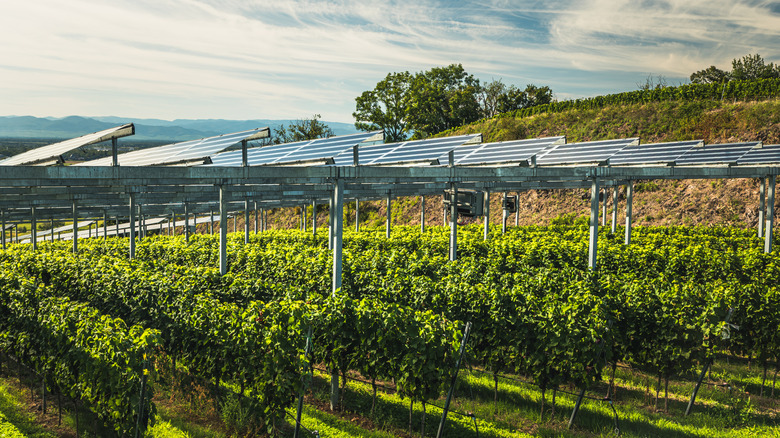
Arizona farmworkers recently secured funding to continue research on the use of solar panels above crops. This hybrid use of farmland for both agriculture and solar energy is known as agrivoltaics, and it's providing unexpected benefits for Arizona farmworkers. The shade provided by elevated solar panels is not only helping crops stay cool and healthy, but it's also giving farmers protecting from the Arizona sun.
Heat exposure is estimated to be the primary cause of up to 2,000 worker fatalities in the U.S. each year (via Public Citizen). Moreover, the U.S. Centers for Disease Control and Prevention (CDC) historically found that crop workers were 20 times more likely to die from heat stroke compared to the average U.S. civilian. It's no exaggeration to say that shade production is another way that solar panels are saving lives. Farmworkers have even noted that a bit of shade can keep drinking water cool all day long, which is enough to make a big difference in comfort.
Another unexpected benefit that Arizona farmworkers might someday see is revenue diversification. A research paper by Debaleena Majumdar at Arizona State University highlighted the possibility of using agrivoltaics as a way to meet clean energy demands in the Phoenix Metropolitan Statistical Area. If farm owners can follow the 20% rule for solar panels, they stand to profit by selling excess energy to communities that need it.
The future of agrivoltaics for Arizona farms
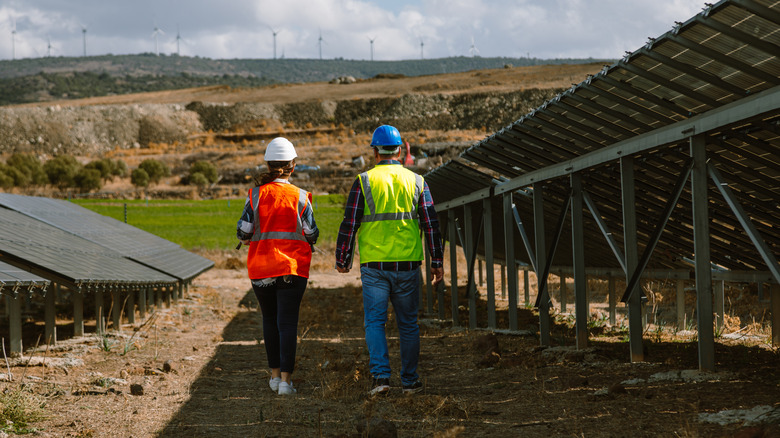
The future of agrivoltaics in Arizona was called into question in 2025 when the Semi-Arid Lab for Scaling Agrivoltaics (SALSA) lost its funding from the U.S. Department of Agriculture and the U.S. Department of Energy. Soon after, though, the Thomas R. Brown Family Private Foundation (TRBFPF) stepped in and provided the funding that is allowing the SALSA team to continue their research. According to Greg Barron-Gafford, the professor in charge of SALSA, this foundation has committed to funding research for three years (via the University of Arizona), and he indicated that the involvement of the TRBFPF has spurred other groups to express interest in agrivoltaics.
Currently, the Oak Run Solar Project in Madison County, Ohio is on track to be the largest agrivoltaics project in the United States. The project is slated to include enough solar panels to generate up to 800 megawatts of clean electricity. It's worth noting that it can take years for solar panels to pay for themselves, but that's from a purely financial perspective. Agrivoltaic solar panels are already paying off for Arizona farmworkers who are now enjoying a better quality of life in safer conditions.