

What Is The 33% Rule For Solar Panels?
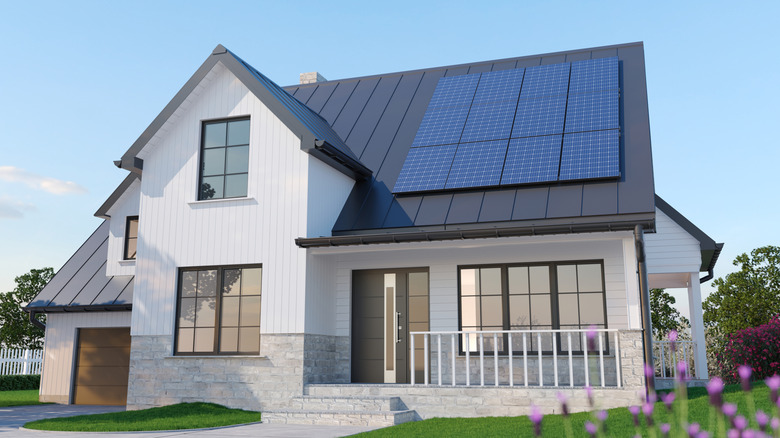
Anyone planning to install a solar array on their roof to generate electricity and decrease monthly power bills might be surprised to discover that you can't cover your entire roof with panels. There are a couple of reasons why, but the most pertinent is a specific part of the fire code safety. Called the 33% rule, it's an enforcement measure that limits panel coverage to 33% of your roof's surface or less. The idea is to leave enough space up there for first responders to navigate in the case of a fire. Firefighters need pathways and added clearance to move about or to ventilate smoke. Proper coverage also leaves enough setback from the ridge line or peak to allow for natural ventilation.
The 33% rule is not a federal law, but rather a state or local building code. It's a critical planning measure to help preserve your roof's integrity and manage the structural load of new panels, but it also helps with optimizing installation speed. Not following the guidelines can make permitting more difficult and can slow the installation and permitting processes, depending on where you live.
However, it's important to note that, while it is a rule and is factored into the permitting and installation stages, it's not an absolute cap or set point. If you do go over 33%, emergency fire services require you to leave larger gaps around the edges of the array and near the roof ridges. It's also not a hardware limitation, either, meaning if you go over the threshold, the extra panels will add to your energy generation, though utility companies may dictate and limit the amount of electricity a grid-connected system can produce.
Another 33% rule can confuse the issue
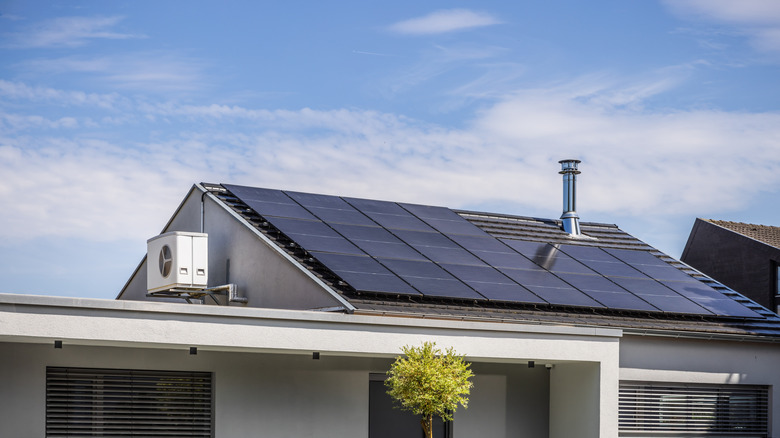
The major 33% rule refers to the solar array installation and the total number of panel coverage on your roof, but there's another, similar rule that solar providers follow. In solar design, the engineering of the related systems, the 33% rule also refers to oversizing a solar array relative to the inverter — technically 133%. A solar inverter is basically the brain of the system, converting the direct current (DC) electricity that's generated by the panels into alternating current (AC) so it's usable by your home's power grid. It's one of the most important elements of any solar array or solar generation system. You need that inverter to do a host of things, like powering appliances or charging your Tesla or other EV with solar panels.
This 33% (or 133%) rule indicates how much more capacity an inverter can safely handle compared to its rated output. That's because solar panels rarely operate at their maximum potential or efficiency. So, a 5-kilowatt inverter can usually handle a larger rated solar array, one rated between six and seven kilowatts. It won't overload the system because the panels likely aren't producing that amount of energy at all times, or often. The second version of the rule has almost nothing to do with the installation of the panels, outside of helping solar installation teams gauge what kind of inverter is required to support a particular solar array.
Solar energy systems have lots of proportional rules

Not to make things even more confusing, but there's also the 20% rule to consider for solar panel installations, as well. It's not really a rule, or a law, or a definitive measure of anything. It's a simple sizing guideline that helps you discern how big a system you might need — you want your system to produce 20% more power than your typical monthly electricity usage to help offset costs. The 20% will also account for spikes in power draw, in case you use more than your monthly average, and other conditions that might reduce your solar panel array's generation efficiency.
It may seem complicated with all these rules and guidelines being presented, but they are definitely some things you should know before installing solar panels and batteries in your home. Installing anything solar-related is a long-term investment and requires a lot more planning than you might have originally suspected. These guidelines are a solid example of that and highlight why it may be better to seek professional guidance before installing the related solutions yourself.