

Microsoft's Newest Wearable Isn't A Smartwatch – It's An AI Badge For The Workplace
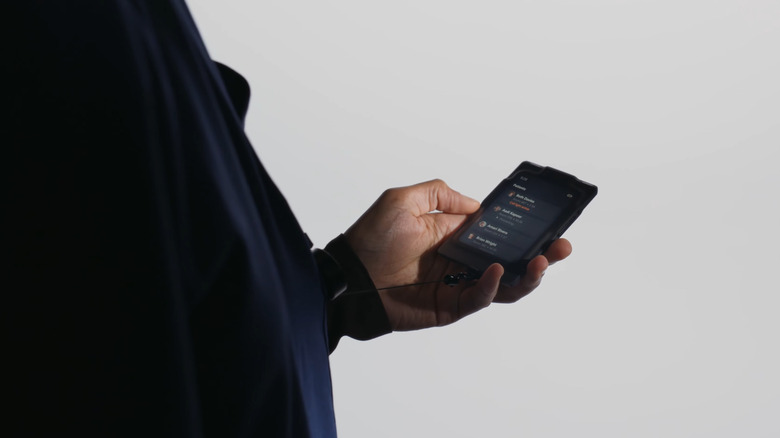
Microsoft isn't backing down from this artificial intelligence business anytime soon, despite a push from users to get rid of Copilot on Windows 11. At Build, the Redmond company's annual event, it demonstrated a new AI wearable: a badge. Presented like a lanyard you'd see in an office, this is part of Project Solara, which intends to be the next step in AI agent integration. AI agents are like specific, siloed off elements of the large language model powering the AI, intended to "focus" it on a task.
Microsoft also showed off concept devices similar to the Amazon Echo Show smart display line, currently called "Desk Concept." Microsoft intends for Solara to be more than the badge, but a reenvisioning of the entirety of computing when it comes to AI. However, the focus was on the badge, or "Badge Concept." Rather than running the AI model on the device, it instead connects to the cloud ("chip-to-cloud") and runs CoPilot that way.
The device itself is still a concept, but it is pitched as coming with a camera, microphone, sensors, touch screen, and internet access. Rather than building it on Windows or its own mobile platforms, Microsoft is instead adapting a version of Android for the form factor. This won't be the full version, but it is dubbed "Microsoft Device Ecosystem Platform," as it's repackaging the source build from Google's software.
Project Solara aims to inject AI agents into your work
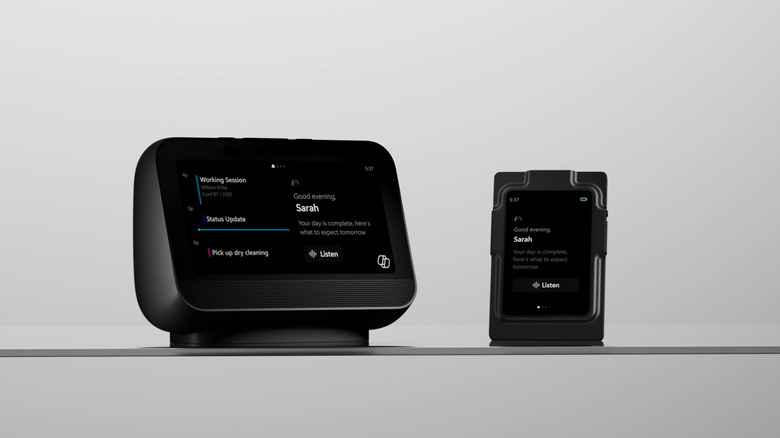
So what does the badge actually do? Microsoft envisions this as something that sits in your current workflow. In Microsoft's press release, it states that it's about bringing it "where people need it most." The idea is that you'd run into a problem with a task at work, ask the AI agent to take a look via the camera, and then assist you with the rest of it. Workplaces envisioned using it are healthcare or "frontline" work.
The company is also promising that the user interface will tie into this overall goal of designing new devices for the current computing age. Rather than building an interface around a standard, it'll instead use "just-in-time UI." This will build out the interface for the job at hand, rather than a pre-set UI. For instance, if scanning documents for digitization, Solara might be instructed to change the UI to a button that takes a photo and another for uploading.
What's unclear is when the devices would launch. There are no dates attached, and the company has a history of scrapping devices before they can surface. Foldable devices, fitness bands, and phones have all been announced, only to be killed off – even after the press got their hands on them. There's also the concern that AI wearables haven't managed to find real success either. One example of a tech brand that lost its customers' trust is Humane, which left its early adopters with a fancy paperweight after being purchased by HP.