

5 Of The Best Wi-Fi 7 Routers You Can Buy In 2026

We may receive a commission on purchases made from links.
Using an old and outdated router is detrimental to your networkas as it's not only bad for security purposes but can also cause issues such as sluggish internet speeds, constant connection drops, and limited range. Some of these issues are typically signs that your router is old and needs to be replaced. If you've experienced these issues and you've already tried all the ways to improve your internet speeds but still aren't satisfied with the results, then it's time you picked up a new Wi-Fi router.
Wi-Fi 7-powered routers are your best option for the fastest wireless speeds, as the Wi-Fi 7 standard (technically referred to as 802.11be Extremely High Throughput) offers theoretical speeds of up to 46 Gbps and introduces Multi-Link Operation (MLO) technology for sending and receiving data over the 2.4 GHz, 5 GHz, and 6GHz bands at the same time via a single connection. There are quite a number of Wi-Fi 7 models on the market to choose from, but not all quite deliver on their promise, especially when it comes to speeds. We know what you should look for in a Wi-Fi router, and we're well-positioned to show you the right models to buy.
TP-Link Archer BE550
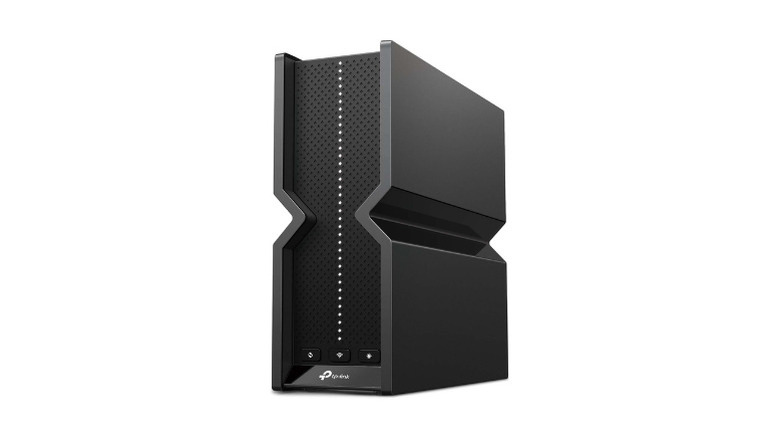
Also known as the TP-Link BE9300, the TP-Link Archer BE550 is a tri-band router with 2.4 GHz, 5 GHz, and 6 GHz radio bands that can broadcast the signal up to 2,000 square feet. This router comes with a 2.5 Gbps WAN port, and it can deliver maximum speeds of 9.2 Gbps across the three bands. For wired connectivity, you can utilize any of the four 2.5 Gbps Ethernet ports that the router offers. Moreover, there's a single USB 3.0 port for connecting devices like your printer for shared printing, one of the handy features you might not know a Wi-Fi router offers.
The Archer BE550 is mesh-compatible thanks to EasyMesh support. That means if you have a large home or move into a bigger one in the near future, you can buy a compatible range extender with EasyMesh or OneMesh support and use it to create a mesh network to ensure full coverage. Lastly, it also comes with a variety of useful features like WPS, Guest Mode, Quality of Service, Remote Access, and VPN client and server support, all of which can come in handy in different scenarios.
It costs $250, which isn't cheap. However, reviewers from multiple tech sites like New York Times' Wirecutter speak highly of it, saying it offers excellent speeds, great port selection, and mesh networking support. The only caveat is that it doesn't have the best range in the 5 GHz band, and it charges extra for full security and parental control features.
TP-Link Archer BE230 BE3600
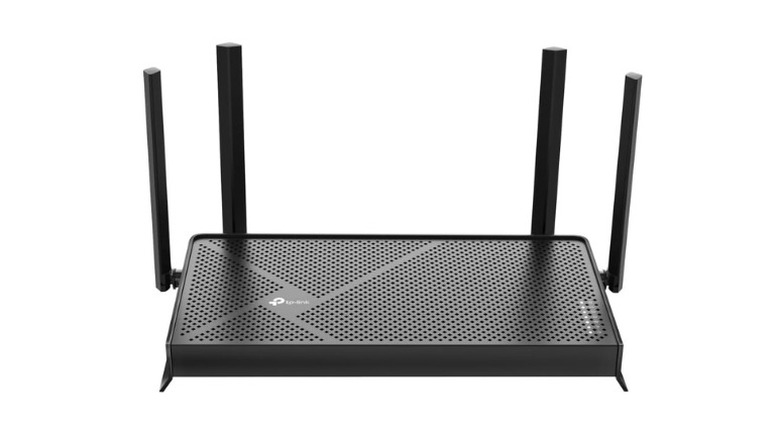
The TP-Link Archer BE230 is a dual-band Wi-Fi 7 router that supports the 2.4 GHz and 5 GHz bands. Even with two bands, it takes advantage of MLO technology to offer fast speeds and lower latency. It can achieve a maximum throughput of 3,570 Mbps and has four built-in antennas that use beamforming technology to ensure broad coverage of up to 2,000 sq. ft. It can connect up to 60 devices simultaneously, which should be enough to cover even a house with a ton of devices.
The Archer BE230 has a great port selection and comes equipped with four Ethernet ports (a single 2.5 Gbps and three 1 Gbps LAN ports), a USB 3.0 port, and a 2.5 Gbps WAN port. This router can create or be connected to a mesh network as it has EasyMesh support built in. As far as downsides go, the Archer BE230 won't be the perfect fit if you have modern Wi-Fi 7 devices with 6 GHz support, as it only supports the 2.4 GHz and 5 GHz bands.
However, at $120, it's a bit cheaper than the Archer BE550, and RTings says it's a great pick if you're on a tight budget. In PCMag's hands-on testing, it was found to offer solid performance and to have handy parental controls and security features, although the site notes that it lacks the 6 GHz band and support for the 320 MHz channel width.
Asus RT-BE96U
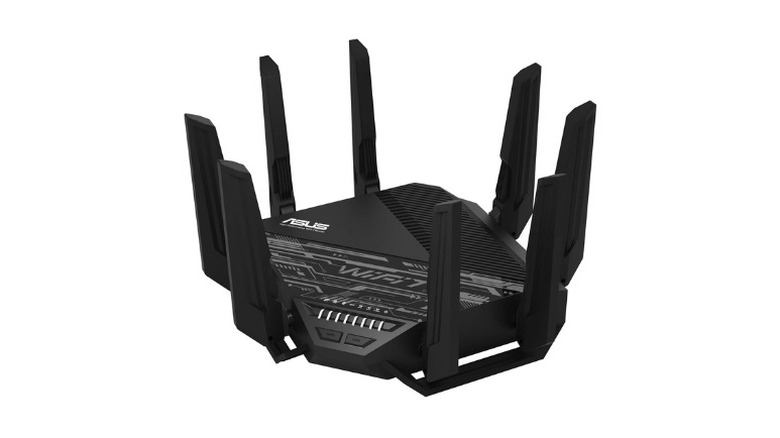
If you have a 10 Gbps internet plan from your ISP and want high-end performance, the Asus RT-BE96U is worth looking at. The Asus RT-BE96U is a tri-band router that is equipped with a lot of ports, including two 10 Gbps WAN ports, four LAN ports (one 10 Gbps and three 1 Gbps), and two USB-A ports. One of the WAN ports can also be used as a LAN, which is great if you have more than four devices that you need to connect to via Ethernet.
Additionally, two of the router's LAN ports support link aggregation, meaning you can aggregate them for higher wired speeds if you aren't satisfied with what you're getting from a single port. This router can deliver speeds of about 19 Gbps across the 2.4 GHz, 5 GHz, and 6 GHz bands, can offer a connection spanning a range of up to 5,400 sq. ft., and is mesh-compatible using Asus' AiMesh protocol. It offers a suite of software features such as Quality of Service for prioritizing specific apps with high bandwidth needs, parental controls, and WPA3 security.
Tom's Guide ranks the Asus RT-BE96U as the best overall Wi-Fi 7 router and highlights its top performance, wide range of ports, built-in security features, and ability to work as a VPN client or server as top reasons to buy it. Other reviewers have found it to offer excellent coverage and speeds, but its expensive cost and bulky nature stick out as major drawbacks. The Asus RT-BE96U costs $550.
Amazon eero Max 7
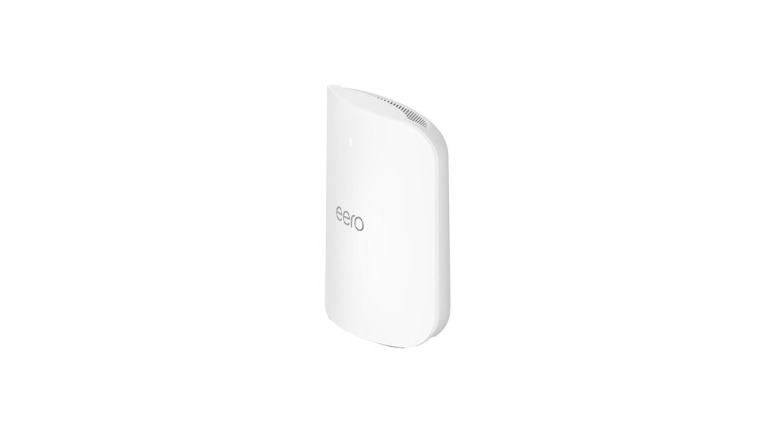
The Amazon eero Max 7 is a mesh Wi-Fi router with tri-band support that can cover up to 2,500 sq. ft. If you have a large house full of smart home devices, you might find the eero Max 7 a more suitable option since it claims to connect over 250 devices and supports Thread, Matter, as well as Zigbee smart home protocols. It comes with four Ethernet ports: two 10 Gbps ports and two that max out at 2.5 Gbps. The company says you can expect wired and wireless speeds of up to 9.4 Gbps and 4.3 Gbps, respectively.
As a mesh-compatible router, it can be used to create or extend a mesh network using Amazon's TrueMesh technology, but you can still use it as a standalone router. Setting up the eero Max 7 is easy and straightforward using the eero app, and Amazon offers extra software features that you can access in the app, such as Wi-Fi scheduling, activity history, content filtering, ad-blocking, and a VPN. However, you'll have to pay for a subscription to access some of these features.
RTings has tested the eero Max 7 and says it offers "outstanding range performance" and "exceptional top speeds." The publication also loved the router's sleek design, multi-gigabit ports, and support for different smart home protocols. However, it notes that eero Max 7 doesn't offer advanced settings, granular network controls, or a web interface for configuration. It's also expensive, as it costs $600.
Netgear Nighthawk M7
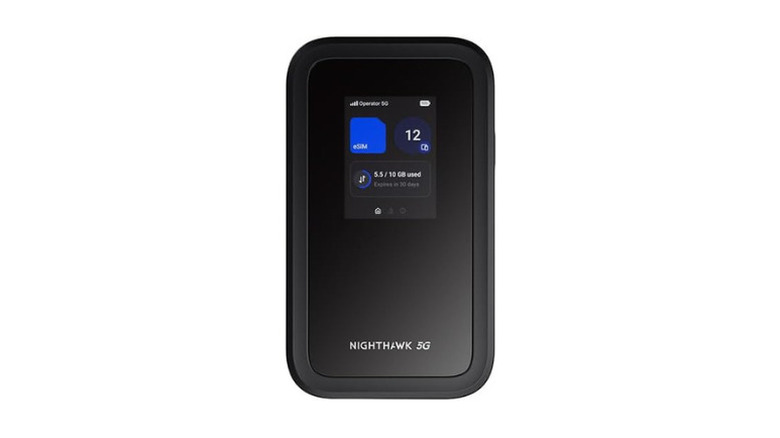
All the routers we've discussed thus far are models that are meant to be kept in a stationary place in your house. However, if you're on the road most of the time or you simply want a Wi-Fi 7 router that you can carry with you, consider the Netgear Nighthawk M7. It's a cellular data mobile Wi-Fi hotspot that supports 5G connectivity and broadcasts a Wi-Fi 7 signal for your devices to connect to over the air (it can connect up to 32 devices). This router has a maximum speed of 3.6 Gbps, and it works with AT&T, T-Mobile, and Verizon networks in the U.S.
It supports both eSIM and physical SIM cards, which gives you flexibility in how you connect to the internet. For convenience, Netgear provides a dedicated eSIM Marketplace through its mobile app (available on Android and iOS), allowing you to purchase and download eSIMs from over 140 countries. As a mobile router, it promises up to 10 hours of battery life and charges via a USB-C port.
You can also use that USB-C port for wired connectivity by buying a USB-C-to-Ethernet adapter. Tom's Hardware recommends the Netgear Nighthawk M5 as the best 5G Wi-Fi mobile hotspot and found it to offer average speeds of up to 250 Mbps. It also says the router can last up to 10 hours, as advertised. However, it's not cheap. This mobile router costs $500 on Amazon.
How we selected the best Wi-Fi 7 routers
Wi-Fi 7 routers first hit the market starting in 2023, and as you can expect, there are many models on the market right now promising to offer blazing-fast speeds as expected from the 802.11be Extremely High Throughput wireless standard. To pick the best Wi-Fi 7 routers, we consulted expert opinions from tech sites that have tested dozens of these gadgets, such as Tom's Guide, Tom's Hardware, Wirecutter, and RTings.
We also leaned on our expertise to make sure that the list we provide is as balanced as possible and meets the needs of different types of shoppers. The list includes routers that are a great fit for those with a tight budget, those with a house full of smart devices, those who need top performance, and even one for those who want something they can move with from one place to another.
For a router to be included in this list, it had to have been reviewed and rated highly to the extent that it was shortlisted as one of the best options by reputable tech sites. We've done our best to point out the pros and cons of each model, so you're aware ahead of time before settling on a given option. Additionally, we made sure all our recommendations are available to buy at the time of this article's writing.