

Scientists Discovered A Hidden Necropolis In The Inky Depths Of The Indian Ocean
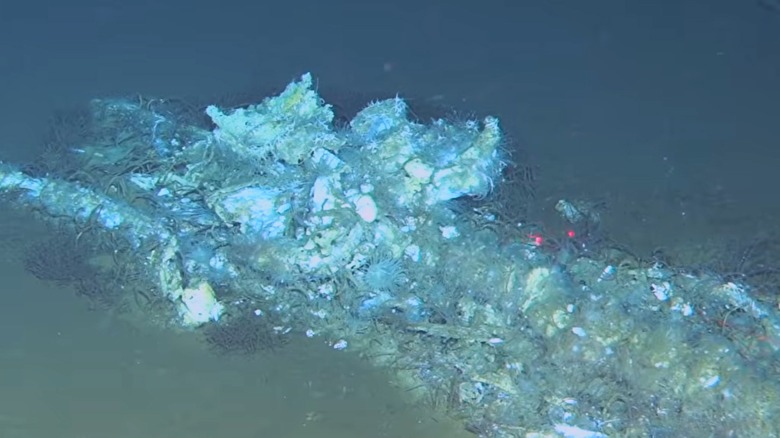
Although around 70% of the Earth's surface is covered by ocean water, only 28.7% of that (specifically the seabed) has been mapped. What awaits us in the hidden depths below? How about a thriving ecosystem that also doubles as a graveyard with bones that date back millions of years?
Recently, ocean divers discovered the motherload of whale graveyards, colorfully referred to in their paper (published in Nature) as a "whale necropolis." This cetacean cemetery is located on the seabed of the southeastern Indian Ocean in an area known as the Diamantina Zone and is one of the deepest known "whale-fall ecosystems" ever discovered. Like many whale-fall communities, the animals here congregate around the freshly-sunk corpses of whales — including beaked and baleen whales. Each carcass can potentially feed a community of brittle stars, bone-eating worms, and clams for decades. It's yet another example of how life can survive at the bottom of the ocean without the sun.
While the discovery of any whale-fall is a smorgasbord for marine biologists (more on that later), the true meat of the necropolis rests just below the sea floor's surface. This deep-sea boneyard doesn't just hold the fresh remains of whales, it also hosts hundreds of whale fossils. As of writing, researchers have cataloged 476 distinct cetacean fossils, the oldest of which date back at least 5.3 million years. And unlike most fossil sites, researchers didn't have to do much digging, if any; the fossils were just sitting there on the ocean floor as "strange lumps." Paleontologists wish it were this easy to excavate dinosaurs on land (and make fossil discoveries that change what we know about prehistoric animals).
A feast for discovery (and brittle stars)
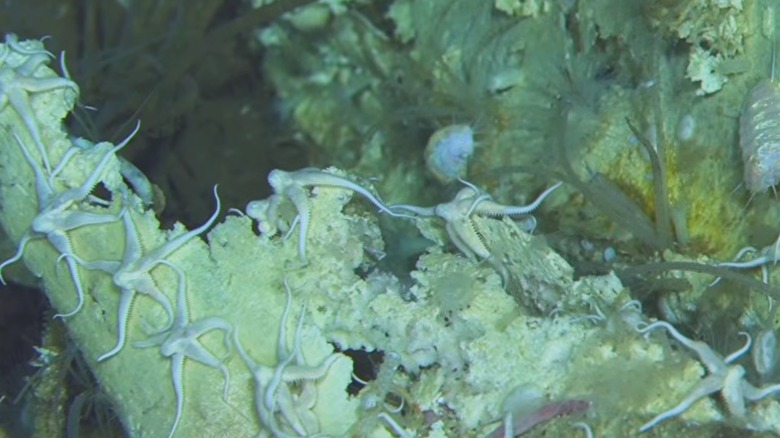
Many deep-sea animals come out of the woodwork whenever there's a whale-fall. After all, it's not every day a feast like this falls out of the sky (or at least higher ocean zones). It's a perfect opportunity for scientists to catalog the animals answering the metaphorical dinner bell.
As previously stated, many of the animals feasting on the relatively fresh whale corpses of the Diamantina Zone include brittle stars, worms, and clams, but researchers believe that many of the animals might consist of previously undiscovered species. For instance, several brittle stars marine biologists studied "differ notably" from other brittle star specimens in the trench. In fact, scientists believe that some of these animals adapted specifically to live in or near whale-falls.
Since the whale necropolis contains countless fossils, it provides a unique opportunity for whale biologists. Because of the nature of the area, the Diamantina Zone can potentially provide a continuous fossil record for that area. Scientists could study the submerged sepulcher and learn more about the "diversity and abundance of beaked whales that lived in that part of the southeastern Indian Ocean." This whale graveyard has already provided a fossil of a previously undiscovered species of whale, the Pterocetus diamantinae. And that's on top of the fact that beaked whales are notoriously rare and difficult to study. Scientists were barely able to learn that beaked whales can hold their breath for nearly four hours because the radar kept scaring them off, so you can imagine how exciting it is to find specimens that won't (or can't) run away.
Future opportunities to look into the past
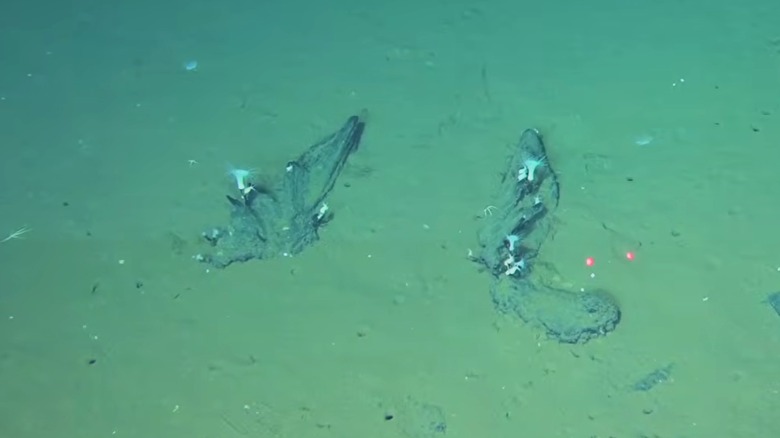
At first glance, 476 fossils sounds like a lot, and it is, but we need to clarify that these are only the ones researchers have found so far. Scientists only combed a survey area of 0.64 square kilometers (about 0.25 square miles). However, the Diamantina Zone stretches a mind-boggling 1,200 km (745.65 miles). With so much of the area uncharted in terms of whale falls and fossils, hundreds if not thousands of fossils could remain waiting for discovery. And who knows how many of them are of unearthed species?
Not all of the potential discoveries revolve around the animals currently living in the Diamantina Zone and the unknown fossils littering the area. One of the greatest mysteries of the Diamantina Zone necropolis is how it was formed. The area is downright fertile with whale bones compared to the surrounding seabed. One theory is that a mix of surface and deep-sea currents siphoned whale corpses into the trench, partially due to its shape. While the underwater crypt can provide a buffet of fossils for paleontologists, figuring out how it formed can potentially help lead the way to other long-lost whale graveyards. Perhaps all we have to do is follow the currents.