

3 Features Only Samsung Galaxy Watches Have
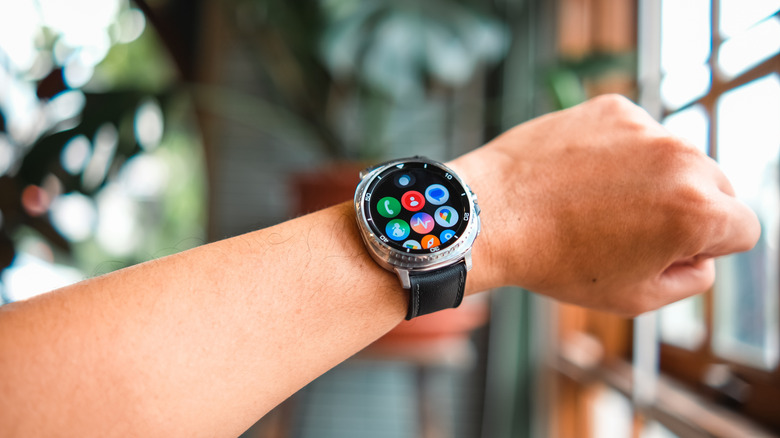
It has been nearly 13 years since Samsung launched its first smartwatch — the Samsung Galaxy Gear. Although the company gave up on the Gear branding in 2018, it has continued releasing new smartwatches every year. As a result, it has one of the most impressive smartwatch portfolios among Android manufacturers and makes some of the best Wear OS smartwatches. This extensive experience in the smartwatch space has enabled the company to introduce new features ahead of its competitors, some of which have yet to appear on any other mainstream smartwatch.
For example, Samsung is widely known for popularizing a mechanical rotating bezel in its smartwatches. Although the company ditched it for a while and switched to a digital bezel, the feedback from vocal fans and reviewers resulted in the company bringing it back with the Classic line in 2021, and it continues to be a part of the company's latest Galaxy Watch 8 Classic. While the likes of Withings have offered their own version of a mechanical rotating bezel in some of their smartwatches, there are a few Samsung Galaxy Watch features that remain absent from other mainstream smartwatches.
AGEs Index
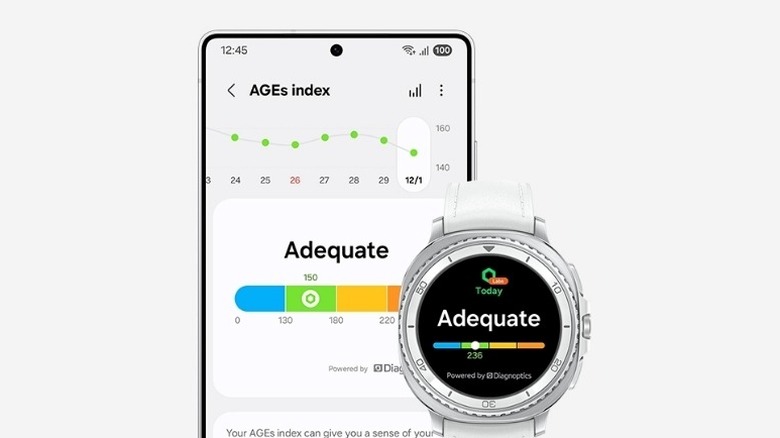
With the Galaxy Watch 7 lineup, Samsung added an enhanced BioActive sensor in its smartwatches, which enables the tracking of advanced glycation end products (AGEs), something that you won't find in any other mainstream smartwatch models. AGEs accumulate over time in a person's body tissue and can reflect the overall biological aging process, while also providing an indication of metabolic health. The updated sensor array packs ultraviolet, violet, yellow, and red LEDs that can track AGEs using skin autofluorescence.
Samsung offers a sliding scale that shows the level of AGEs in a person's body, from low (optimal) to high. Although the level of AGEs doesn't fluctuate wildly on a daily basis, they can, over longer periods, show if you're eating too many processed foods, high-sugar foods, and heavily fried meals. However, remember, smartwatches are predictive wellness tools and not diagnostic devices, making these indices only good tools for catching long-term behavioral trends. You can find support for the AGEs index only on Galaxy Watch 7 and newer models, as this requires newer hardware.
Body composition measurement
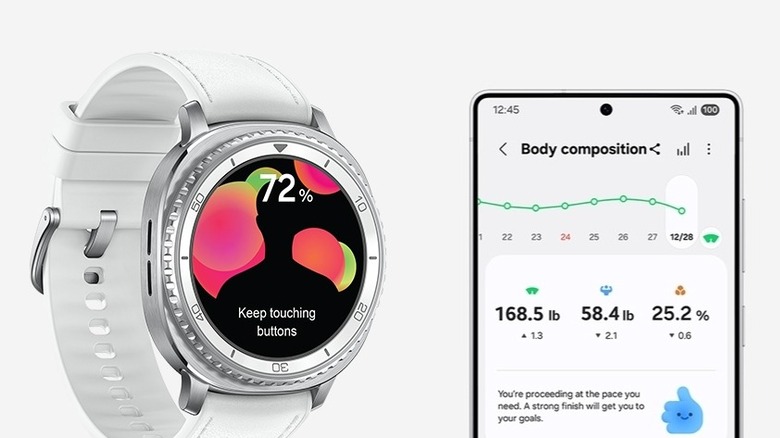
Another feature that you will only find on Samsung devices among mainstream smartwatches is body composition measurement, thanks to the built-in Bioelectrical Impedance Analysis (BIA) sensor. This feature essentially allows Samsung smartwatches to measure your body composition, including body fat percentage, body water content, and skeletal muscle mass. It sends a low-level microcurrent through your upper body and measures how well your muscles, blood vessels, and organs conduct it. The level of resistance to the current can tell the smartwatch how much of your body is muscle mass, water, and fat.
All Samsung smartwatch models since the debut of the Galaxy Watch 4 series include the necessary BIA hardware. While Samsung's body composition measurement is based on sound science, its implementation in a smartwatch can become slightly problematic and can lead to upper-body bias and hydration sensitivity, which are absent from a multi-thousand-dollar BIA machine at a medical clinic. As a result, like the AGEs index, this feature is also best suited as a convenient trend tracker, rather than a precision clinical tool.
Antioxidant index
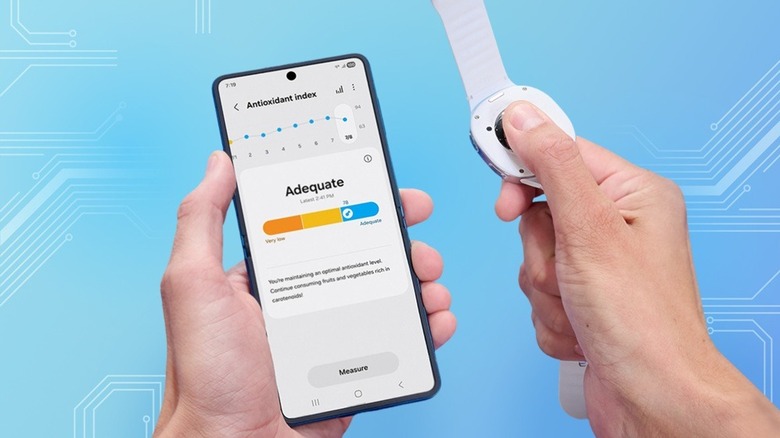
The Antioxidant Index found on Samsung smartwatches is another feature you won't find on any other mainstream smartwatches. While the name of the feature is a bit of an oversimplification, it actually scans your body for carotenoids. These are organic, red, yellow, and orange pigments that reach your body with your fruit and vegetable diet, and are considered a reliable marker for your actual fruit and vegetable intake. Samsung smartwatches send a combination of different wavelengths of light into your skin and look for how much of this light is absorbed and how much is reflected back.
Samsung smartwatches use this measurement as a proxy for your overall antioxidant health. It assumes that if your carotenoids are high, you are likely eating a nutrition-dense diet. The Antioxidant Index score is offered from 0 to 100, with the higher score being better. It's not intended for medical use, and your diet's impact can take up to two weeks to show up in the Antioxidant Index. It's only available on the Galaxy Watch 8 series and received a notable update in June 2026 as part of Samsung's next-gen Galaxy Watch features.