

Dolby Digital Vs. Dolby Digital Plus: What's The Difference?
There's much ado about the audio formats you choose, whether you're talking about listening to music or surround audio from your favorite movies and shows. But there are a lot of options even if you look into a proprietary format like Dolby Digital. From Dolby Technologies alone we have Dolby Digital, Dolby Atmos, and Dolby Digital Plus. If you're scratching your head wondering what the big difference is, you're not alone.
Dolby Digital, in general, is an audio compression technology used for multi-channel immersive and surround audio. In order to fit digital audio data effectively onto physical media like discs or make it available for broadcast via wireless channels and over the air, the data is compressed. It's reduced or shrunk to deliver faster transmission, hopefully, better performance, and ensure the entire process requires fewer resources — so it's all more efficient. True lossless compression aims to reduce the file size and handles the eventual reconstruction without sacrificing any of the original data and its quality. Lossy, which is what Dolby Digital audio is, tries to get as close to that as possible.
Dolby Digital is a format that supports 5.1 channel audio. Dolby Digital Plus, the newer and upgraded version, is a format that supports 7.1 channel audio and above. While not necessarily relevant here, Dolby Atmos is similar, but designed to be an object-based format that adds height audio channels to create more of a 3D sound. It generates an audio bubble that makes it seem like the sounds are coming from all around you, as in not just traditional surround, left, and right, but also from above or below. All told, that's the difference between the three, but what does it actually mean?
What do the different Dolby Audio formats actually do?
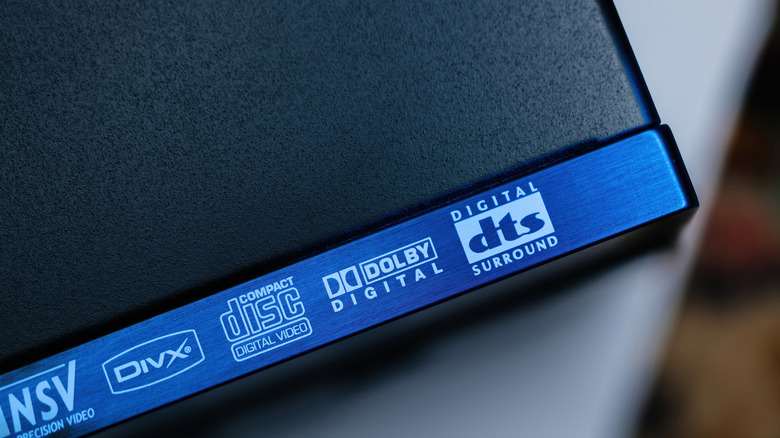
To make things a little easier to understand, let's compress the terms right away, just like our audio streams. Moving past the Dolby Audio versus Dolby Atmos points made in the intro, we can establish that Dolby Digital and Dolby Digital Plus are the company's primary audio formats. Dolby Technologies actually has more, including Dolby TrueHD, Dolby Volume, Dolby Pro Logic llz, and Dolby AC-4. They are all designed for specific uses.
Dolby Digital, the original, was for stereo home theater surround, with up to six amplification channels across five speakers and a subwoofer: Front or center, left surround, right surround, left channel, and right channel. The "up to" is important because you could also have less, including mono, 2-channel, and 4-channel configurations. Dolby Digital Plus is an enhanced format, offering better data bandwidth, and improved sound, because it offers higher bitrates than the original. It also supports more amplification channels, from 7.1 channels and above, which adds two more speaker options via left and right surround rear. Its backwards compatible, if you're watching media that only supports the older format, but with upgraded content you'll get to experience the new, improved compression and added channels.
For the layman, Dolby Digital Plus means that home theater solutions will be far more capable, surpassing the quality of previous systems and technologies to give you a truly immersive and cinematic setup. Some of the best ways to test your surround sound audio, established setup or new, involve playing Dolby Audio-compatible songs, live concert recordings, games, and playing back well-known audio-centric scenes in blockbuster movies. "Master and Commander: The Far Side of the World" has an incredible audio track.
Do you need to upgrade to Dolby Digital Plus (DD+) capable hardware?
Technically, yes, to experience the new Dolby Digital Plus uncompressed and improved audio to its full potential, with Dolby Atmos, you need hardware that supports the technology. That includes your TV, media player, and surround audio equipment, depending on what you have setup in your home. However, the real answer is a bit more nuanced. Since the technology is backwards-compatible, if you happen to be watching Digital Plus-supported media you can still experience it in 5.1 channel audio, provided your equipment supports it.
Any Digital Plus stream will be converted to a standard Digital 5.1 bitstream, with the extra two channels folded into the current configuration. So, what would normally go to surround back speakers are instead broadcast to the left and right surround channels. You shouldn't lose any audio, it will just sound a bit different with an older format system.
To bring things back home, that means if you're happy or satisfied with your current surround and home audio configuration, you don't necessarily need to upgrade, especially if it's working fine as-is. But if you want to experience more modern, improved, and immersive audio then it could be worth the promotion. If you do have an aging system, there's so much cool new tech that can level up your home theater that's worth considering. Please note that some of these descriptions are grossly oversimplified to make the information easier to digest.