

Cool New Tech That Can Level Up Your Home Theater In 2026
We may receive a commission on purchases made from links.
Setting up a home theater can be a daunting task ... and an expensive one, too. The audio-visual experience must be downright perfect to justify the massive investment of building a proper home cinema setup that does everything you want and then some. From good picture quality to a great audio system that breathes new life into the score of your favorite movies, it can be a bit overwhelming at times to figure out all the tech that's required to configure an amazing theater space in your home that's in a class of its own.
It's only natural that people spending big bucks don't want to invest in dated hardware that makes their home theater room an antiquated one. Buying tech released recently — in the past year or two — can go a long way in future-proofing your setup and letting you access state-of-the-art features to level up your home theater. Browsing the wealth of options at your disposal can be a bit too much to handle at times, but the following new pieces of technology, all of which have rave reviews from trustworthy publications, can go a long way toward unlocking a satisfying movie-going experience right in your home.
Samsung HW-Q990H
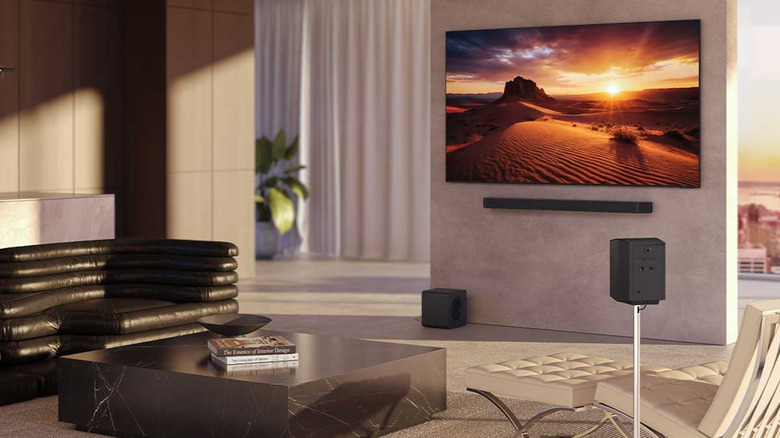
The importance of a good audio system to make your home theater sound immersive can't be overstated. Sure, TV speakers may get the job done, but do you really want to invest a truckload in the visual department only for the sound to come up short? Several kinds of audio systems do a great job of helping you achieve a whole new level of fidelity in this department, and the Samsung HW-Q990H stands right there with the best of them. Checking in at $1,999.99, it's one of the latest additions to the Samsung audio ecosystem, with the 2026 Q-Series soundbar, subwoofer, and dual rear speakers combo going a long way towards ensuring that the audio quality in your movie room is top-notch.
Improvements over its previous iterations, the Q990F and Q990D, are quite noticeable. Auto Volume ensures that you don't have to quickly change the volume whenever you switch channels or play other media that might be presented natively at a different decibel level. Another great addition is sound elevation, ensuring that spoken dialogue sounds like it's organically originating from the speaker's mouth instead of the soundbar placed below the TV. Along with these upgrades, returning features like SpaceFit Sound Pro and Samsung's patented Q-Symphony technology still get the job done, like always. The former uses the built-in microphone on the soundbar to automatically calibrate the speakers and ensure room-filling sound, while the latter enables multiple speakers to work together and adjusts the setup accordingly for a richer audio experience, meaning that both your TV speakers and this sound system can work in harmony.
NothingProjector Motorized Floor Rising 95% ALR Projector Screen
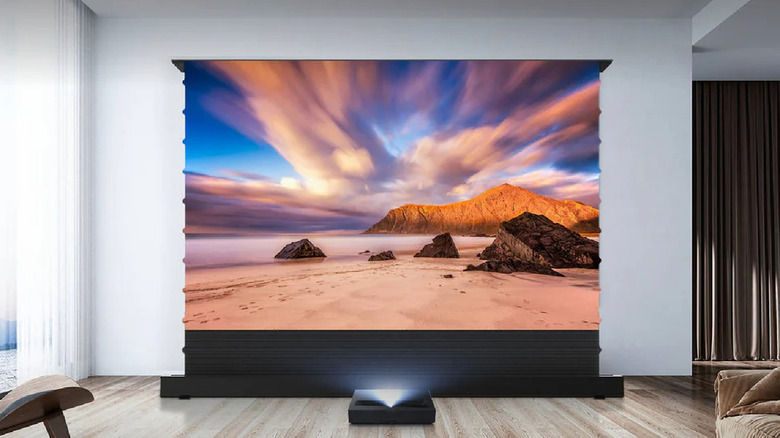
With space constraints being a factor to take into account for any home theater setup, it's easy to see why short-throw and ultra-short-throw projectors have become so popular in modern homes. These devices can be placed very close to your screen, rather than requiring a large expanse between the projector and the screen, but the higher-end models still maintain amazing projection quality. However, no matter how high-fidelity your projector output may be, it'll all be for naught if the screen it's projecting on doesn't match those same quality standards. To ensure that you don't face that issue, the recently released NothingProjector Motorized Floor Rising 95% ALR Projector Screen can turn your TV space into a proper home cinema. It supports a projection size of up to 120 inches and is very easy to set up, courtesy of its motorized design that helps it expand and retract with ease. This happens in just half a minute, which is especially impressive.
Sure, $1,699 is a bit on the steep side, but the value you get at this price point is unmatched. A motor that doesn't make too much noise, ambient light rejection technology that makes this screen viable to use in brighter environments, and a perforated acoustic surface at the lower half of the screen (great if you use a soundbar) all go a long way in lending a premium feel to this model. Suffice it to say, this screen can walk hand-in-hand with even top-end projectors.
Samsung S95F OLED
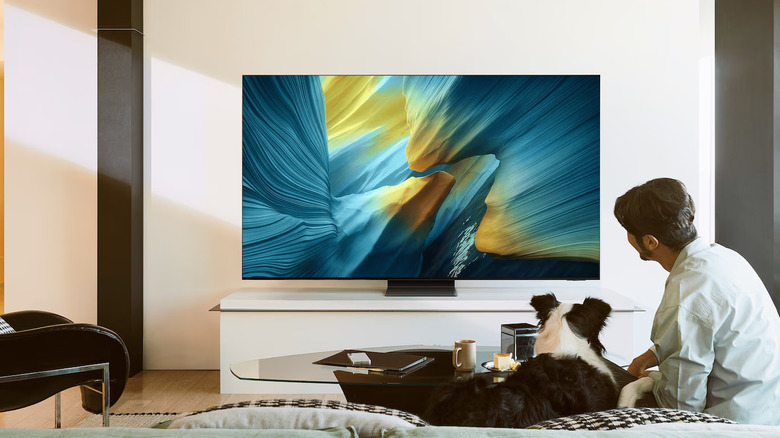
While most people consider projectors to be an invaluable addition to a home theater system, this isn't necessarily the case. Sometimes, a big TV screen is more than capable of helping you build the ultimate home theater system. This is why the Samsung S95F OLED, which debuted on March 31, 2025, can be a great purchase for home theater enthusiasts who don't want to deal with the nitty-gritty of setting up a projector. The 83-inch model is perfect for people who want to check out their favorite movies, TV shows, and games on a large screen, but there are two caveats to keep in mind. First, the eye-watering $5,297.99 price tag can be too big an investment for some — or most. Second, unlike the other variants of the S95F OLED, the 83-inch model replaces the superior QD-OLED screen with a W-OLED instead. The W-OLED excels in settings with lots of light, which probably isn't what you're shooting for with your theater setup.
For what it's worth, the 77-inch model isn't really small at all and lets you enjoy the benefit of an OLED screen better suited for dark environments, if that's non-negotiable for you. Either way, the S95F OLED is a striking TV that is loaded with state-of-the-art technology, right in line with what people would expect from a high-end television in 2026. It supports multiple HDR formats, including HDR10, HDR10+, and Hybrid Log-Gamma (HLG). Four 48-gigabits-per-second HDMI 2.1 outlets and support for eARC connections make it compatible with pretty much all major systems. Gaming enthusiasts will love that it's capable of 4K resolution at a 165-hertz refresh rate — specs so advanced that only high-end PCs can operate at this level — along with VRR (Variable Refresh Rate) and ALLM (Auto Low Latency Mode).
Amazon Fire TV Stick 4K Select
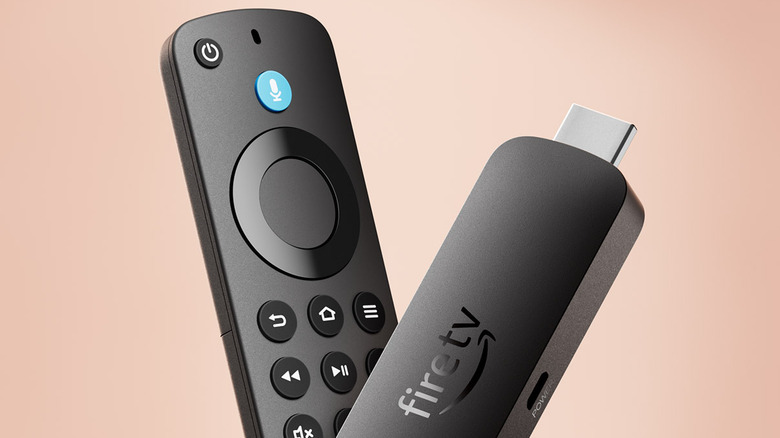
Not all of the additions in your home theater need to be expensive, feature-packed devices that are loaded with so many things that it'll make your head spin. There's nothing wrong with seeking out cheap and easy ways to unlock 4K streaming for your home theater setup, especially if you can do without some perks. The Amazon TV Fire Stick 4K Select, launched on October 15, 2025, falls in this category. Sure, there's no Dolby Vision or Dolby Atmos support, as compared to the regular 4K Amazon Fire Stick and its Max variant, and Select also comes with a slower processor and less memory. But the Select makes up for this with an attractive $39.99 price tag, while running the latest Vega OS and still providing 4K streaming capabilities.
As one would expect from a Fire TV Stick, the setup is as easy as they come. Simply plugging this device into an HDMI port and connecting the power outlet means that you're good to go, with a straightforward routine following not long after to calibrate the remote, connect to your Wi-Fi, and add your account. From here, you can download all the apps you want to turn your Amazon Fire TV Stick 4K Select into an entertainment powerhouse that lets you access a wealth of content and stream it to your home theater screen. However, for some people, the visual and audio limitations may be too much of a compromise, which is why they might be better off at least exploring the other Fire TV Stick models instead.
Acoustic Energy AE300 Mk2
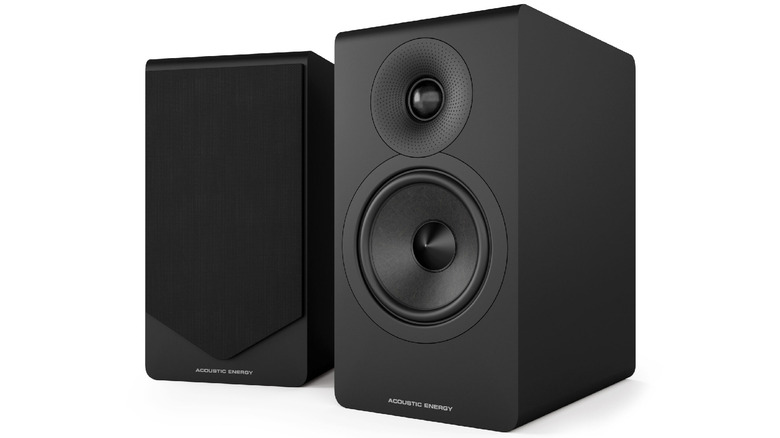
If your home theater is packed with so much tech that fitting a full-fledged audio system isn't in the space budget, why not opt for a pair of quality bookshelf speakers instead? The idea of sticking to a simpler, two-speaker audio framework may not be all that enticing, but the Acoustic Energy AE300 Mk2 generates enough power to make your room reverberate with its amazing sound output. The latest Mk2 variant of these speakers, released in 2025, boasts a 29-millimeter fabric dome driver, along with a separate 12-centimeter driver made of coconut fiber and paper that's specifically made for midrange frequencies and bass sounds.
Mount these $1,199 bookshelf speakers to an appropriate stand, and they'll become a perfect addition to your home theater setup in a room that is small to medium-sized. The balanced sound output and punchy bass will be more than enough to make your ears rumble whenever your favorite music reaches a high point or an action movie decides that it's the perfect time for a loud, impactful explosion to shake things up. The matte finish also looks good in most settings, but you'll have to wipe off your fingerprints whenever you handle these speakers.
Samsung Music Studio 7
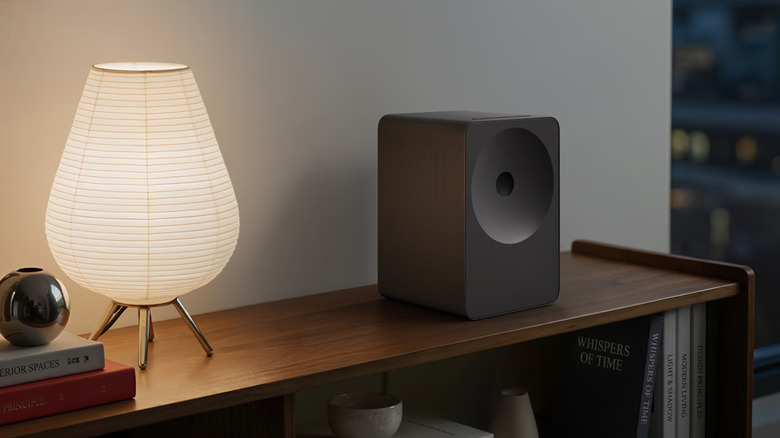
Still on the topic of speakers that are useful in rooms with a space constraint, the Samsung Music Studio 7 is another product you should keep an eye on. For $499, this solitary wireless speaker brings impressive depth to the audio of your movies, music, TV shows, and games. If you're a bit of a stickler when it comes to multidirectional audio, then nothing's stopping you from buying two of these speakers and adding them to your home theater setup, with SpaceFit Sound Pro technology ensuring that these pair will be calibrated properly to accurately recreate a sound field with even more depth. This effect is further enhanced with the addition of Samsung's Q-Symphony feature, which can help your (Samsung) TV speakers work in tandem with one or two Samsung Music Studio 7 speakers and further enrich the projected soundscape.
It helps that this 2026 speaker supports high-resolution 24-bit/96-kilohertz audio playback, along with AI Dynamic Bass Control, to make these low-frequency sounds clear and immersive in equal measure. The Studio 7 also supports Dolby Atmos, recreating a surround sound effect despite the lack of rear speakers. While a hardcore home theater enthusiast might not use this speaker on its own, it's definitely possible thanks to support for all major voice assistants and Spotify Tap. The latter is facilitated by an action button that launches the Spotify app and either recommends a track based on your listening patterns or plays something totally fresh.
XGIMI Horizon 20 Max
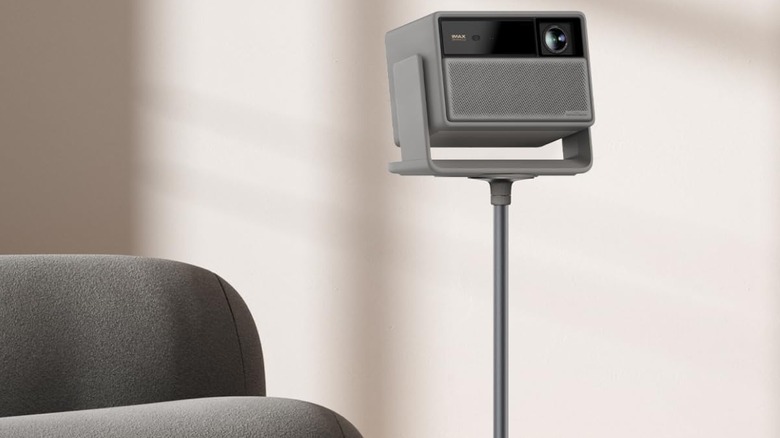
We've already talked about a projector screen tailor-made for ultra-short-throw projectors, and the XGIMI Horizon 20 Max will be the perfect complement to that screen. This is easily one of the brightest projectors available on the market, with a peak brightness of 5,700 ISO lumens being so over-the-top that an argument can be made that you won't even need a projector that's so bright in the first place. The Horizon 20 Max brings top-of-the-line tech in just about every area: 4K projected resolution, a contrast ratio of 20,000:1, triple-laser Digital Light Processing (DLP), 3D support, expansive 110-percent BT.2020 color coverage, and support for all major HDR formats, along with Dolby Vision. Given how this is considered to be one of the best projectors for home theaters, according to cinephiles, it's easy to see why the Horizon 20 Max can set you back a whopping $2,749.
This projector also supports IMAX Enhanced and Filmmaker Mode, removing any unnecessary post-processing effects to make movies look exactly how directors intended. Gamers will love the projector's Game Mode and VRR support, with both of these features working in tandem to reduce latency to one millisecond when gaming at 1080p resolution, with a refresh rate of 240 hertz. If you want to enjoy higher resolutions in your AAA video games, you still get solid 3-millisecond latency at 4K resolution and a 60 hertz refresh rate. The portable nature of this projector is also worth highlighting, although keep in mind that setting up this device for optimal picture quality can be a bit of a pain, especially since the menus can be a bit glitchy and complex.
madVR Envy Extreme MK3
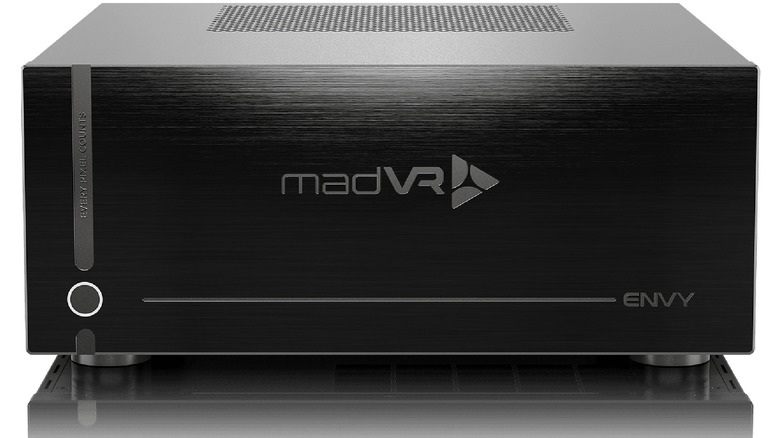
A good home theater setup has a lot of unsung heroes doing a ton of heavy lifting in the background to ensure that the picture quality is as great as it can be. Most people serious about unlocking cinema-quality visuals will find it worthwhile to invest in a separate video processing unit that helps in accurate image projection and enhances the visuals of your movies. Madshi Video Renderer, more commonly known as madVR, is especially reliable in this department, with the madVR Envy Extreme MK3 being a high-end video processing unit that can project images at up to 8K resolutions and will breathe new life into the movies and TV shows you watch.
The Envy Extreme MK3's long list of features includes HDR Dynamic Tone Mapping that optimizes everything you watch, with Highlight, Contrast, and Shadow Detail Recovery ensuring that both white and black levels pop while watching HDR content. Non-Linear Stretch technology helps avoid black bars without distortion, while dynamic subtitle placements keep captions visible without obscuring the action too much, and MotionAI will help you enjoy proper frame interpolation — smoothing — without much of the so-called soap opera effect that plagues most TVs and other devices that try to integrate this technology. Sure, all this tech comes at the ridiculously hefty price tag of $15,995, but people serious about making their at-home theater as perfect as possible will at least consider this investment.
Kaleidescape Strato E Movie Player
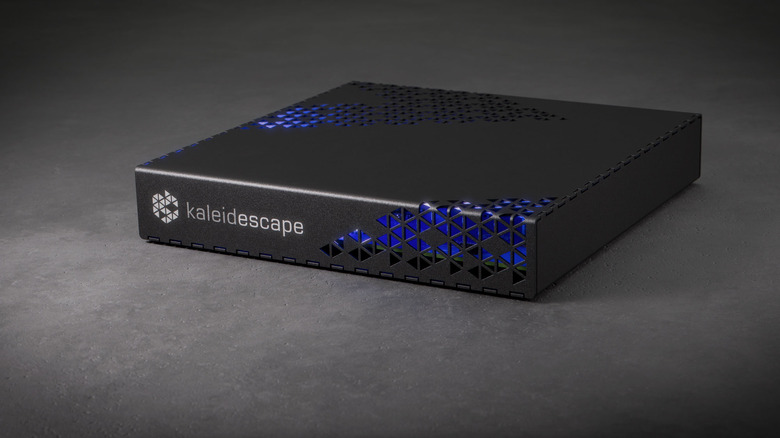
With streaming services continuing to grow in popularity, most people may not find a digital movie player to be the best use of their hard-earned cash. However, cinephiles with amazing home theater systems understand the need for uninterrupted video streaming and top-drawer picture quality, which is why Kaleidescape's offerings can be so useful in this department. While many people believe that the Kaleidescape Strato S is the best media player in the world, their latest product, the Kaleidescape Strato E Movie Player, is their most affordable offering, coming in at $2,995. This is still a bit expensive for many, but the perks this movie player offers will become clear as day once you watch high-bitrate content on this device. In terms of visual fidelity, it supports HDR10 content and Dolby Vision, while audio fanatics will enjoy watching content with Dolby Atmos and DTS:X integration.
It may seem like an additional expense to buy movies from the Kaleidescape Movie Store, but rates tend to be fairly affordable, and the quality of these prints makes up for the added cost in the eyes of many enthusiasts. On top of all this, the user interface is one of the best in its class when it comes to feature set and usability, and the device's compact build makes it more portable than you might expect. That being said, one area where it falters is its limited internal storage, with the 480GB SSD filling up in no time as you purchase and download a wealth of 4K content. Sure, you can buy a server from Kaleidescape to make up for this deficiency, but that's an added expense on top of the premium you're already paying for the Strato E.
Roku Streaming Stick Plus
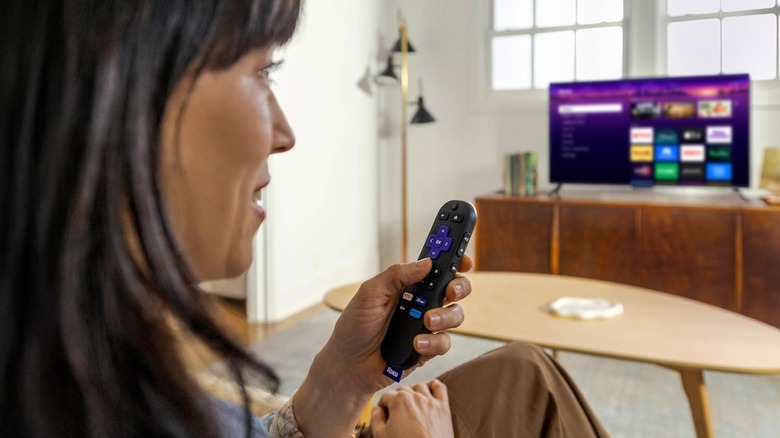
As appealing as high-end video processors and media players may be, one look at the Roku Streaming Stick Plus and its $29 price tag will make it a no-brainer for people who want their home theater setup to be expansive, yet affordable. It's very convenient to set up this device, with the use of a TV's USB port to power the device simplifying things. However, the interface of this device lags from time to time, which might be because it adheres to the outdated Wi-Fi 5 standard. Still, for one of the best Roku streaming devices on the market, this is a compromise many people are willing to make.
The user interface is neat, tidy, and easy to navigate, and a voice-enabled remote makes it simple to play whatever content you want. However, people who want a state-of-the-art home theater should keep in mind that this device lacks support for Dolby Vision and Dolby Atmos. While 4K content and regular audio formats work well with the Stick Plus, you may need to bump up your budget and grab a different media-playing device if these shortcomings are too much for you to deal with.
Methodology
To build our list of cool new tech that can really light up your home theater in 2026, we first focused on the "new" part of that equation — only products released in 2025 or 2026 have been considered here. From that group of shortlisted devices, only those with quantitative approval ratings of 80% or better (e.g., four out of five stars) from paying customers or glowing qualitative reviews or actual awards from trusted publications and websites like WIRED, CNET, PCWorld, and TechRadar (among others) made the final cut.
That selection process left us with ten fun and stellar tech items that cover a wide range of home theater needs, from beefing up your audio to nailing the latest in projector and TV technology, and everything in between. You're bound to find something here you just have to have ... maybe everything!