

This New Solar Power Study Might Solve A Big Transmission Problem
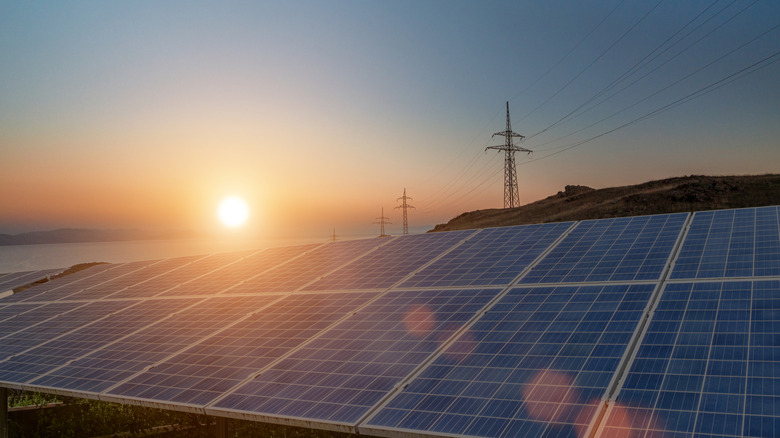
Location is one of the most important factors in solar panel installation. Water that drips off these devices can improve certain environments — one of China's largest solar farms is greenifying the Qinghai desert, for example — but shade is the nemesis of solar panels. You aren't supposed to install photovoltaics near tall objects like towers since they can potentially block the panels, but what about transmission lines? The answer might be yes.
The energy company ISA Energia Brasil conducted a test in São Paulo, Brazil, to determine whether it could install solar panels near electrical power lines. Of course, the study was designed to determine the impact of shade cast by the transmission cables, as well as whether placing the components near each other caused electromagnetic field interference or affected operational compatibility.
Surprisingly, the study's data showed that the solar panel installation experienced little interference, and that the shade cast by the power lines barely affected the panel's performance. To be fair, though, ISA Energia Brasil didn't use run-of-the-mill solar panels (the solar panels you install on your home). The company built a "prototype solar panel plant" that used high-efficiency panels. These photovoltaics could even absorb radiation reflected off nearby objects, but since the study was conducted in the real world rather than in a laboratory environment, it's hard to argue with the results.
A bright new future for solar power
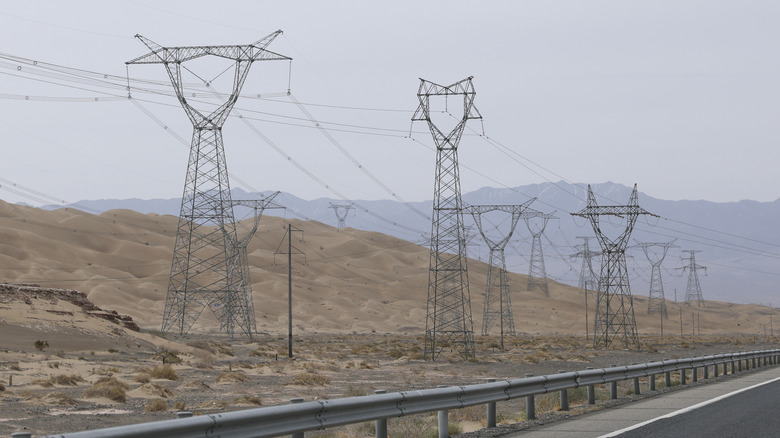
According to ISA Energia Brasil's computer calculations, a solar panel plant similar to the prototype used in the experiment could generate 1.746 MWh of power annually (Now imagine how much more energy such a plant could provide if fossil fuels weren't ruining solar power). The main takeaway of this study is that the ground beneath power lines is an untapped resource that could solve many energy problems.
ISA Energia Brasil maintains around 23 kilometers (14.3 miles) of power lines — São Paulo alone occupies 16.2 million square meters (6.25 square miles) of associated safety zones ripe for solar power plants. The company believes it could install photovoltaic plants on these lands with minimal issues, thereby supplementing the electricity already flowing through the transmission lines with renewable energy.
Admittedly, many electrical grids already transfer energy from solar power plants to users, but they all share an issue: These existing systems must shuttle the electricity through limited-capacity long-distance transmission cables. ISA Energia Brasil's study demonstrates that electric companies can potentially install miniature solar farms in the front yards of many customers (figuratively if not literally), quickly delivering the maximum amount of renewable energy. Plus, such installations would help decarbonize Brazil's electricity sector and potentially do the same in other countries that adopt them.