

Charlize Theron And Viggo Mortensen's Underseen Sci-Fi Movie Adapts A Pulitzer Prize-Winning Book
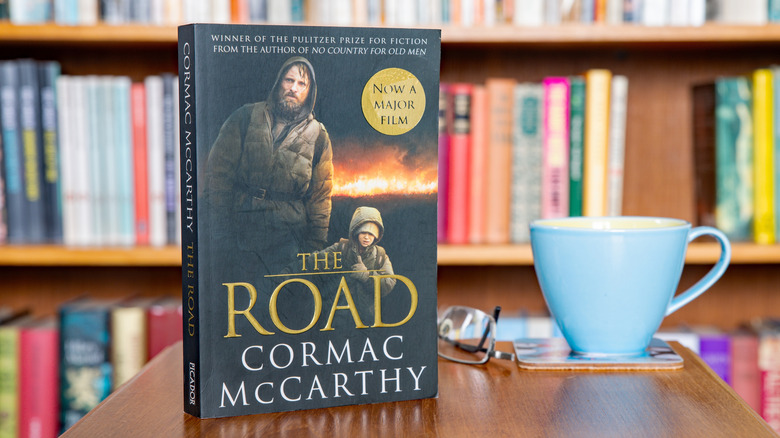
If you're a fan of grim dystopian literature, odds are you've heard of Cormac McCarthy. His novel "The Road" is widely considered one of the best examples of gritty, post-apocalyptic fiction ever written, widely praised for its ability to ground a personal narrative of a father and son in a setting where humanity has been nearly eradicated.
Despite the critical acclaim for the novel — which won the Pulitzer Prize and a number of other plaudits — the film version, also called "The Road," failed to connect with audiences (and failed to make our own list of the best movies about the end of the world). A star vehicle for Viggo Mortensen, who had turned in an excellent performance in the similarly bleak "A History of Violence" — which has the honor of being the last film released on VHS —the film adaptation was warmly received by critics.
However, it barely managed to scrape out $27M at the box office against a production budget of $25M, and is considered a significant flop; particularly with Charlize Theron also attached (though she appears only briefly in flashbacks as the protagonist's wife), and McCarthy penning the screenplay. Contrast that with another well-known film adaptation of McCarthy's work, "No Country for Old Men," which not only grossed more than $171M at the global box office, but went on to win four Academy Awards, including Best Picture while featuring film's most realistic psychopath.
On The Road
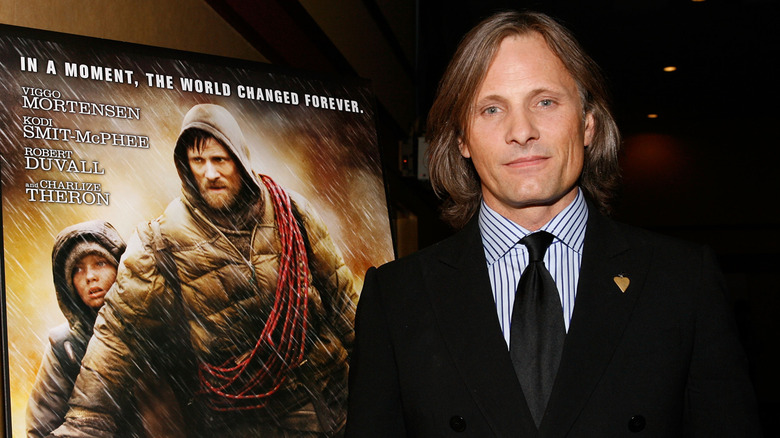
While "The Road" sits at a very respectable 74% on Rotten Tomatoes, there is some divide amongst critics about how well it earns its grim tone. The film confronts the viewer with a bleak vision of the world and repeatedly punishes its protagonists. In the words of Don Shanahan's review at Every Movie Has a Lesson, "It's hard to come away liking a movie with this little innocence or hope."
The movie does an excellent job of contrasting a father's grim determination with his son's relentless optimism, which is repeatedly challenged over the course of the movie. Like most of McCarthy's fiction, "The Road" is unflinchingly violent, brutal, and nihilistic, though the film's ending is slightly more hopeful than the version we get in the book. However, Deborah Ross at The Spectator agrees with Don Shanahan's take, arguing that the punishment the film forces you to endure isn't worth the payoff.
While I personally enjoyed the film almost as much as the novel, there are a number of reasons it may not have landed at the box office, chief among them the difficulty in marketing it. It's a slow, almost plodding narrative, and while it's punctuated by violence and the horrors of man's inhumanity, there are few action sequences that lend themselves to a traditional trailer. It also lacked the awards bump that "No Country for Old Men" enjoyed, and it's possible book readers weren't eager to put themselves through the same emotional torment again, but in film form.