

How Does Space-Based Solar Power Get To Earth?
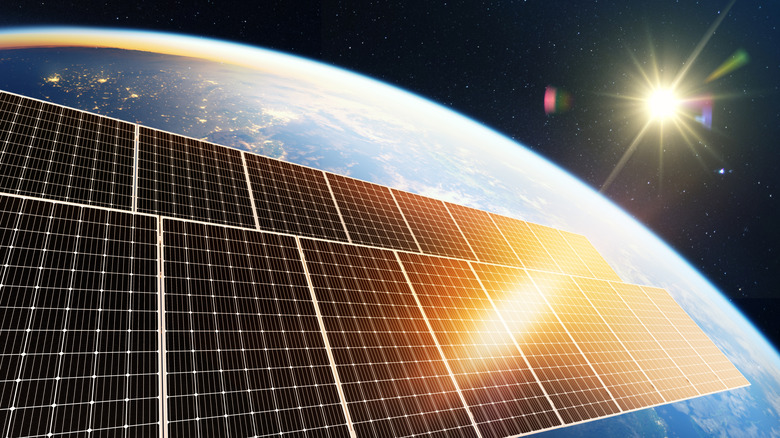
Being able to capture solar energy in space and then transfer it down to Earth would allow for an almost unlimited collection of energy, and it would help alleviate concerns that fossil fuel is ruining solar energy efforts. On top of that, it would help negate the effects of shadows and clouds on the collection of solar energy with solar panels. But, how exactly do we get the energy we collect in space back down to Earth? Well, there are currently two methods that scientists are working to use: laser-based and microwave-based.
The efforts to capture solar energy in space are far from limited, though. use solar power to generate near endless energy in space, and it's likely space agencies will turn to solar energy to help power moon bases as more countries strive to explore the lunar south pole in a search for water. However, here on Earth, finding a way to bring that power back down to the surface is also crucial. Especially as we continue to see growing concerns over climate change and the effects of generating power with fossil fuels. Capturing power in space is simple. Without clouds or other hindrances to stop the solar energy from hitting solar panels, we just need to put the hardware in place and wait for the energy to build up. However, transferring it through the atmosphere and clouds is another story. But, that's a problem scientists have been cracking away at for years, and this is how they plan to do it.
Microwaves provide constant energy delivery
According to a Caltech video breaking down how wireless power transfer works, a microwave-based system works off of a phenomenon known as interference. Dr. Ali Hajimiri, the Co-Director of the Space-Based Solar Power Project at Caltech, explains it by describing putting both of your hands into a river and looking at the ripples that it creates. There are areas where the energy from both hands combines together, becoming stronger, and then areas where it is weaker and canceled out by each other.
The idea with wireless power transfer, though, is to focus on the way the energy interferes with each other and direct it out at the same direction, thus cutting down on the actual interference caused by the sources. This allows you to keep the signal strong without losing as much of the energy. The downside to microwave-based power delivery, though, is that it can be costly to create the satellites and position them. Additionally, they are often located so far out in orbit that they cannot easily be maintained, according to the U.S. Department of Energy. However, laser-based delivery could help with that.
How laser-based power delivery would work
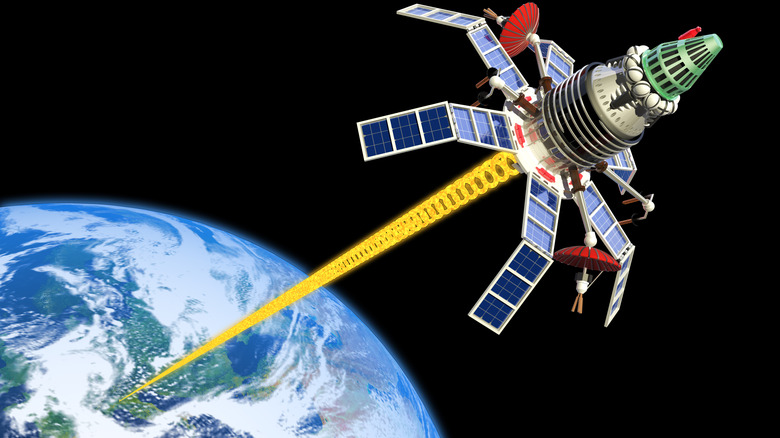
The second method that researchers are looking at using to deliver solar power is to utilize infrared laser beams. One company, Overview Energy, has already experimented with the idea, even going so far as to capture solar energy and then beam it down from an airplane to a receiver on the ground in 2025. The benefit here is that the laser is considered safer than constantly transmitting microwaves from a microwave-based system.
There are some limitations, though, especially in Overview Energy's system, which utilizes near-infrared lasers, and that is the fact that the near-infrared lasers cannot penetrate the clouds. As such, a system that uses lasers would need to rely on not just satellites in orbit around the Earth, but also on a series of receivers positioned in the sky to help catch the energy as it is transmitted to the final receiver on the ground. This means more moving parts, which ultimately means more opportunity for something to go wrong.
Still, the U.S. Department of Energy argues that a laser-based system might be cheaper and easier to maintain. And, according to Overview Energy, the laser would be scalable, allowing it to be expanded or narrowed as needed. As with all of these power systems, though, the actual electricity we use will not be generated until the energy reaches the ground.