

4 Things You Probably Didn't Know Your Smart Thermostat Could Do
We may receive a commission on purchases made from links.
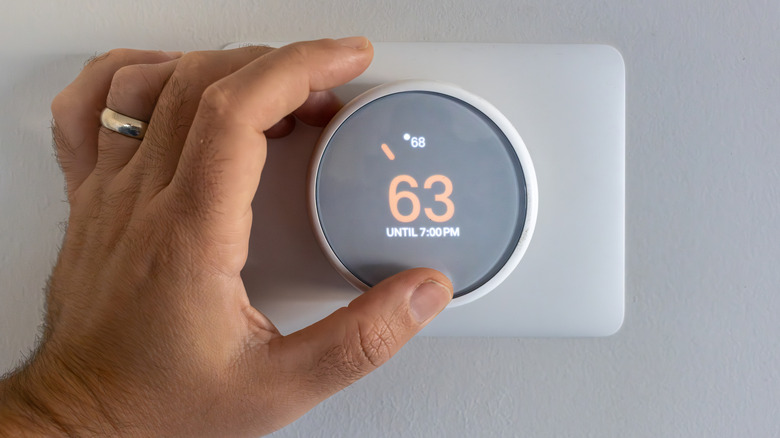
Smart home thermostats are one of the best upgrades you can make in your home. Being able to adjust the temperature on your smartphone from the comfort of your couch instead of having to get up and manually turn the thermostat up or down simply makes life easier and your home a little more comfortable. Learning smart thermostats are even more exciting, as they can adapt to your usage preferences over time and automatically adjust the temperature as needed so your home always feels just right. But many of these $200 gadgets can do so much more than just let you tweak how hot or cold it is.
Regardless of whether you're thinking about buying one of the major smart thermostats or you've already owned one for years, it is absolutely worth taking the time to learn about the great features they offer. Yes, it's cool (literally) to have a device that can automatically regulate your home's temperature, but these thermostats are designed to help you optimize them in dozens of different ways for your unique needs, and even to save a few bucks on your monthly power bill. So let's take a look at these lesser-known smart thermostat features you probably didn't know about and see how they can benefit your home (and wallet).
Save you money every time you leave your house

If you're wondering what a smart thermostat actually saves you money on, the answer depends on how you use it, but automating temperature adjustments is a key factor in any savings the gadget can achieve. For example, a smart thermostat can be set up to detect when you leave or return home, then tweak your temperature setting accordingly. With this, your system switches to a temperature that's less demanding and more energy efficient when you're not around, so that it's not heating or cooling the house for nothing.
But how does this feature work? Many smart thermostats use a combination of smartphone GPS tracking and built-in sensors that detect nearby movement to figure out whether or not you're at home. If you're away from home each weekday for work or out every Saturday morning for your kid's soccer game, the thermostat notices your absence and then adjusts the temperature in your home automatically during those times.
One of the best use cases for this handy feature is when you leave on vacation. As with any other time you leave home, when your smart thermostat detects that you're out, it'll keep the temperature set more conservatively. This adjustment still keeps your home from getting too hot or cold, but saves you a few bucks on your monthly bill.
Adjust temperatures for one or more specific rooms
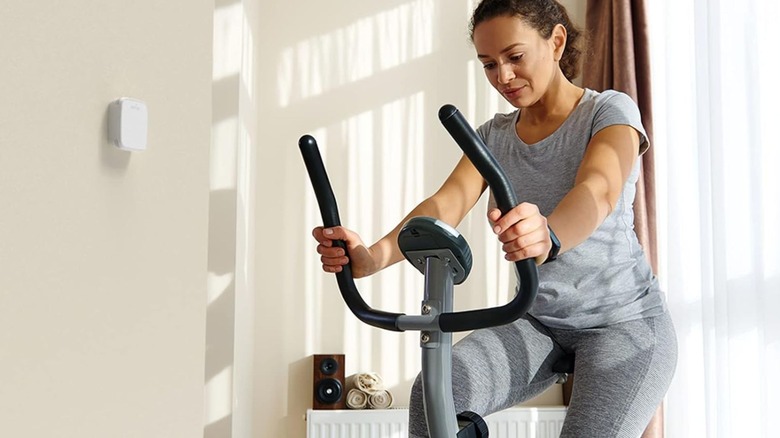
It's perfectly fine to just set up your smart thermostat and use it as-is. It'll run based on the temperature around wherever it's mounted via its internal sensor. However, if you need the temperature to be a little more precise for certain rooms or floors in your house, some smart thermostats are compatible with remote room sensors, and the combination can help you meet your goal.
Remote sensors let you tell your system to run until a desired temperature is reached in that particular area, giving you another layer of comfort and control. They are also a nice extra to have for home offices, your baby's nursery, or if you have items in a particular room that benefit from staying within a certain temperature range. And, of course, if you have a large home with multiple floors or just a quirky layout that consistently has uneven temperatures throughout, these wireless room sensors can be lifesavers. Do note, however, that the rest of your home may end up warmer or cooler than whatever temperature you set for one specific sensor.
As a caveat, these sensors typically only work with the same brand of thermostat, and not every company that makes smart thermostats makes sensor accessories. While there's a limited variety of third-party sensors, like the Aqara Zigbee, they may not be worth the fuss. To connect them to your smart thermostat, you'll likely need to connect them first to another hub. Not all third-party sensors work with major smart thermostats, either, so if you want a room sensor, you're better off looking for a thermostat that comes bundled with one.
Notify you when it's time to change the air filter
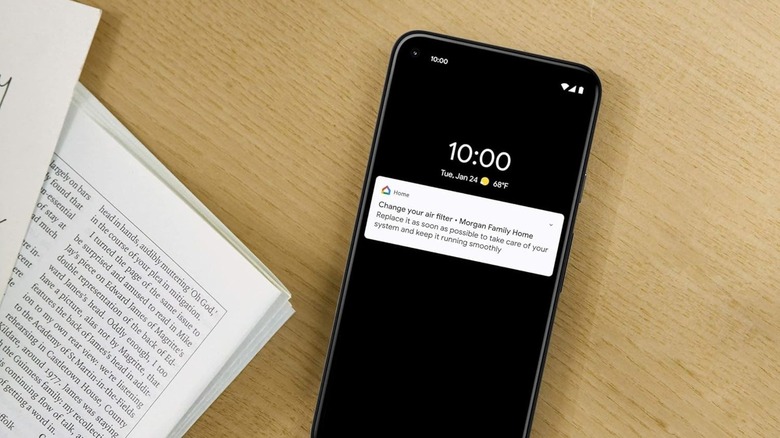
Life always finds a way of keeping you busy. Between work, kids, cooking, and cleaning your house, it's easy for smaller to-do list items like changing your air filter to fall through the cracks. However, a smart thermostat can send you regular reminders to notify you whenever it's time to swap in a fresh air filter. Keeping up with that chore ensures your HVAC system stays working effectively and efficiently. This is a small yet tremendously convenient feature to have, and the reminder perks don't stop there.
Smart thermostats are directly connected to your HVAC system, and some brands are even capable of sending you an alert when there are noteworthy problems, such as an issue with airflow in your ducts. Having a big heads-up like this for something so important gives you the chance to be proactive. From there, you can decide whether you want to take a look at things yourself or go straight to calling in a licensed HVAC professional for a tune-up or repair before the issue snowballs.
Earn you kickbacks by adjusting usage during peak hours
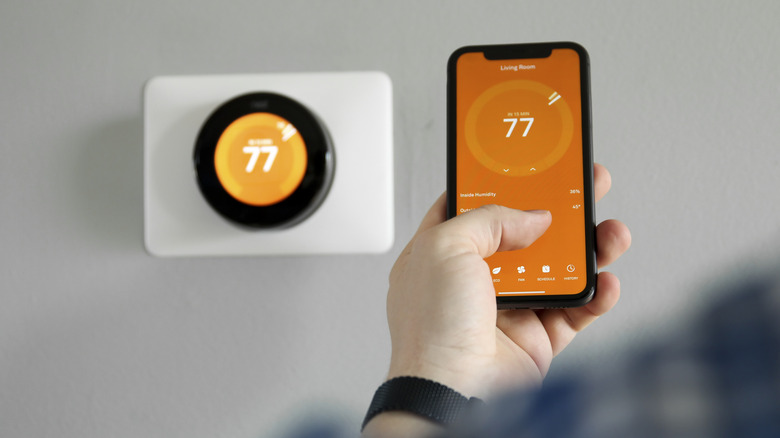
Odds are, you've heard the term "peak hours." It means exactly what it sounds like: the hours when local electrical grids see a big increase in power usage. This is most commonly weekday evenings, once everybody's home for the day and using electricity. Power companies usually charge a higher fee during this time due to the added strain on their grid, and if you're using a lot of electricity during peak hours, your monthly power bill can get pretty hefty. Smart thermostats are a great way to save money on energy bills, and the savings go beyond just using less power overall.
As a way to help mitigate these intense usage spikes, local power companies often offer some sort of peak savings programs to folks who have a smart thermostat and opt in. Generally speaking, once you enroll, your smart thermostat will automatically scale back your HVAC usage during peak times. That means your home will be slightly less warm during the winter and slightly less cool during the summer. Your home then ends up consuming less energy, which lowers the stress burden on the overall power grid. In turn, the power companies kick you back some savings on your bill. Some even offer steep discounts on smart thermostats or give them away for free as a way to encourage people to help reduce peak-time usage demands.
Smart thermostats offer a ton of great features, and there are many ways to get the most out of them. From discounts on your monthly power bill to helping keep your entire home perfectly comfortable, they're an upgrade that's hard to argue with. How's that for smart?