

Why Do TV Remotes Feel So Cheap?

Technology only seems to be getting better and better. Your AC's thermostat can track your living patterns and pre-cool the home before you get back from work, and your outdoor camera can recognize your friends. Yet, despite many daily electronics becoming "smart," the majority of TV remotes seem frozen in time, to the amazement of some online users. Heck, most TV remotes still use infrared instead of Bluetooth, even though IR tech hasn't been cutting-edge since the '70s. Thus, it's only natural to wonder why your TV remote feels so cheap while everything else seems space-age in comparison.
One word: cost-cutting. That infrared gizmo? In addition to being simple from a manufacturing standpoint, it's also likely a way to save money on Bluetooth fees (yes, Bluetooth tech is pay-to-play). Alkaline batteries? Archaic, sure, but they get the job done because a TV remote doesn't require that much power. Also, it's a valid question to ask why they still have so many confusing controls when other devices are getting some hefty streamlining treatment and dropping buttons like they mean business.
Well, along with manufacturers keeping "sponsored" buttons to get that sweet money from larger streaming services, making a complete redesign would again drive up costs. It may seem like a non-issue, but building a new remote from scratch (one that resembles something from the 21st century) requires a completely new casing and a circuit board. As a result, companies simply take on an "if it ain't broke" attitude when it comes to this peripheral and reuse old designs that may be clunky, but still do the trick.
Are traditional TV remotes on the way out?
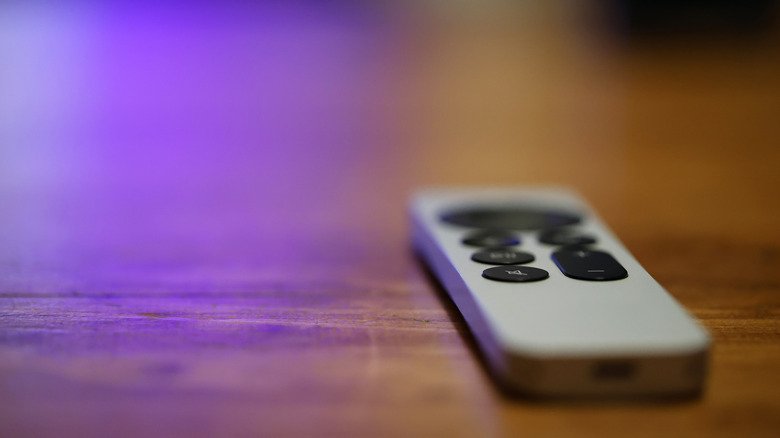
Yes, your TV remote may seem cheap, but in many cases, it's just the result of a lack of progress. The manufacturers themselves are treating the remote like an afterthought, so it's no wonder these devices feel outdated. Put everything together, and it's looking more and more like there's no need for bundled TV remotes anymore. A decade or two ago, your remote dying would be a tragic event that would, unless you bought a universal one, condemn you to the fate of walking to the TV every time you needed to change the channel. Nowadays, if push comes to shove, you can control your TV with a smartphone app.
Of course, the future demise may only strike down those clunkier remotes. Take Apple TV as an example. Its minimalist Siri Remote does cost $59, but it actually redefines what a TV remote can do. For starters, it has six buttons (not counting the directional click-pad), and while it keeps the IR, it also opens you up to the super convenient world of voice controls.
It's important to add that it may take a few years for this trend to pick up speed, so it's not logical to expect manufacturers to start packing similar devices with their smart TVs any time soon. A voice-enabled remote needs components like processors and microphones, which cost more than a few buttons and an IR transmitter running on AA batteries. Until that day comes, we'll likely continue receiving our token TV remotes that will still feel cheap with a dash of convoluted thrown in for good measure.