

Paul Rudd And Nick Jonas' New Movie Is A Crowd-Pleaser You Shouldn't Miss
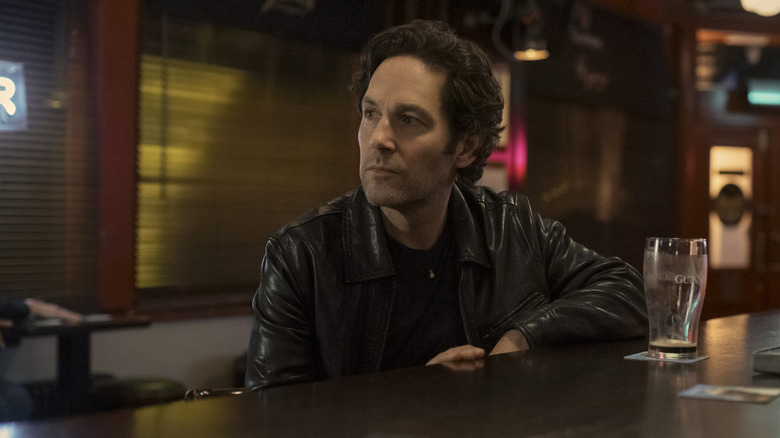
Paul Rudd's ability to draw on his everyman charisma in almost every role he takes on is nothing short of impressive. From being the heart-warming boyfriend to Lisa Kudrow's Phoebe in the most popular sitcom in the world ("Friends," which Matthew Perry almost turned down for a sci-fi series) to a nonchalant miniature superhero ("Ant-Man") to a seemingly nice yet grossly manipulative psychiatrist ("The Shrink Next Door"), it's a deceiving range for a leading man.
It can often feel and look like Rudd is playing variations on the same character in every movie and TV show he's cast in (which sometimes is the case), yet with such subtle differences that ultimately make his performances vaguely unique. I believe he reached the culmination (or quintessence) of that character type in his latest dramedy, John Carney's "Power Ballad." There's simply no one from his contemporaries better suited to play protagonist Rick Power, a middle-aged singer-songwriter who gave up his rock star dreams in favor of creating a happy family.
Rick is an expat husband and father living in Dublin, Ireland, with his day job being the lead singer of a local wedding band that typically plays covers at weddings big and small. Yet he still tinkers with scribbling down songs of his own when he has the time, even though he's painfully aware that the ship of becoming a global star sailed a long time ago. But when fate links him up with the stupendously famous singer Danny Wilson (Nick Jonas, who also lent his voice to a bold Apple TV series), who just separated from his beloved boy band to go solo, he reignites something in him. Still, after a booze-heavy night of jamming together, Rick goes back to his regular life, which blows up six months later when he realizes that Danny stole his original song to skyrocket his solo career.
The complications of a hit song
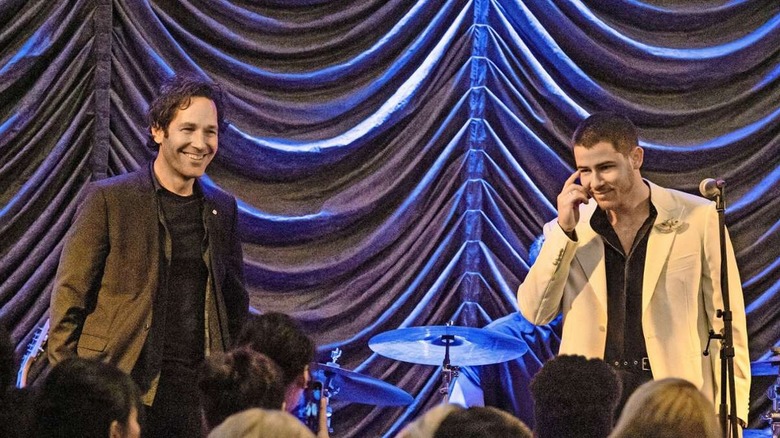
The insurmountable trouble that Rick faces is that he can't legally or otherwise prove that the song (cleverly titled "How to Write a Song Without You") is actually his creation. There are no audio recordings, videos, or captured live performances that would prove the track belongs to him. He tries regardless, but even his own family (alongside his bandmates) begin to doubt whether he's telling the truth or just gone mad with envy. He doesn't even want the royalties or any financial compensation but simply the recognition that his musical genius, for once in his life, has been acknowledged.
And that's where Rudd's talent (and all the everyman roles he ever played) kicks in and amplifies. You feel every bit of Rick's desperation, anger, and disappointment, because the actor plays him as straight and plain as possible. He's not greedy or demanding, trying to keep his composure and the little pride he carved out for himself in the music scene, but he does gradually come apart as every attempt to reclaim his song fails.
But Jonas' Danny is no villain either. He's trapped by his own studio and arrogant manager, micromanaging everything and keeping him from doing the right thing even when he's got the inkling to do so. That inevitably drives a wedge between the two, separating them for the vast majority of the movie, which is kind of a shame, because Rudd and Jonas gel perfectly on the screen. The bond they create in that first encounter feels wholesome and genuine because the music buff in both of them instantly takes over to share a profound love for the art, leaving no room for egos. And that unabashed, pure passion is what empowers "Power Ballad" from its first minute to its last.
Power Ballad hits all the right notes
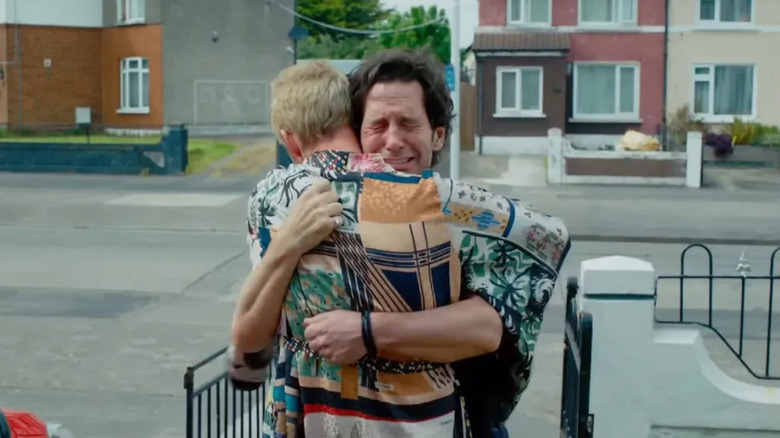
Although it's hardly a challenge to figure out where "Power Ballad" is headed once the basics of the plot are laid down, there are effectively implemented side roads that lead to unexpected story beats. If there's a noticeable shortcoming in the screenplay, it's that the resolution of the central conflict arrives a bit too conveniently under a slew of circumstances and trickery that can feel a little far-fetched. Yet they are easy to brush off since the how of it all is besides the point.
What truly matters is how the final confrontation affects the two characters in their respective arcs, bringing them peace of mind or unrelenting guilt. There's certainly a critique in "Power Ballad" about the ins and outs of the merciless music industry and its carefully manufactured stardom, but the moral lesson that inevitably stems from it is what prevails (thankfully) in the end.
And in his final musical performance on stage, Rudd has never been better at driving home a vital message and conclusion of the note the hero's journey ends on. It's not just the fact that he's an excellent singer with a stellar voice (even compared to the real-life pop star standing next to him), but that he can portray one with heart and charm who feels real. And director John Carney knows that actor-potency well enough to use it to its fullest in a half-sneaky way to leave us all teary-eyed — like a true power ballad should — when the screen fades to black.