

The 2026 Jeep Grand Cherokee Summit Is A Tech Powerhouse
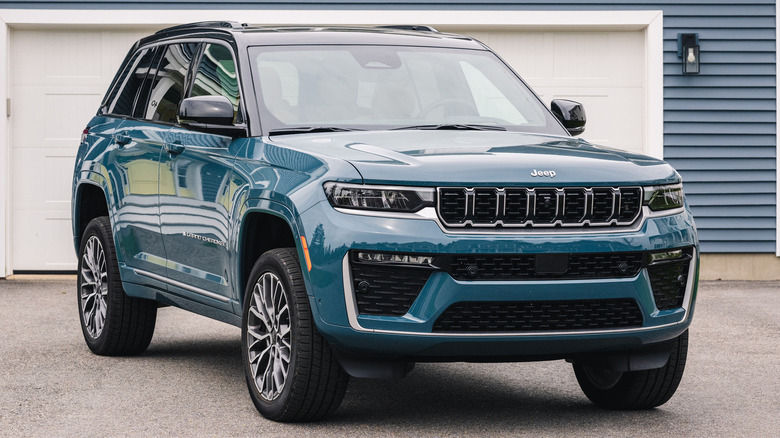
Jeep may not be the first automaker that comes to mind when thinking about high-tech vehicles. The Wrangler is a regular anachronism. In an era where cars can drive themselves on air-sprung suspensions that read the road ahead without the use of fossil fuel, this old Jeep has solid axles at both ends, a roof and doors that come off, and an available manual transmission.
So calling the Jeep Grand Cherokee a tech powerhouse might sound outlandish, but I assure you, it's not. After a week spent behind the wheel of the revised 2026 model, done up in range-topping Summit trim, I discovered a regular bonanza of tech wizardry at work in this Jeep. A new engine borrows cutting-edge combustion tricks from the Maserati MC20 supercar. Night vision cameras are nothing new in the auto industry, but the Grand Cherokee's application impresses.
Ford and GM seem to steal the hands-free driving headlines with brand-name systems in BlueCruise and Super Cruise, sometimes to unfortunate effect — like the NHTSA investigation into self-driving Mustang Mach-Es — but Jeep has quietly unleashed its own setup that is remarkably smooth and easy to use. Then there's that HDMI port in the center console. Plugging in a bulky cable may seem the opposite of high-tech car content, and yet, in conjunction with a passenger-facing dashboard display, this is actually quite a clever bit of technology.
Turbulent Jet Ignition
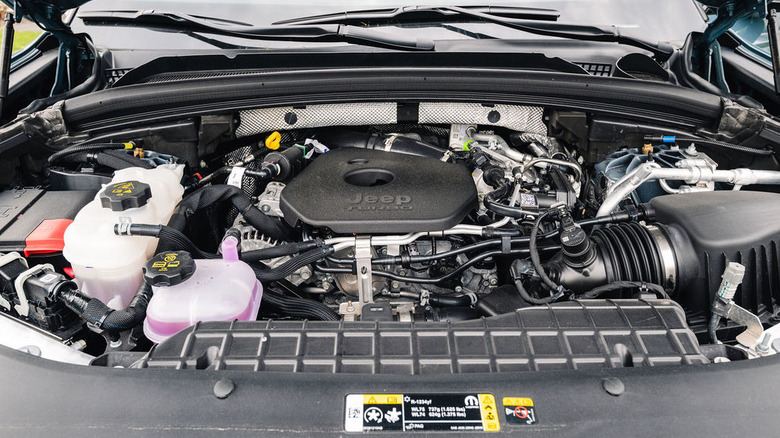
Turbulent Jet Ignition (TJI) is one aspect of a new engine dubbed the Hurricane 4 set to replace the long-running Pentastar V6 in Jeep's Grand Cherokee lineup. Borrowing tech from the Maserati MC20 (one of the many Stellantis brands), which itself leaned on Formula 1 engineering, TJI kicks off the combustion cycle earlier than in traditional gas-powered engines for a more complete and efficient burn.
With a dedicated spark plug and a tiny pre-combustion chamber sitting atop the cylinder, fuel from the port injector is set aflame to create partially combusted particles that make ignition of the air-fuel charge in the main combustion chamber happen more quickly. The supporting cast of high-tech components includes sodium-filled exhaust valves for heat management, a variable geometry turbocharger capable of 35 psi of boost, and plasma transfer wire arc cylinder bore coatings that form a slick microscopic surface between the piston and cylinder wall using steel alloy melted at 4,150 degrees Fahrenheit.
Put it all together and you've got an ICE making 324 horsepower and 332 lb-ft of torque from 2 liters of displacement. That translates to a specific output of 162 hp/liter, which is better than what a Lamborghini Urus achieves. The 6,200-pound tow rating matches that of the Pentastar V6, and though combined fuel economy only increases from 22 mpg to 23, the power-dense, high-tech Hurricane mill manages to run on 87 octane.
Night vision
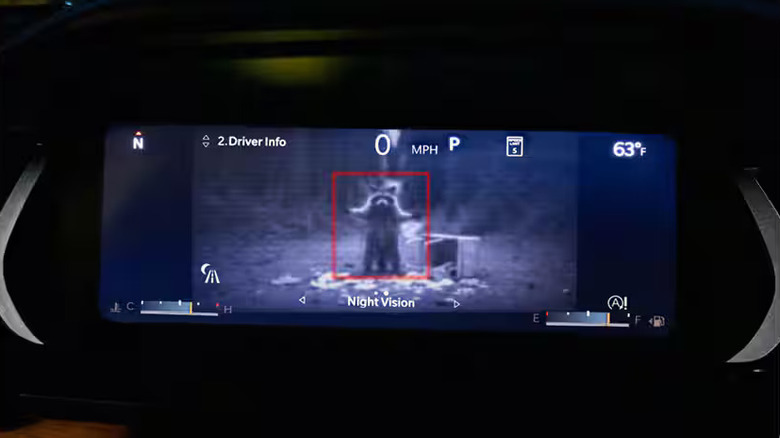
With the focus on technology in the Grand Cherokee Summit, the multitude of systems can become overwhelming. A large color central display, a fully digital gauge cluster, a head-up display just outside your peripheral vision, a live stream of what's out front with the night vision cam, and another camera feed of what's happening out back via the digital rearview mirror can leave your eyes strained. Each serves a purpose, and most can be toggled off, but the night vision system is of particular interest and worth the tech overload.
Using infrared sensors and thermographic technology, the system scans up to 328 feet out in front of the Grand Cherokee. When a pedestrian or large animal is detected, they're highlighted by a yellow box on the digital gauge cluster display. You can switch the night vision footage on and off, but when it's active, you've got a live feed of what's ahead within the gauge cluster. This is a little disorienting while driving, especially given you have to glance down to see it.
The system does work during the day, but the yellow highlight feature only comes on at night. It is limited to people that are at least 4 feet tall and critters standing at least 3 feet high, and once ambient temperatures go beyond 86 degrees Fahrenheit, the system can no longer measure the temperature difference between objects and the surrounding area effectively. That said, when operational, night vision is a tremendous help on dark, winding roads.
HDMI port
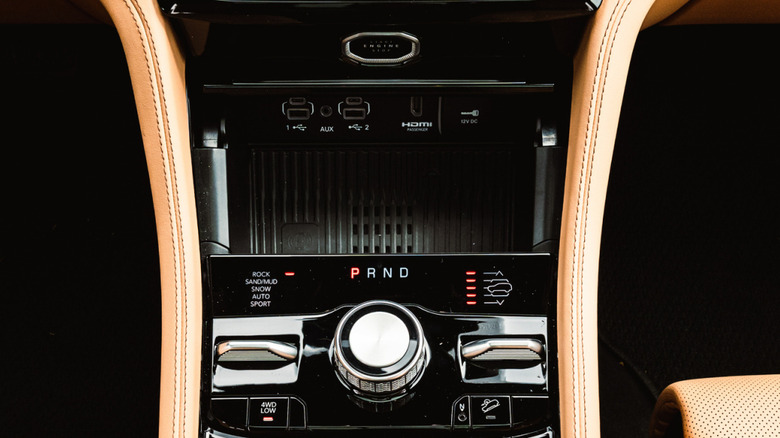
We've written about what HDMI ports in your car are for in the past, but in that instance, there was discussion about Honda including these outlets as a precursor to Android Auto and Apple CarPlay. In the latest Jeep Grand Cherokee, however, the HDMI port at the bottom of the center stack is more clearly tied to the touchscreen display integrated within the passenger-side dashboard. That screen alone is a neat bit of tech, as it allows occupants to engage with the vehicle infotainment system without distracting the driver thanks to its privacy filter.
However, by combining the two, passengers can enjoy their favorite Apple TV content — and likely other streaming platform options, but Apple was what I tested. Because the Grand Cherokee Summit has a household-style outlet on the back of the center console, you can power up your Apple TV, then plug its HDMI cable into the Jeep's port. You also need a Wi-Fi connection, and if you can't set one up with your smartphone, Jeep does offer a subscription-based hotspot.
With everything connected, "Ted Lasso" is ready for viewing on a 10.3-inch QLED screen. Unfortunately, you cannot route audio through the McIntosh 19-speaker audio system — likely to avoid distracting the driver — but with a set of headphones, sound comes through loud and clear. It is a very cool old-school meets new-school bit of automotive tech that would be ideal for long road trips.
Hands-free driving
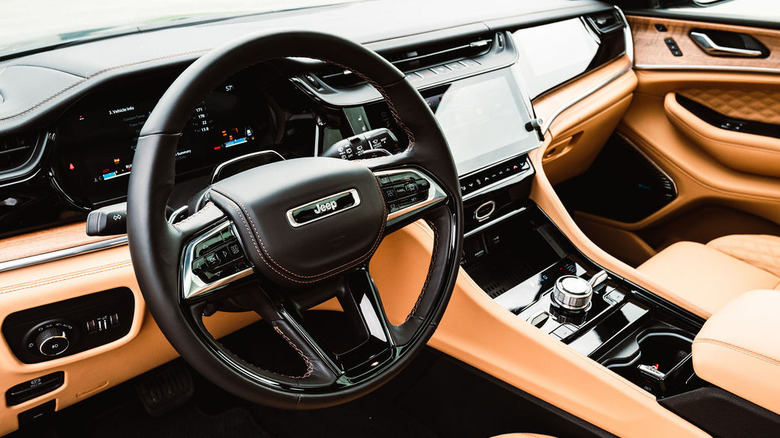
The hands-free driving discussion is all over the place and can be challenging to keep straight. ICYMI, adaptive cruise control (ACC) builds on traditional cruise control by automatically adapting your speed based on traffic flow. Systems like Hyundai's Highway Driving Assist blend that ability with lane centering that effectively bumper bowls you between lane lines, though it's much smoother in practice.
Tesla EVs are known for their Full Self-Driving system that can apparently pilot a Tesla across the U.S. without human influence. Jeep goes with the simple moniker Hands-Free Active Driving Assist. It currently works on 200,000-plus miles of highways in North America and is truly hands-free. Switch on ACC and the system alerts you that hands-free operation is ready when it deems it safe to do so. I drove for the better part of an hour on I-95 with my hands completely off the wheel. A small camera mounted on the steering column watches your face to determine how attentive you are. Look away for too long and it will insist you grip the wheel.
Another trick aspect to this system is the automatic lane change capability. Flick the turn signal like you normally would to indicate you're moving over and — if the Jeep deems it safe — it will do so for you. Both the hands-free and lane change features are smooth and confidence-inspiring. It's also deeply unsettling to get used to. In heavy traffic, the lack of physical control left me feeling nervous with the limited room for error. But for long highway cruises and light traffic, hands-free driving is an excellent bit of tech.