

5 Of The Biggest Issues With Apple HomePods, According To Owners
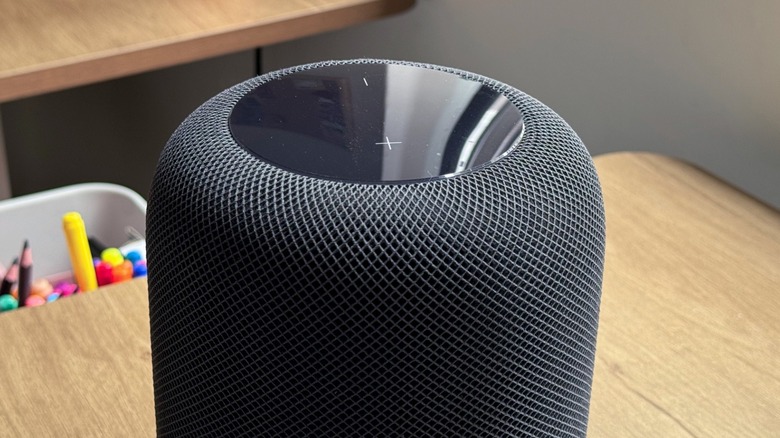
The HomePod was Apple's latest attempt to enter the speaker market. After the unsuccessful iPod Hi-Fi of the early 2000s, the company tried again in 2018 with the original HomePod. This rounded speaker resembled the 2013 "trashcan" Mac Pro, but with a beautiful mesh on the sides and a touchscreen display that let you invoke Siri or control the song. However, what could've been Apple's redemption in the speaker market became an issue not only for the company but also for owners, who began experiencing poor audio quality, mesh getting dirty or damaged, and an unreliable Siri.
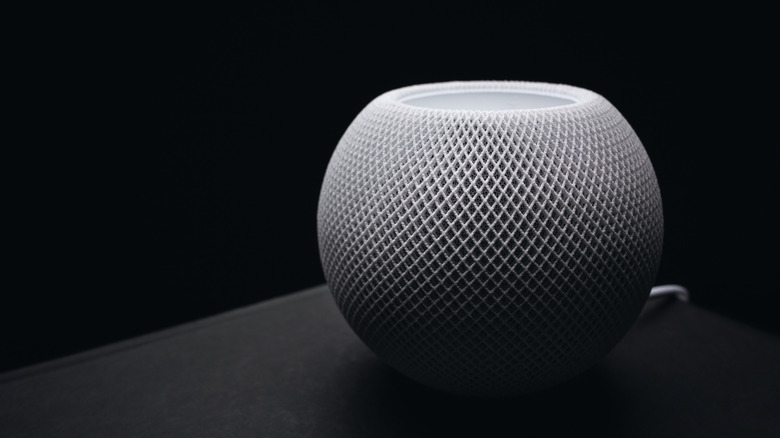
Even though Apple still sells the HomePod and the HomePod mini, these devices have recently become more expensive due to the company's price hike, and they still exhibit most of the issues users complain about. In the case of the HomePod mini, despite some new colors, this device hasn't been updated since its original release in 2020; as for the HomePod 2, it addressed some of the issues of the original model, but it didn't improve the audio experience or Siri.
While new models are expected to be released soon with the revamped Siri experience introduced in iOS 27, it's still unclear whether Apple will address some of the other concerns users have been experiencing with the current HomePod models for over eight years.
It can just die
No tech product lasts forever, and every device can present some kind of error. That's normal. However, if you look at a few subreddits, you'll get an impressive number of users reporting that their HomePod just died. Sometimes they can die overnight; sometimes a faulty update just bricks them, and that's it, the end of their life. The big problem, however, is that Apple rarely does anything about a HomePod that just stops working. In one of the Reddit threads, a user wrote: "I took my 4-year-old HomePod to an Apple Store, and the rep said there's nothing they can do since it's a dated model." The issue, of course, is that the HomePod died.
Another user wrote: "My HomePod died overnight. No warning signs, no issues. Checked and replaced the fuse. Nothing. I can't even think of how to troubleshoot due to the lack of input options." While some HomePod owners suggested trying a different power outlet, leaving it unplugged, or even touching and holding the top touch sensor while plugging it back in, none of these steps helped.
Sometimes, users can take the HomePod to an Apple Store and hope to have it unbricked and brought back to life. Most of the time, however, customers are required to pay for a new model, as there's no way to repair this device. While I have never experienced that with my HomePod pairs, this has been one of the top issues customers have reported.
Unreliable audio with multiple pairs
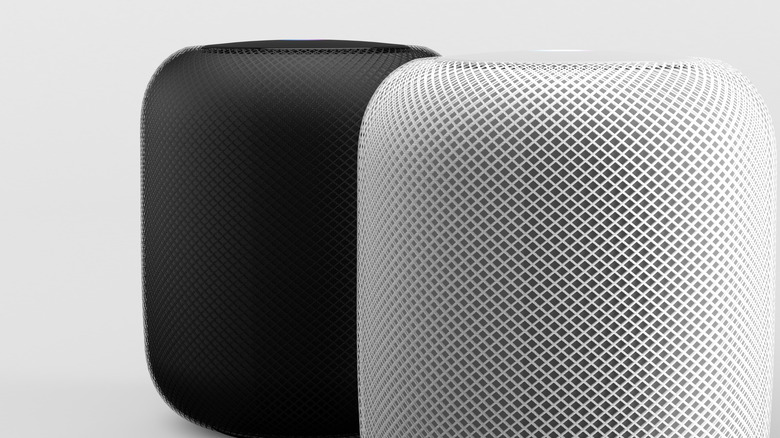
HomePods just dying is not the only issue that plagues Apple's speakers. If you have more than one of the company's speakers, most customers report issues with how these devices sync. Even though a stereo pair has been one of the OG features of the first iteration of the HomePod, eight years later, users still have trouble getting them to play music or to act like proper speakers when watching a show or movie. In a Reddit post from two years ago, a user wrote: "One HomePod is controllable, and the other doesn't respond to volume changes or mute. The only way to fix it is to restart the Apple TV and HomePods some random number of times until it eventually works again."
A year ago, another thread had multiple customers complaining about HomePod syncing issues that were plaguing not only the original model but the HomePod mini as well. "When all speakers are playing, after a while they get out of sync by just a fraction of a second and you can hear an echo effect due to it, which means I have to disconnect the HomePods one by one." There are also posts from three years ago, five years ago, etc., showing that even though Apple keeps updating and refreshing the HomePod software, these problems persist and keep coming back. Just like with the device just dying, sometimes everything works properly, and other times everything just goes sideways.
Mesh gets dirty
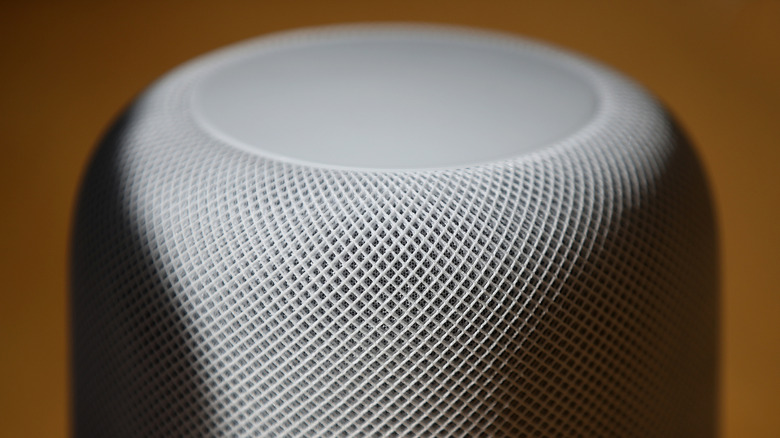
To this day, the HomePod is still limited to a few countries and regions. When the original model was released in 2018, it was obviously not available in Brazil (it still is not); so before I was able to get one of the speakers, I kept looking for reviews and people's experiences with the new black-and-white models. Since I already had poor experiences with Apple's clear accessories for the iPhone, I knew that getting the black model was likely the best option, but I didn't know how right I was until I went to the U.S. a couple of years later and I saw a white HomePod in a (not so) Premium Reseller. It was completely dirty and kind of yellow thanks to the way the sun used to get inside the store.
If you take a look at some Reddit threads, you'll see that white models get a lot dirtier, like this case and this case here. While Apple says customers can use a 70 percent isopropyl alcohol wipe, 75 percent ethyl alcohol wipe, or Clorox Disinfecting Wipes, the main recommendation is to clean it with a dry cloth, which doesn't do much.
Still, even if you have something like the black model, you may also notice that the mesh on the AirPods Max starts to come loose after a few years, and it looks like it could be ripped apart anytime soon.
Plays randomly thanks to faulty display
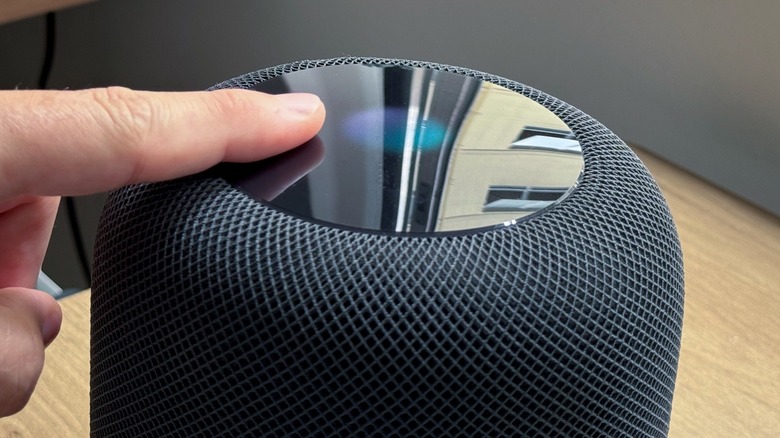
This issue has plagued most of my friends with HomePods, as well as several people on Reddit. In a thread with 42 comments, a user asks other customers to list their HomePod model, how long they have had the device, the current software version, and what Apple Support told them, because they were experiencing ghost touches with the HomePod. Usually, when ghost touches occur, it means the HomePod is already on its way to dying. However, before it stops functioning, users either hear the HomePod playing a song loudly in the middle of the night, or they realize there's a faint sound somewhere in the house, only to discover it is the HomePod playing an album on repeat for hours.
There are also several reports of HomePod ghost touches, along with some possible workarounds. For example, cleaning the display could help if the HomePod has a layer of dust on top. Turning the device off and then back on is also an option. Users can also try some software tweaks, like disabling the ability to touch and hold the display to call Siri, or increasing the touch duration to four seconds to invoke the personal assistant, which could help prevent a false ghost touch from making the HomePod play something.
On an iFixit forum, a user reported having "multiple HomePods with faulty touch sensors that would randomly trigger playback." They used a teardown as a reference to disconnect the touch panel, reassemble the HomePod, and avoid this issue. This way, they could still use Siri and AirPlay, but no longer be plagued by music randomly playing at weird hours. While this is not recommended for those without experience disassembling tech, it reflects how desperate HomePod customers have been over the years due to issues.
Siri is unreliable
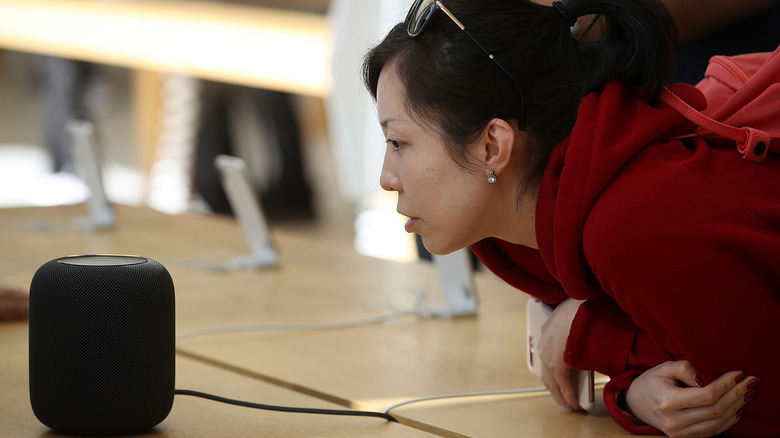
Of all the biggest issues plaguing HomePod owners, this could be the easiest to avoid, even though it continues to be a problem: Siri is just unreliable. While Apple still has to unveil its plans for Siri on the HomePod and Apple TV, the current experience is just bad. For example, the personal assistant can get confused when setting a reminder or multiple timers, and sometimes it even gets the weather forecast wrong. If you have your HomePod set to English but, for whatever reason, you listen to songs that are not in that language, then you need a ton of luck to say the name of the song in an English-like accent to make sure the HomePod will play what you want.
In a time where Amazon has Alexa+ and speakers also have built-in AIs, it's just unacceptable that Siri still doesn't understand multiple languages at once, especially on a device like the HomePod. Rumors so far suggest that Apple is planning a "HomePad," a device similar to the HomePod with an iPad-like display. This device will be a competitor to the Amazon Echo Show, and now that we have had a first look at Siri's new capabilities, it seems the next iteration of the HomePod could be a lot better.
Still, Apple hasn't addressed the use of different languages in the same voice query, and users continue to be plagued by a poor experience when trying to listen to something slightly different from what Siri's language is set to on their devices.