

5 Unexpected Features You Might Find On Your Robot Vacuum
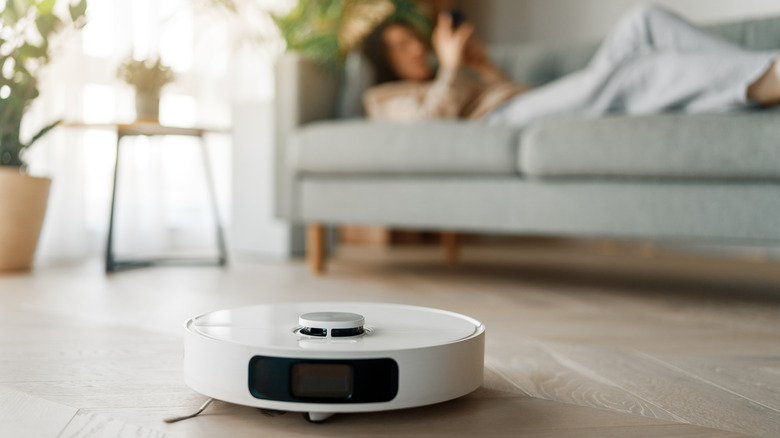
Robot vacuums are one of the best technologies you can have at home. Companies have invested so much money into making these robots worth it, and they're great for intelligently vacuuming and mopping the house and even cleaning themselves. Long gone are the days when these robots would eat cables or heavily rely on users to move furniture and make space.
They can identify how much they need to clean, where they need to come back, and even what's in front of them. However, if you think you might have seen everything a robot vacuum can do, you should know that there are a few unexpected features you might find on your next robot, like a flexible arm, legs that can help it climb stairs, an LLM voice assistant, and more.
As manufacturers reach a plateau in how they can improve their robots, some of them have decided to try different approaches that, even though it might sound like a wild idea at first, can eventually expand out from really premium models to more affordable options. As everybody's home is different, it makes sense that many different robots are available, as they can be helpful for specific users, and not so much for others. That said, these are some of the unexpected features you might find on a robot vacuum.
Climbing stairs and thresholds
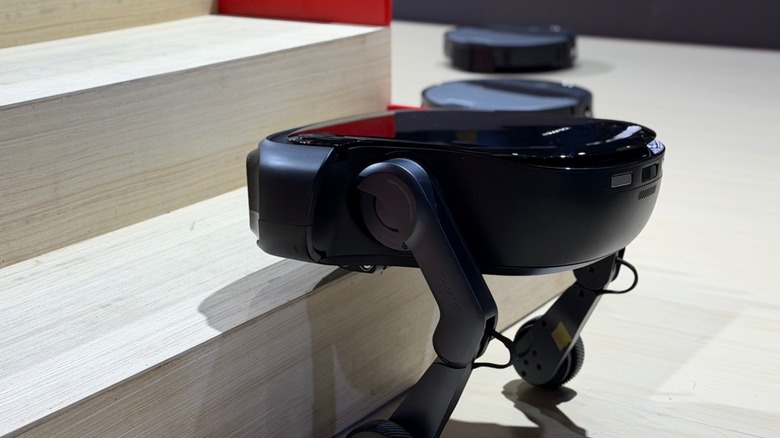
During CES 2026, Roborock presented a robot vacuum that can climb stairs. With the Saros Rover, it uses articulated frog-like wheel-legs that can clean steps as they climb. While the company hasn't provided a timeline for when this product could actually be released, it told BGR that this is more than just a concept, and is a product they're working on. If you've been following our Roborock coverage, you know that the company presented innovative concepts in the past and has made them into working products.
That said, if climbing stairs becomes a reality for robot vacuums, then this would mean that cleaning houses with different floor levels can be a lot easier; better than that, if your home has a big threshold, then these new legs could help the robot pass by them without an issue. The technology has already evolved a lot, as Roborock first introduced a robot that could take up to 4 cm high thresholds, but companies like MOVA now offer robot vacuums that can go as high as 8 cm.
While not everyone needs a robot vacuum that can surpass thresholds, this technology can be quite useful depending on the format of your home, or if you're just tired of having to move your robot to different floors due to this unevenness. Even though the technology is still not perfect, and the robots need a few tries to get to a new area with a threshold, the tech has been rapidly evolving and expanding to different models, brands, and price ranges.
Picking up objects
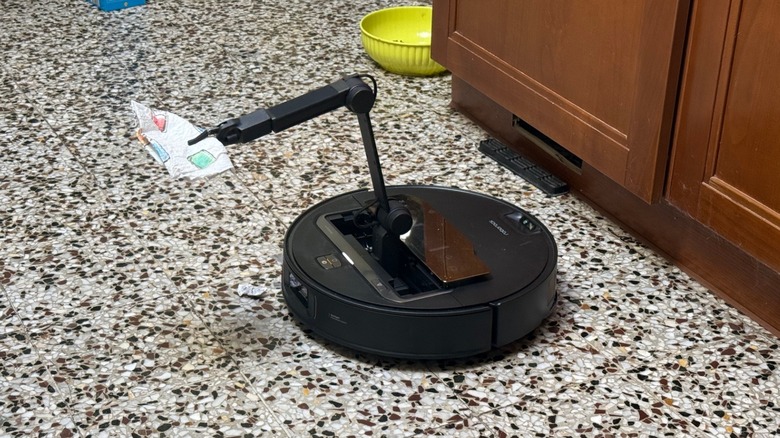
Released in 2025, Roborock was the first company to introduce a robot vacuum with an arm. While we questioned in our review whether a robot needs an arm, the multi-axis mechanical arm introduced by the company to one of its top products is really impressive. With a high-torque extraction mechanism, it uses AI cameras to isolate small items like a stray sock, a toy, or a cable, and then the robot deploys its extension tool to lift the object off the floor and take it to a designated area. What's more interesting is that you can tell the robot to get your flip flops and put them in a specific area, while other debris like paper towels can be put in a trashcan.
Over the past year, Roborock continued to improve the software of this product, with more objects being recognizable and even allowing it to pick up other things from the floor. Thanks to this technology, the robot can ensure a perfectly clean environment as it removes objects that shouldn't have been in front of it, hindering the cleaning process.
Instead of just avoiding an object, a cable, or a sock, the robot intelligently understands what is in front of it and performs an action. Even though most customers don't need a robot with a flexible arm, it's cool that there are robots like this available.
Camera features for pets
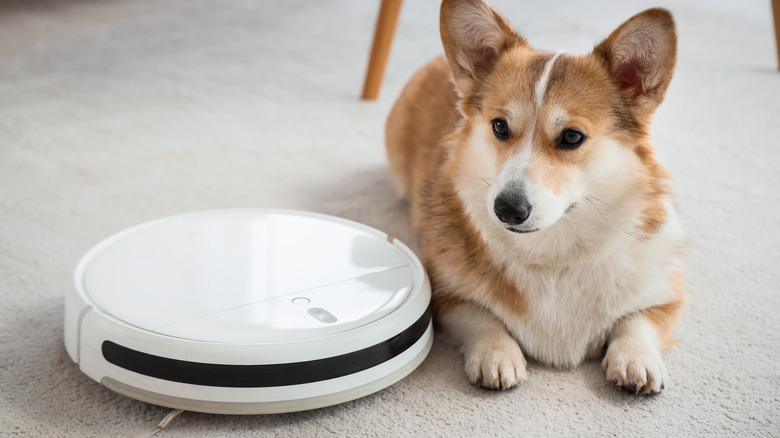
Samsung, Roborock, and Ecovacs are among the companies that upgraded the regular front-facing obstacle-avoidance camera with both infrared and HD RGB cameras that can integrate with their mobile apps. With that, if you have a cleaning schedule or you're just worried about your pet while you're working or away from them, you can turn on the robot and ask it to find the pet. When the robot detects the pet, it can follow at a safe distance, snap automated photos, or send a notification to your phone allowing you to open a live video stream with two-way audio communication.
This means you can talk to your pet, hear them barking, meowing, or something else, and ensure that everything is alright at home. This very unexpected feature can be very important for pet owners, as they can use the fancy sensors of their robots to check how their pets are doing.
It's a cool feature that's been available in robots like Samsung's Bespoke Jet Bot AI+ series, Roborock's premium S series and Saros lines, and Ecovacs' Deebot X models. In addition, these cameras can also be useful to identify objects around the house, and then send you notifications about what's been found on the floor and where.
LLM Voice assistants
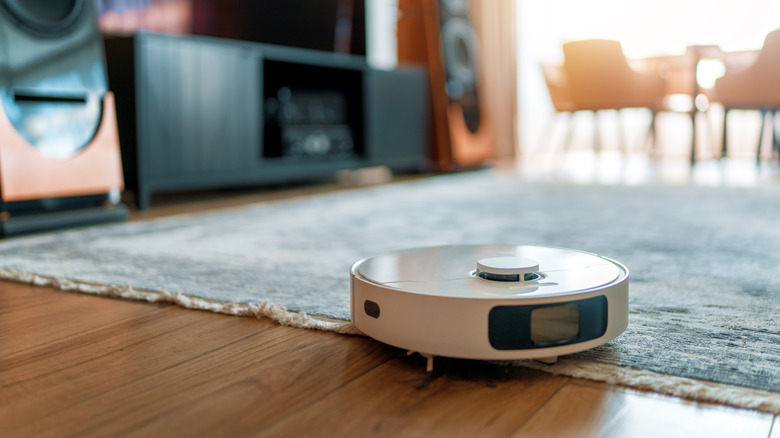
It's an AI world after all, and LLM fever is also making its way to robot vacuums. Why do you need to have a conversation with them? It's unclear, but companies like Samsung, Ecovacs, and MOVA have been adding LLMs to their robot vacuum offerings. Jokes aside, what they're actually offering is local microprocessors programmed to recognize basic voice keywords, as the vacuum's microphone array routes audio queries through a cloud-based LLM backend.
The biggest benefit is that the machine can understand regular conversations, syntax variations, and multi-step commands. In addition to that, the robot can explain a lot better the issues it might have while cleaning the environment rather than just emitting a generic error code.
With this change in new robot vacuums, users no longer need to memorize command phrases like "Start cleaning kitchen zone two." Instead, the robot vacuum with an LLM-backed system can understand "I dropped some crumbs by the kitchen, go clean that up," and it can deduce the intent, correlate it to map coordinates, and execute the task. This makes the process of non-scheduled cleans a lot easier than opening the phone app of the robot vacuum, selecting the area, and what kind of cleaning the robot should do there, as it can understand your query and get the task done.
Retractable LiDAR Navigation Towers
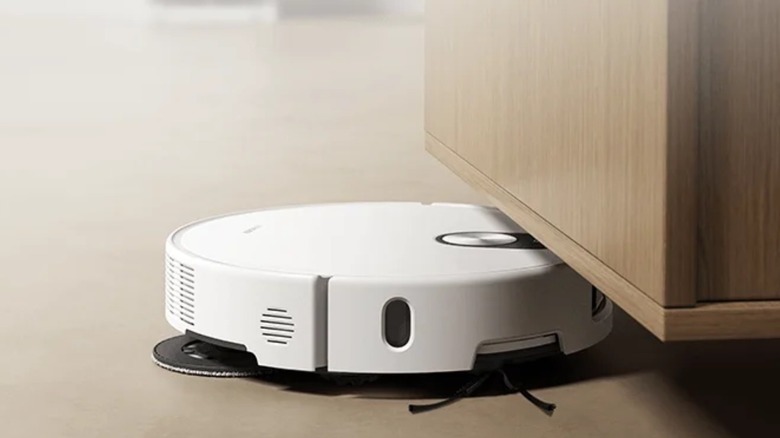
The least unexpected, but, to be honest, flew under my radar, is something Xiaomi and MOVA recently introduced, which is retractable LiDAR navigation towers. While, of course, one would expect that robot vacuums are going to clean and mop spaces properly, one thing that's bothered me and several other customers is that sometimes these robots are too big and can't go underneath furniture. One of the main issues is that standard LiDAR navigation requires a fixed, raised dome on top of the chassis to scan the room 360 degrees.
With a retractable LiDAR, these companies can make their robots identify with the front-facing sensor a low-clearance opening, like the edge of a sofa, a bed frame, or kitchen cabinets, so they can make the retractable LiDAR flush into the robots' main body and lower their profile significantly.
In the case of Xiaomi's Robot Vacuum 5, its dToF navigation module makes the robot sub-9.5 cm, which is more than enough for most furniture. While the company says mop capabilities are unavailable, you can ensure that you're not the one that needs to manually clean underneath these spaces, as the robot can vacuum there whenever you start a cleaning session. This is an unexpected feature that I hope will be added by more manufacturers in the near future.