

The World's Largest Particle Accelerator Is Shutting Down (For Now) - Here's Why
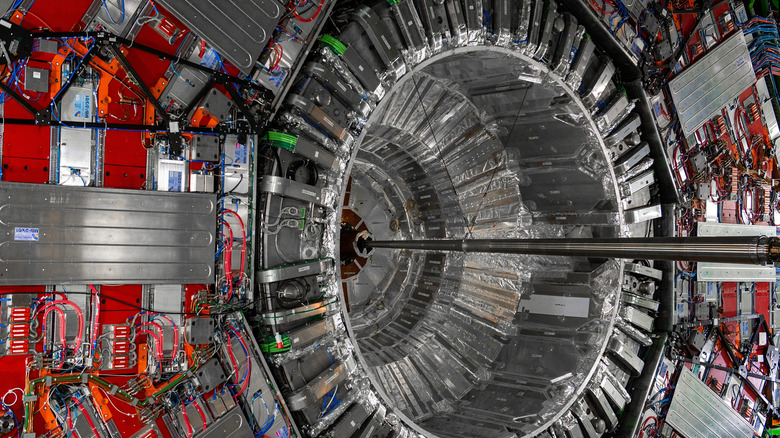
The Large Hadron Collider (LHC), the world's largest, most powerful particle accelerator, and the center of many a conspiracy, has been shut down. After completing a final collision and physics run on June 14, the collider will undergo some major upgrades as part of the next phase in its operations. This process is referred to as CERN's Long Shutdown 3 (LS3), with the next operational phase labeled the High-Luminosity LHC (HiLumi LHC), which will increase the number of collisions when it comes back online.
During the break, the entire system will receive regular maintenance, consolidation, and upgrades to the eventual new model, with it scheduled to come back online in 2028 to 2030 depending on how everything works out. The LHC is most famous for the discovery of the Higgs Boson particle back in 2012, but it's also responsible for the discovery of well over 85 hadrons, alongside many physics and astrophysics implications.
Interestingly, physicists have also used the LHC in the past to convert lead into gold by dropping some protons. It's modern alchemy at work. Particle accelerators like the LHC work by basically firing particle beams into a tunnel, where they collide, react, and reveal secrets about the universe. The LHC isn't the only one in use, as there are over 30,000 around the world. While the LHC — soon to be the High-Luminosity LHC — is shut down, many others are continuing the research in its stead.
The next version of the collider will be ten times more capable
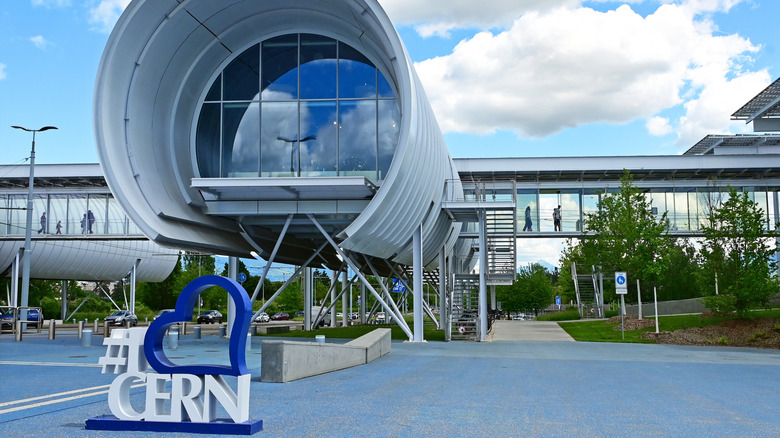
Currently scheduled to be fully online in 2030, beginning with a gradual restart from 2028, the HiLumi LHC and the next iteration of the system are purportedly expected to increase its overall luminosity by a factor of ten. That should allow researchers to expand their acquired datasets and enable more advanced "precision studies." As the upgrade is one of the most expansive undertakings since the LHC was first constructed, this pause or phase has been given the name LS3.
CERN explains that thousands of specialists will work together to transform the collider across the various areas of the facility, and specifically named the Super Proton Synchrotron (SPS) in the North Area, the Experimental Cavern North 3 (ECN3) — which will be converted into a high-intensity fixed-target facility — the ISOLDE facility, and the CERN Neutrinos to Gran Sasso (CNGS) target areas which will be dismantled. Work will also be performed on the personnel safety systems, electrical network and technical galleries. During the renovations, an estimated 1.2 kilometers of magnets and components will be removed and replaced with new equipment.
Despite LHC being shut down for the time being, CERN promises that scientific activity from the facility will "remain intense." Researchers will continue analyzing datasets collected during its operational era, while also preparing for the next generation of the facility. Meanwhile, particle accelerators elsewhere are being used to shorten the nuclear waste timeline in some very unique ways.