

The '80s Had A RAM And Oil Crisis Too - Here's What We Can Learn From It
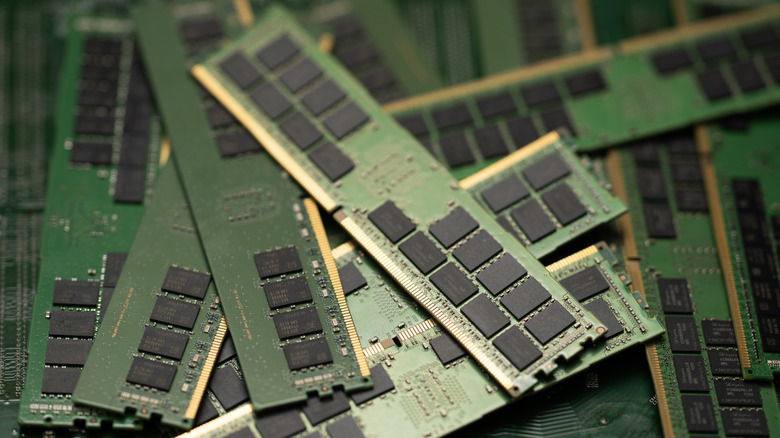
History has a way of repeating itself, and the RAM crisis of today isn't an entirely new problem. In the late 1980s, people were buying quite a lot of personal computers, which meant PC manufacturers needed to buy more RAM. Eventually, that demand for PCs slowed down, leaving those same manufacturers with a surplus of inventory, including extra chips that weren't being installed inside computers. This shift in supply and demand set off a domino effect that led to decreased production and, when demand caught up with supply again, skyrocketing RAM prices.
Just as today is not a great time to buy a new computer or gaming console, neither was it a good time to purchase a new PC in the 1980s. The same was true for anyone who needed to fill a car up with gas. The former involved accusations that Japan was flooding RAM into the US market, which decreased its price, but new sanctions later increased the price. The latter saw geopolitical instability and conflict in major oil-producing regions, as well as a pullback in demand from previous decades. Today, RAM prices are getting too high due to AI data centers needing more computing power. Oil, on the other hand, is expensive due in part to the conflict in Iran.
The increase in RAM cost is impacting the gaming industry, causing higher prices for consoles and hardware. The 1988 crisis impacted gaming companies, too, like when Nintendo had to delay the American release of Zelda II: The Adventure of Link. Even with those trials and tribulations, Nintendo and the broader economy recovered from the 1980s RAM and gas crisis, so maybe there's something that history can teach us about our situation today.
The 1980s RAM and oil crisis

The demand for RAM in the early-to-mid-1980s led to a production glut as manufacturers tried to get their piece of the pie. At the same time, chip makers in other countries — particularly Japan — brought inexpensive alternatives to the U.S. market. With so much RAM produced and its initial price drop, manufacturers began creating fewer chips, while the U.S. government imposed sanctions on Japan, limiting the import of chips made in that country. This cratered what had been a ready supply of RAM in the U.S. and caused a rapid increase in prices of electronic components that relied on memory.
By the summer of 1988, the cost of RAM had soared. The price increased from around $199 to $505 for a megabyte of RAM, with the cost of a 256k DRAM chip increasing from $2.95 to $12.45 in a matter of weeks. This led to many avoiding buying chips until the price decreased. Some companies didn't so much avoid buying RAM as they were simply unable to, or at least couldn't afford to. That's the sort of headwind companies are having today, too, with (for instance) Valve having a difficult time obtaining RAM for its Steam Machine. Meanwhile, the oil glut of the late 1980s led to drastically lower prices, which was great for commuters but devastating for some countries and even some states (like Texas).
Eventually, oil and gas prices rose again as conflicts in the Middle East tightened supplies, and the two commodities — RAM and oil — continued on their rollercoaster ride. Today, AI data centers are causing items including RAM to skyrocket in price while we hope for the sort of price relief that overproduction provided, if only briefly, in the 1980s.
What can we learn today?

Looking at what occurred in the past can help point to solutions for the future. This particular conversation has blossomed in several online forums, where users discuss the possibility of RAM returning to a normal price or at least decreasing to more reasonable ranges. Reddit users debate whether or not we will ever see RAM return to a lower price, with the general consensus being that the price will continue to rise until people stop buying, thus lowering the demand.
That discussion is exactly what happened during the 1980s RAM shortage, where supply and demand played a large role in the price fluctuations. Today, companies including Xbox, PlayStation, Nintendo, and Valve have increased the price of their consoles as a result of the RAM shortage. Valve's latest console is here, but you may not want to buy a Steam Machine in 2026. The console could have been a few hundred dollars cheaper if not for the RAM shortage, as well.
As the prices of all things electronic continue to increase, will consumers eventually hit a breaking point and just stop buying? That's what happened, sort of, in the 1980s when RAM prices initially tumbled. The real problem, though, wasn't super high prices but an overabundance of available RAM, which forced manufacturers to lower prices if they hoped to sell any at all. Maybe the real lesson of the 1980s RAM and oil crisis is that there will continue to be cycles as the markets try to make corrections. The good news might be that those corrections sometimes involve innovations, like the advent of more fuel-efficient cars in response to the oil shortages of the 1970s ... which, of course, eventually contributed to the glut in the next decade.