

5 Products Sennheiser Makes (Other Than Headphones)
Sennheiser has built a strong reputation over the years for producing high-quality headphones, in terms of both build and sound. The company was founded by Dr. Fritz Sennheiser as Labor W (Laboratorium Wennebostel) in Germany in 1945 and continues as a family-run business today. Its first product lines, however, weren't headphones but instead precision electronic measurement gear for laboratories and industrial customers, before expanding to microphones in 1946. In the decades since, Sennheiser has expanded into other product categories, including soundbars, microphones, hearing aids, and a range of accessories.
It's worth noting that today, Sennheiser's professional audio business, which covers areas like microphones and conferencing, is separate from its consumer headphone and soundbar business, which since 2022 has been owned by Swiss firm Sonova under a long-term license to use the Sennheiser brand name.
While most people know Sennheiser for headphones — a number of which audiophiles swear by – its decision to branch into additional categories has helped it to maintain its profile and strengthen its position in the field of professional audio. Let's take a look at the key product areas in which Sennheiser is best known, and how they appeal to everyday users as well as professionals.
Soundbars
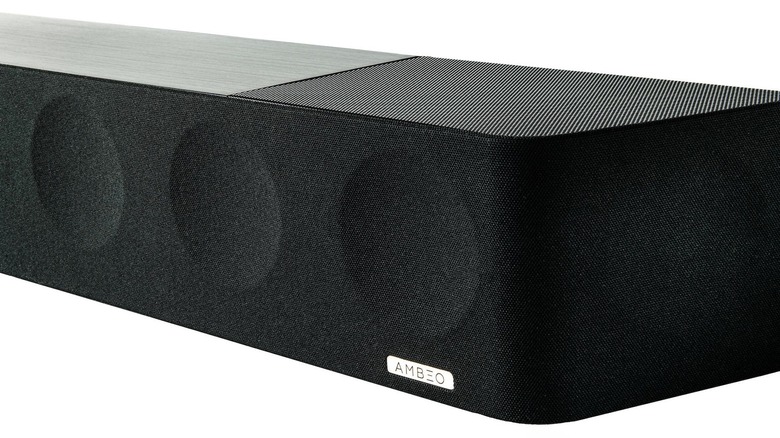
In the home‑theater space, Sennheiser, via its consumer audio partner Sonova, offers several soundbars under the AMBEO brand, which is used for the company's immersive 3D audio technologies and products. They include the top-of-the-range Max soundbar at a wallet-busting $2,000, the mid-range Plus at a more reasonable $1,000, and the Mini at $500. With prices like that, it's safe to say the soundbars are aimed at customers who want a noticeable step up from TV speakers, with support for formats like Dolby Atmos and DTS:X (a 3D surround sound format ideal for movies and gaming), multiple HDMI inputs, and companion apps for setup and tuning.
Choosing the best soundbar size for your TV also means matching it to your room, with Sennheiser's three soundbars each suited to different-sized spaces. The Max, as its name suggests, is designed to fill large living rooms with deep bass and wide surround effects, while the Plus still delivers room‑filling sound and strong bass for slightly smaller living spaces. The Mini, on the other hand, is ideal for more compact rooms of up to 270 square feet (25 square meters). All three devices offer Dolby Atmos and DTS:X. They also deploy room‑calibration mics and digital processing for a wide, three‑dimensional sound field from a single-unit design that should please home-theater enthusiasts desiring cinema-like immersion without a full surround setup. And there are, of course, some tips and tricks you can deploy to make sure you get the best from whichever model you choose.
Microphones

Beyond its consumer tech, Sennheiser's professional division remains one of the most respected names in microphones, from studios and stages to broadcast and film production. Made by Sennheiser itself rather than Sonova, its microphones draw on decades of transducer design and signal‑processing experience, emphasizing natural tone and durability across a range of demanding environments.
Two long-time standout Sennheiser mics are the e835 handheld and the MKH 416 shotgun. The wired e385 mic retails for a reasonable $100 and, according to a Home Recording Lab review, buyers "won't be disappointed with the sound or the style ... though you might take a bit of risk with durability" if you're using it on the road a lot. It also says the mic holds its own against the Shure SM58, a legendary stage mic considered the industry standard for live performances.
The MKH-416, on the other hand, is a short shotgun mic designed for use in film, radio, and television production, especially location work. Priced at $1,049, the MKH-416 arrived way back in 1975 and over that time has built a stellar reputation for excellent directivity and low self‑noise. Audio gear review site MusicianNerd has used the mic for outdoor projects in various weather conditions and loved it so much that it gave it a 10/10 rating, describing the only downside as its hefty price.
Hearing aids
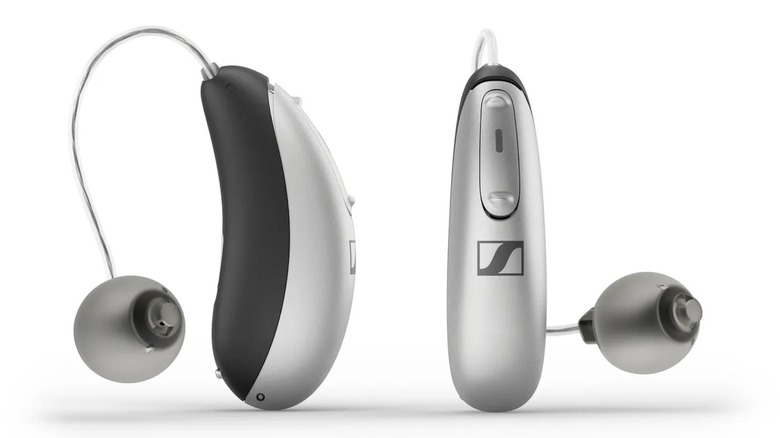
Sennheiser also offers a couple of hearing aids, though Sonova also operates that part of its business. The FDA-cleared devices launched in 2023 and are available over the counter for wearers with mild to moderate hearing loss. The two hearing aids, called All‑Day Clear and All‑Day Clear Slim, offer Bluetooth streaming, intelligent scene detection, and speech enhancement, and work for up to 24 hours on a single charge. Conveniently, you can fit them yourself with guidance from an app, so there's no need for a hearing test or an in‑person fitting. The Sennheiser All-Day Clear costs $1,400, while the All-Day Clear Slim costs $1,500.
It's worth noting that when Sonova took over Sennheiser's consumer business, the deal wasn't about entering the hearing care market, since it was already well established in this field. Instead, the deal was a chance for Sonova to bring decades of hearing-aid expertise to a trusted name in consumer audio, ultimately creating a portfolio that spans entertainment and hearing assistance while capitalizing on the narrowing gap between consumer audio and hearing technology.
Companion apps and software
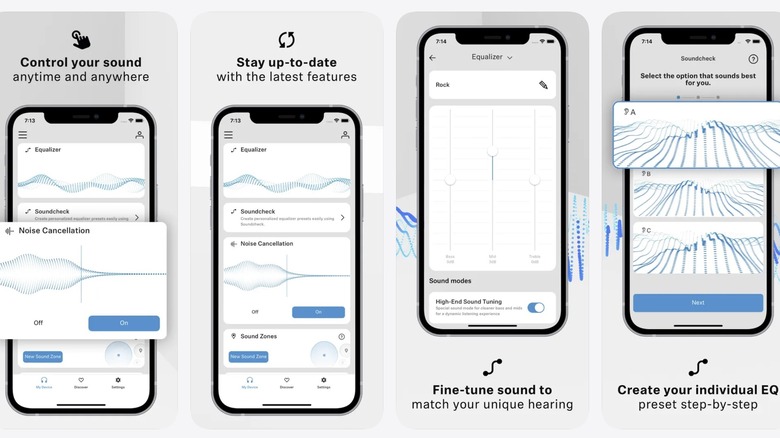
Sennheiser has been making audio gear since the 1940s. But to survive and prosper, a business has to be able to move with the times, and in recent decades, as the digital revolution took hold, Sennheiser expanded to software designed to support those in various audio-based roles, as well as companion apps for everyday users of its consumer gear. The apps fit into two main categories: consumer audio apps for headphones, earbuds, and AMBEO soundbars, and, to a lesser extent, apps for professional audio PC tools and gaming headsets, with the gaming headsets now developed by EPOS, a separate company that took over this part of Sennheiser's business in 2020.
For the consumer apps, think smartphone tools that let you do things like adjust sound profiles, use an equalizer, switch to preferred settings according to your location, activate noise‑cancelling modes, update firmware, and personalize how your Sennheiser headphones or soundbar function during general use. The main one, called Sennheiser Smart Control, arrived in 2018 and is free to use. The company pitches it as offering "effortless sound control and personalization in the palm of your hand." The Smart Control app seems generally well received among Android users, receiving a 4.5/5 rating from 18,000 reviews, while on Apple's App Store it receives a 3.4/5 rating from 1,500 reviews.
Merchandise
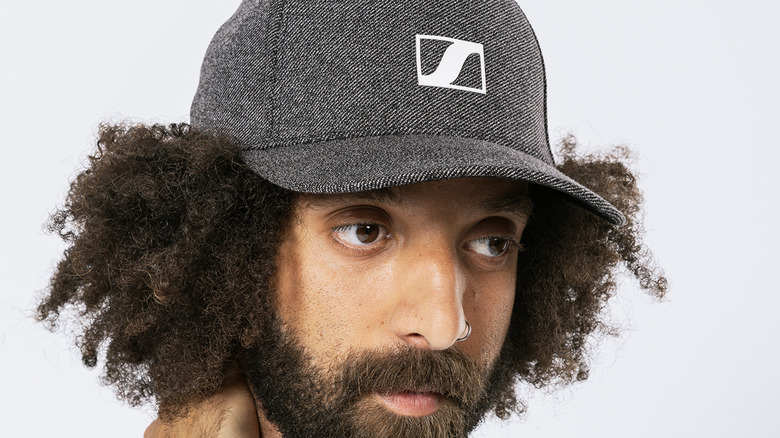
OK, this final part is a bit left-field, but interesting in its own right as it reflects how Sennheiser has established itself as a solid brand that some people really care about and feel attached to. We're talking about merchandise. While Sennheiser has been offering merch for more than a decade, it periodically updates its collection with new gear and designs. The current store selection includes everything from baseball caps and softshell jackets to travel bottles and sherpa vests, all with Sennheiser branding. You'll also find items like socks, T-shirts, a drybag, and tie-down straps.
At the moment, the merch section on the U.S. site feels more like a preview than a full store where you can make purchases. In other words, you can view the items, but you can't add them to a cart yet, and no prices are displayed. The fact that you can purchase items in euros from Sennheiser's European online stores suggests that the company's latest collection of merch is still being rolled out, with U.S. sales probably coming soon.
It's hard to know if offering merch like this leads to more purchases of Sennheiser's main gear. It's far more likely that people coming to the store for Sennheiser-branded shirts and hats have already bought into the brand, making these items a fun little extra for dedicated fans.